Every August at the farmers market, the same conversation starts up at our table. Someone wants a warm cup they can pour after dinner, and we slide a sample of rooibos across the counter. The first question is how to say it. ROY-boss. The second is what it is, and that one takes a while, because rooibos has one of the best stories in the tea world.
Here's the short version. Rooibos is a naturally sweet, 100% caffeine-free herb that grows in one small corner of South Africa and nowhere else on earth. It brews a deep red cup, tastes like honey and toasted nuts, and forgives every brewing mistake you can throw at it. The long version is better, so pour something warm and settle in.

What is rooibos? (It's not actually tea)
Rooibos comes from Aspalathus linearis, a scrubby shrub in the legume family with soft, needle-thin leaves. It's a cousin of beans and peas, not of Camellia sinensis, the plant behind green, black, and oolong tea. Strictly speaking, that makes rooibos a tisane, an herbal infusion rather than a true tea. Around the shop we call it rooibos tea anyway. So does most of the planet.
The name is Afrikaans for red bush, and once you've seen the finished leaf you understand why. Oxidation turns those green needles a deep russet red, and the cup they brew glows like a jar of amber honey held up to the light. People in the Cederberg region have been cutting and drying this plant for generations, long before it ever reached a grocery shelf. When you steep it, you're borrowing a tradition, and it's a good one.
Where rooibos comes from (and why nowhere else)
Rooibos grows only in the Cederberg mountains region of South Africa's Western Cape, a rugged stretch of sandstone peaks a few hours north of Cape Town. Farmers have tried planting it in similar climates around the world, and the plant refuses to cooperate. It wants that exact mix of poor sandy soil, hot dry summers, and wet winters. Every true rooibos on the market, ours included, traces back to that one region.
Harvest happens during the southern summer. Growers cut the branches by hand, bundle them, and bring them in for processing the same day. The South African Rooibos Council keeps a close watch on quality and origin, and rooibos now holds protected status in much of the world, the same kind of protection Champagne enjoys. It's one plant from one place, and we think that's worth respecting.
How rooibos is made (red vs. green)
The craft looks a lot like black tea production, just with a different plant. Workers cut the needle-like leaves, bruise them to break the cell walls, and spread them out to oxidize under the African sun. Oxidation does the real work: the leaves shift from green to deep red-brown, and the flavor rounds out into that signature honeyed sweetness. Sun-drying finishes the job.
Skip the oxidation and you get green rooibos, the leaf dried quickly before it can redden. It brews a lighter, grassier cup, closer in spirit to a green tea, and it has its fans. The red style is the classic, though, and it's the one we reach for when we blend. If a bag just says rooibos, it means the red.
What does rooibos taste like?
Naturally sweet is the headline. A good cup of rooibos tastes of honey, malt, and toasted nuts, with a soft woody note underneath and sometimes a whisper of stone fruit. There's no astringency to push through, either. Rooibos is very low in tannin, so it never turns bitter, not even when you forget the pot for 20 minutes. That's rare in the hot-drink world, and we don't take it for granted.
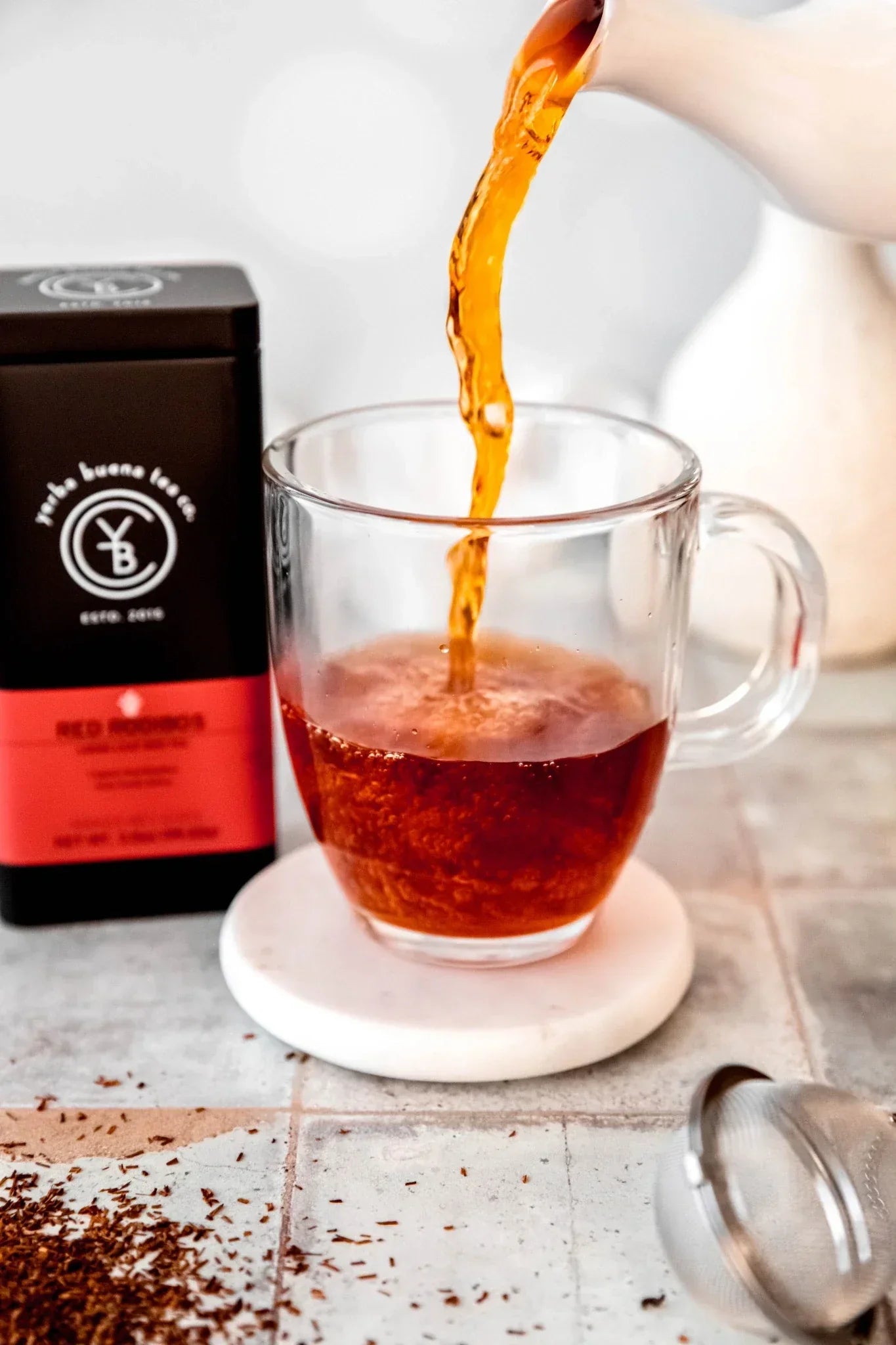
The honest way to learn the flavor is to start plain. Our Red Rooibos is pure organic Cederberg leaf, nothing added, honey-sweet on its own. Steep a cup, taste it straight, then add a splash of milk and watch it turn into something close to dessert. That low-tannin sweetness is also why rooibos blends so well. Vanilla, citrus, spice, and fruit all sit comfortably on it without a fight.
Does rooibos have caffeine?
No, none at all. Rooibos is naturally 100% caffeine-free, and naturally is the important word there. Nothing was stripped out or processed away, because the plant simply never makes caffeine in the first place. Decaf black tea starts with caffeine and loses most of it, while rooibos never had any to begin with. It's the difference between a quiet room and a room where the music got turned down.
That fact shapes how people drink it. In South Africa it's an all-day pot, first cup to last, and families there have long brewed it weak with milk for children. At our house it's the after-dinner cup and the rainy Sunday refill. If caffeine is the thing you're steering around, our whole caffeine-free collection leans on herbs like this one, with rooibos doing a lot of the heavy lifting.
How to brew rooibos
This is the easiest brewing lesson we give. Rooibos wants full boiling water and a long steep, and it's nearly impossible to ruin.
- Use 1 heaping teaspoon of loose leaf per 8-ounce cup.
- Pour water at a full boil, 212 F. No need to let it cool.
- Steep 5 to 7 minutes. Longer is fine, and often better.
- Re-steep the same leaves for a second, gentler cup if you like.
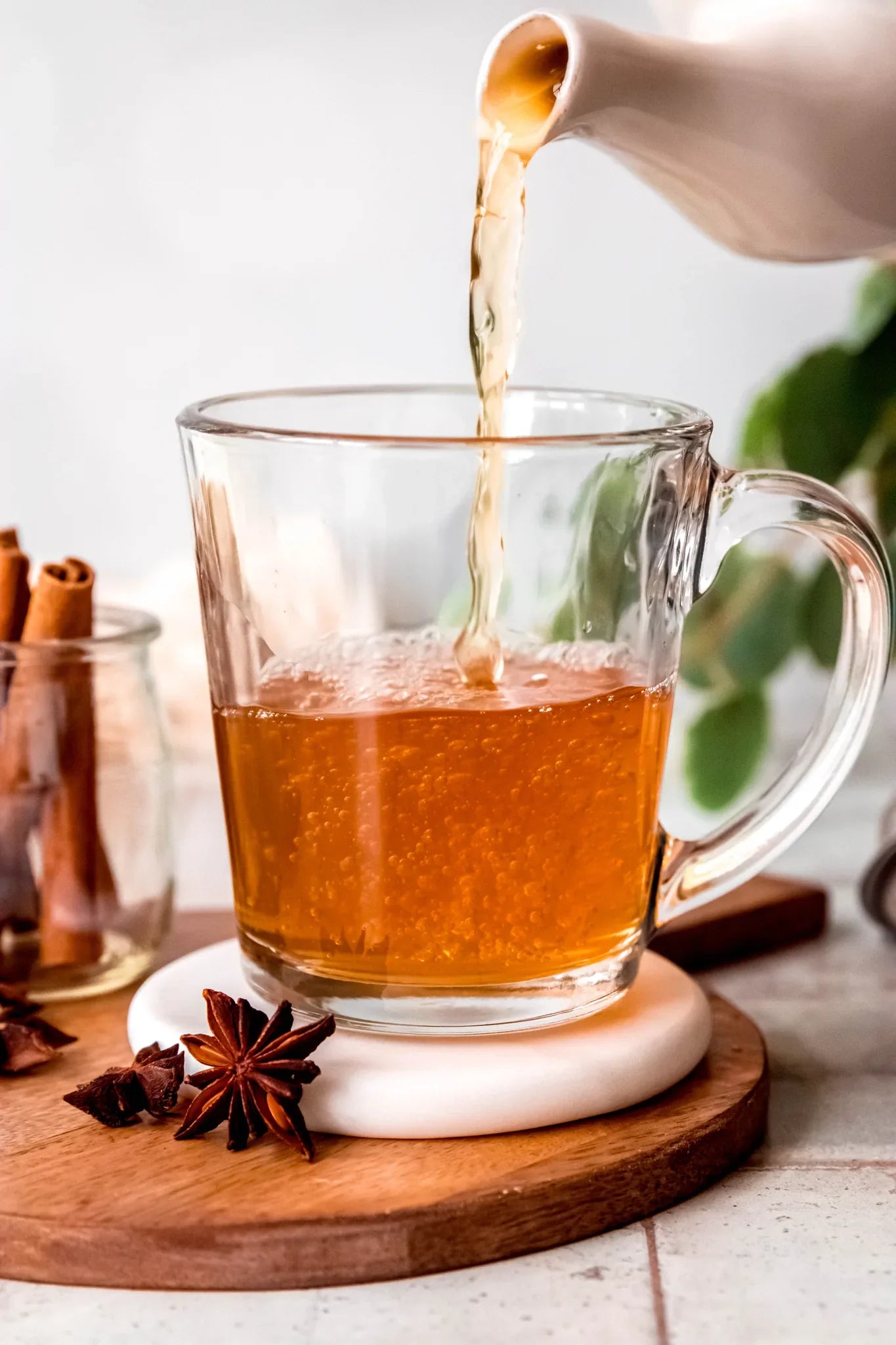
Because there's so little tannin, an oversteeped cup just gets deeper and sweeter instead of bitter. Walk away to answer the door and lose track of time. The pot will forgive you. Rooibos takes milk and honey beautifully, holds up as a latte base under steamed milk, and makes one of the best iced pitchers of late summer: brew it double strength, pour it over ice, and drop in an orange slice if you're feeling fancy.
Rooibos chai: the chai for evenings

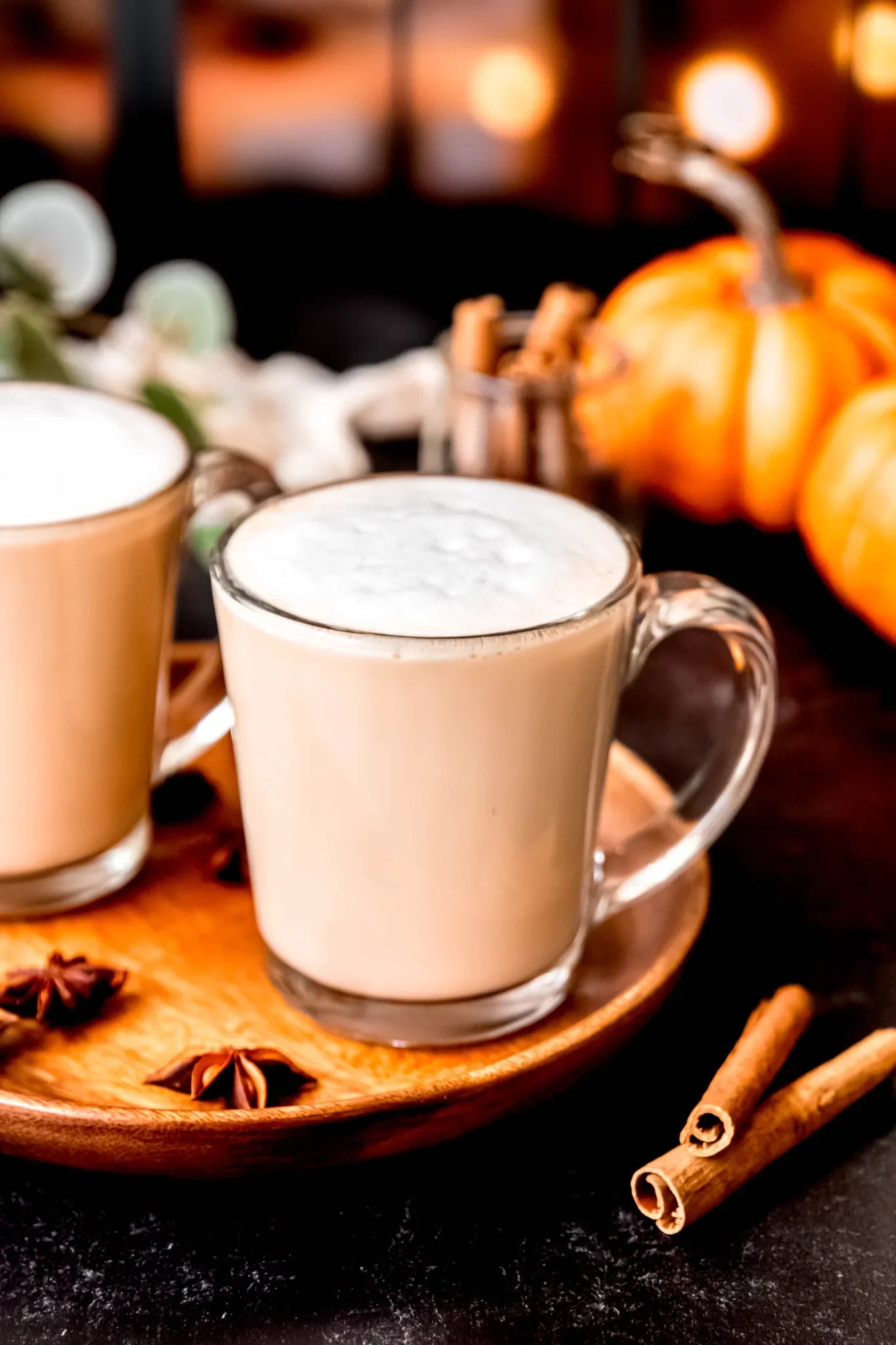
Ask for chai almost anywhere and you'll get black tea simmered with masala spices, which is wonderful and also caffeinated. Rooibos chai swaps the base. Cinnamon, ginger, cardamom, and clove land on that honeyed red leaf instead, so you get all the warmth of a proper chai with zero caffeine. It's the cup we hand people who love spice but want it at 8 pm, and it's the secret behind the cocoa-style lattes our youngest market visitors order with great seriousness.
We hand-blend two versions here in Salem. South African Chai is our classic rooibos chai, organic rooibos scented with traditional masala spices, bold enough to stand up to milk. Maven Blend is a gentler rooibos chai with coconut and ginger, creamy and soft, lovely with a spoon of honey. Brew either one straight, or simmer it on the stovetop with milk the way we do in our masala chai recipe. The method carries over exactly, and with rooibos you can let it simmer without a bitter edge sneaking in.
The rooibos blends we make in Oregon
We've been hand-blending rooibos since our farmers-market days, and it's still one of our favorite bases to work with. A few from the current shelf:
- Honey Rooibos pairs rooibos with honeybush, its softer South African cousin, for a cup that drinks like dessert without a grain of sugar.
- Orange Rooibos adds real orange peel, bright and sweet, and it makes an excellent iced tea.
- Turmeric Spice brings turmeric, coconut, and orange together on the red base. It brews a golden-amber cup, and it's the leaf we reach for in our golden milk latte recipe.

Add the two chais above and the pure Red Rooibos, and that's the family. Each one starts with organic rooibos and gets blended in small batches here in Salem, honest about what's in the bag. You can browse them all in one place in our rooibos collection.
A caffeine-free cup for fall
It's late August as we write this, and the mornings in the Willamette Valley have started to turn. Sweater weather is on its way, and rooibos is built for it, a sweet and warming cup that welcomes spice, one you can pour at any hour of the day. It shows up all through our Fall Collection for exactly that reason.
Start with a plain cup of red rooibos to learn the base, then wander toward the chai when the rain arrives. However you get there, you'll be drinking a plant with one home on earth and generations of tradition behind it. We think that makes the cup taste better. Come find us at the market and tell us if you agree.