By the Yerba Buena Tea Co. team. Last updated August 2026.
Here's something most tea drinkers never learn: that Tazo bag steeping at your coffee shop traces back to a Portland basement. The man who blended it had already founded Stash twenty-two years earlier, and he would build a third company after that. For more than fifty years, Oregon has been one of America's great tea states. Hardly any tea grows here. Oregon blends it and brands it, surrounded by some of the best farmland in the country.
We're a small part of that story. Yerba Buena Tea Co. hand-blends organic loose leaf tea in Salem and sells it at farmers markets across the Pacific Northwest. We're a chapter here, not the whole book. So let us tell you the bigger one.

Oregon's unlikely tea empire
It starts in 1972, in the basement of a Portland Victorian. Three friends, Steve Lee, Dave Leger, and a young Steven Smith, put in seven thousand dollars and started Stash Tea. Three years later, the partners pioneered the market for domestic peppermint and spearmint, selling Oregon-grown mint to giants like Lipton and Celestial Seasonings. Oregon's first real gift to tea was the herbs, not the tea plant. Stash was acquired in 1993 by Yamamotoyama, the oldest family-owned tea company in Japan, with a lineage reaching back to 1690.
After Stash, Smith was just getting started. In January 1994 he launched Tazo, working with the Sandstrom Partners design firm to build blends like Zen and Awake around a price point higher than Americans had ever paid for a box of tea. Five years later, Starbucks bought Tazo for $8.1 million. If you've ever had a Tazo at a coffee shop, you've had a piece of Portland.
Then he did it a third time. In 2009, after a year in Provence, Steven Smith bought a former blacksmith's shop in the shadow of Portland's Fremont Bridge and founded Smith Teamaker. He died in 2015, but the lineage he helped start, from a basement in 1972 to shelves around the world, is a genuinely Oregon story. Three of the most recognizable names in American tea were born in one city, traced through one restless career.

Does Oregon grow tea? One farm says yes.
For decades the answer was no, and for most of the country it still is. Then, in 1988, Rob Miller and tea expert John Vendeland planted a half acre of Camellia sinensis near the Willamette River in Salem, simply to find out whether the plant would survive an Oregon winter.
It thrived. That plot became Minto Island Tea Company, the first and only commercial-scale tea farm in the state, now run by Elizabeth Miller and Chris Jenkins as part of their larger organic farm. They pick by hand and process in small batches, about ten minutes from downtown Salem.
We love this for a reason that goes past trivia. It took nearly thirty years of patient, unglamorous work to prove that tea grows in the Willamette Valley. That's the same temperament behind every good thing this valley produces, and it's the temperament we try to bring to blending. If you're curious how one plant becomes five different teas, we walk through it in types of tea explained.
A global cup on Oregon ground
The leaf itself has always come from far away. It travels from China, India, Japan, and beyond, from places that have grown and steeped tea for centuries. Our Assam comes from India, our Genmaicha from Japan. That part connects us outward, to the whole world.
The rest connects us to home. The botanicals, the kitchen where we blend, and the people we share it with are pure Oregon. What Oregon gives a blender is a deep bench of farmers and a craft culture with the patience to do small things well. It's also why we refuse to use natural flavors: when the real ingredient is this good, you don't need the shortcut.
Why Oregon grows incredible things
It helps to be surrounded by some of the best agriculture in America. Oregon raises more than 220 different commodities. Ninety-nine percent of the nation's hazelnuts come from here. The Willamette Valley earned the state its nickname as the grass seed capital of the world, Oregon leads the country in marionberry and caneberry production, and the state ranks among the top mint growers in the United States. That's the same Oregon mint that helped build Stash half a century ago.
For a tea blender, that matters two ways. First, the herbs and botanicals we reach for come from a state that takes growing seriously, which raises the bar on what we accept. Second, Oregon sits on the doorstep of the Pacific Rim, close to the ports and the origins that real tea travels through. A global cup, blended on local ground.

Our Northwest Mint is our tip of the hat to that mint heritage, and the rest of the organic herbal teas carry the same idea. You'll find it in the black teas too, where a good Assam base meets whole spices we weigh out by hand, as in our Chai and Earl Grey. In summer, the same botanicals go into our iced tea blends.
Where Oregon tea lives today
Oregon's tea life is bigger than any one company, and much of it is something you can go and do.
Portland throws its own celebration, TeaFestPDX, held at the World Forestry Center since its first year in 2017. The wider Pacific Northwest gathers each fall at the Northwest Tea Festival in Seattle, which lands on the last weekend of September at Seattle Center. Closer to home, you can sit for a quiet pot at Yun Shui Teahouse inside Lan Su Chinese Garden, take in a tea ceremony at the Portland Japanese Garden, or tour the tea plot at Minto Island in Salem.
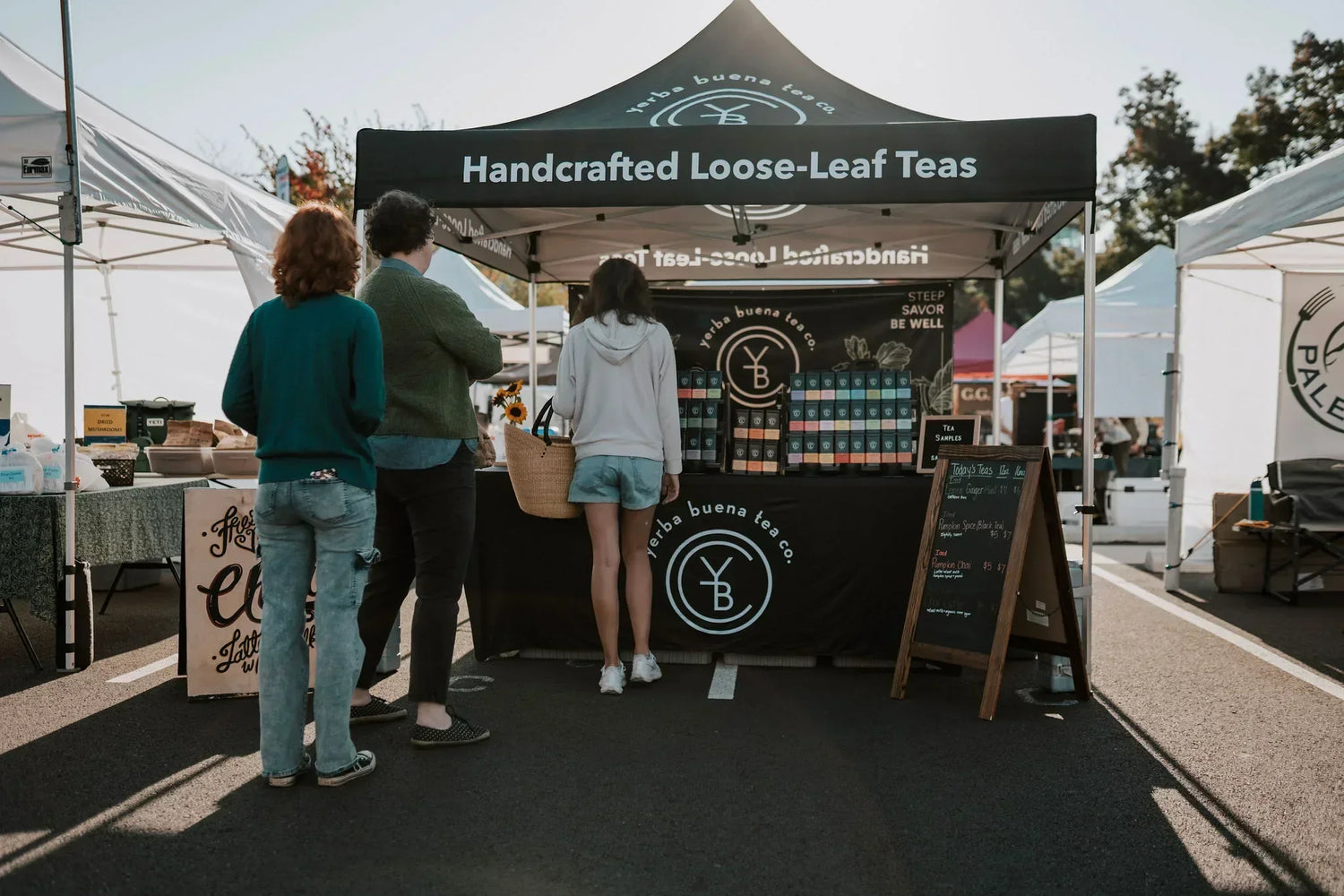
Or you can wander a Saturday market and meet the people who blend what you drink. That last one is where you'll find us.

Where to buy loose leaf tea in Oregon
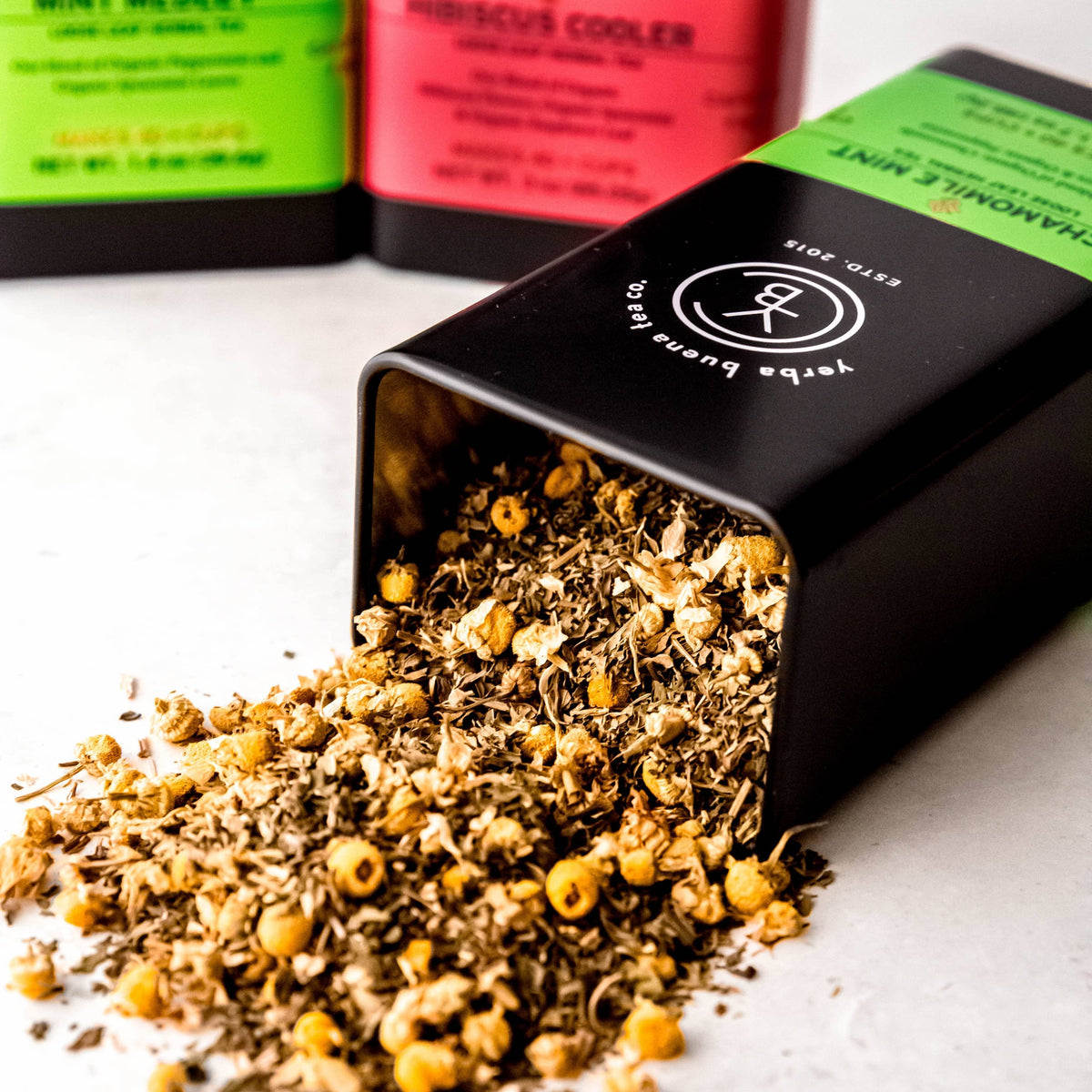
Yerba Buena Tea Co. is women-owned and rooted in Salem. We started at a farmers market table and never really left, and you can read how that began on our story page. Every blend gets mixed by hand in our Salem kitchen, in batches small enough that someone here has touched every tin.
Through the season you'll find our booth at Salem, Beaverton, Lake Oswego, and Portland farmers markets, plus independent grocers and tea shops up and down the West Coast. We keep it that way on purpose. Skipping a storefront lets us spend the day talking tea instead of running a register. Four ways to get our tea:
- Catch us at a market and taste whatever is brewing. See the schedule on our find us page or the upcoming markets list.
- Order online for delivery anywhere in the country. Browse the full tea collection, or start with our best sellers.
- Pre-order for market pickup and skip the line. Place it on our pre-order page and collect it at the booth.
- Stock us in your cafe or shop. If you run a grocer, cafe, or tea bar in the Northwest, our wholesale page is the place to start.

Gift shopping counts too. Our tea box sets pair three blends in one package, and the gifts for tea lovers collection sorts by who you're buying for. For more about where we set up and what's in season, our Oregon page keeps the current picture.
Curious about the name while you're here? It's its own little tea story, and we tell it in Yerba Buena vs. Yerba Mate. For questions, wholesale or otherwise, reach us through our contact page.
Frequently asked questions
Does Oregon grow its own tea?
Yes, on a small scale. Minto Island Tea Company in Salem is the state's first and only commercial-scale Camellia sinensis farm, grown from an experimental half-acre plot planted in 1988. Beyond that one farm, almost no commercial tea is grown in Oregon or anywhere else in the United States. Oregon's larger contribution to tea is its herbs, its farming culture, and its blenders. We source organic leaf and herbs from trusted growers, then blend, taste, and pack every batch by hand in Salem.
Where can I buy loose leaf tea in Oregon?
You have good options. Order online for delivery, pre-order for pickup at a farmers market, or find loose leaf on the shelves of independent grocers and tea shops around the region. For Yerba Buena Tea Co. specifically, our find us page lists current markets and stockists across the Willamette Valley and Portland metro, and you can shop all our organic loose leaf tea any time.
Where can I buy loose leaf tea in Portland?
Portland has a rich tea scene, from teahouses to a summer tea festival at the World Forestry Center. Yerba Buena Tea Co. is based in Salem and brings its booth to Portland-area farmers markets through the season, with shipping anywhere in between. Check our find us page for the current Portland-area schedule.
Where can I buy loose leaf tea in Salem, Oregon?
We blend in Salem and sell at the Salem farmers market through the season. You can also pre-order online for market pickup, or have any blend shipped. Minto Island Tea Company, also in Salem, sells tea grown on its own farm.
What is the oldest Oregon tea company?
Stash Tea, founded in Portland in 1972, is the elder of the bunch and helped put Oregon on the tea map. Tazo followed in January 1994, and Smith Teamaker in 2009. Steven Smith had a hand in all three.
Did Tazo really start in Oregon?
It did. Steven Smith launched Tazo in Portland in January 1994, and Starbucks acquired it in 1999 for $8.1 million. That coffee-shop Tazo has Oregon roots.
Who founded Stash Tea?
Steve Lee, Dave Leger, and Steven Smith founded Stash Tea in 1972 with seven thousand dollars and the basement of a Portland Victorian. In 1975 the three of them opened the domestic market for Oregon-grown peppermint and spearmint, selling to Lipton and Celestial Seasonings.
Do you use Oregon-grown ingredients?
Our tea leaf comes from growers overseas, as nearly all American tea does. For herbs and botanicals, quality leads the decision, and Oregon's growers often win it on merit. A family that has farmed this valley for five generations tends to know good ingredients on sight. Our Northwest Mint is the clearest nod to that.
Does Yerba Buena Tea Co. have a tea shop in Salem?
We sell at farmers markets, through market pickup, and online rather than from a storefront. It keeps the operation small and puts us across a table from the people drinking our tea.
What makes Oregon a good place for a tea company?
Oregon grows more than 220 commodities and ranks among the country's best farming regions, from Willamette Valley berries to Pacific Northwest mint. It also sits close to the Pacific Rim ports that tea travels through. Blending here means working surrounded by people who care about how things are grown.
That's Oregon tea: a tradition from across the world, blended by hand in Salem. Browse the collection or come find us at a market.