By the Yerba Buena Tea Co. team. Last updated September 2026. This article is for education, not medical advice (full note at the end).
We all know the feeling: bone-tired, but your brain won't clock out. You've tried the screen-off rule and the cooler bedroom. A warm, caffeine-free cup is one of the gentlest next things to reach for.
The short answer: the most useful bedtime tea ingredients are chamomile, kava, valerian, passionflower, lavender, lemon balm, and ashwagandha. They help in two ways: a little gentle chemistry (most of them nudge your GABA system, the brain's brake pedal) and the wind-down ritual itself. Below is what each one does, how fast, who should skip it, and which of our blends it lives in.
Why tea helps you sleep
Two things are happening in a good bedtime cup, and only one of them is chemistry.
The chemistry: your GABA "brake." GABA is the neurotransmitter that quiets an overactive mind. Several sleep herbs gently support that system. Chamomile is the classic example. Its flavonoid apigenin binds the same calming site on the GABA-A receptor that anti-anxiety medications use, but as a partial agonist, which means a softer, ceilinged effect rather than a sledgehammer (review of herbs and the GABAergic system). That's also why a cup of chamomile relaxes you without the dependency profile of a sleeping pill.
A myth worth clearing up: L-theanine. You'll see "L-theanine" credited for tea's calm. True, but L-theanine lives in actual tea (green, black, white, the Camellia sinensis plant), not in caffeine-free herbal blends. So a bedtime herbal tea isn't working through L-theanine. It works through its herbs and through the ritual.
The ritual: underrated, and real. A warm, screen-free, caffeine-free cup 45 to 60 minutes before bed is a behavioral cue. You're telling your nervous system the day is over. The National Center for Complementary and Integrative Health (NCCIH) is candid that the clinical evidence for many sleep herbs is still limited, so we won't promise miracles. What we can say honestly is that the tradition is centuries deep, the mechanisms are plausible, and the ritual costs you nothing to try.
The 7 best sleep-supporting tea ingredients
1. Chamomile
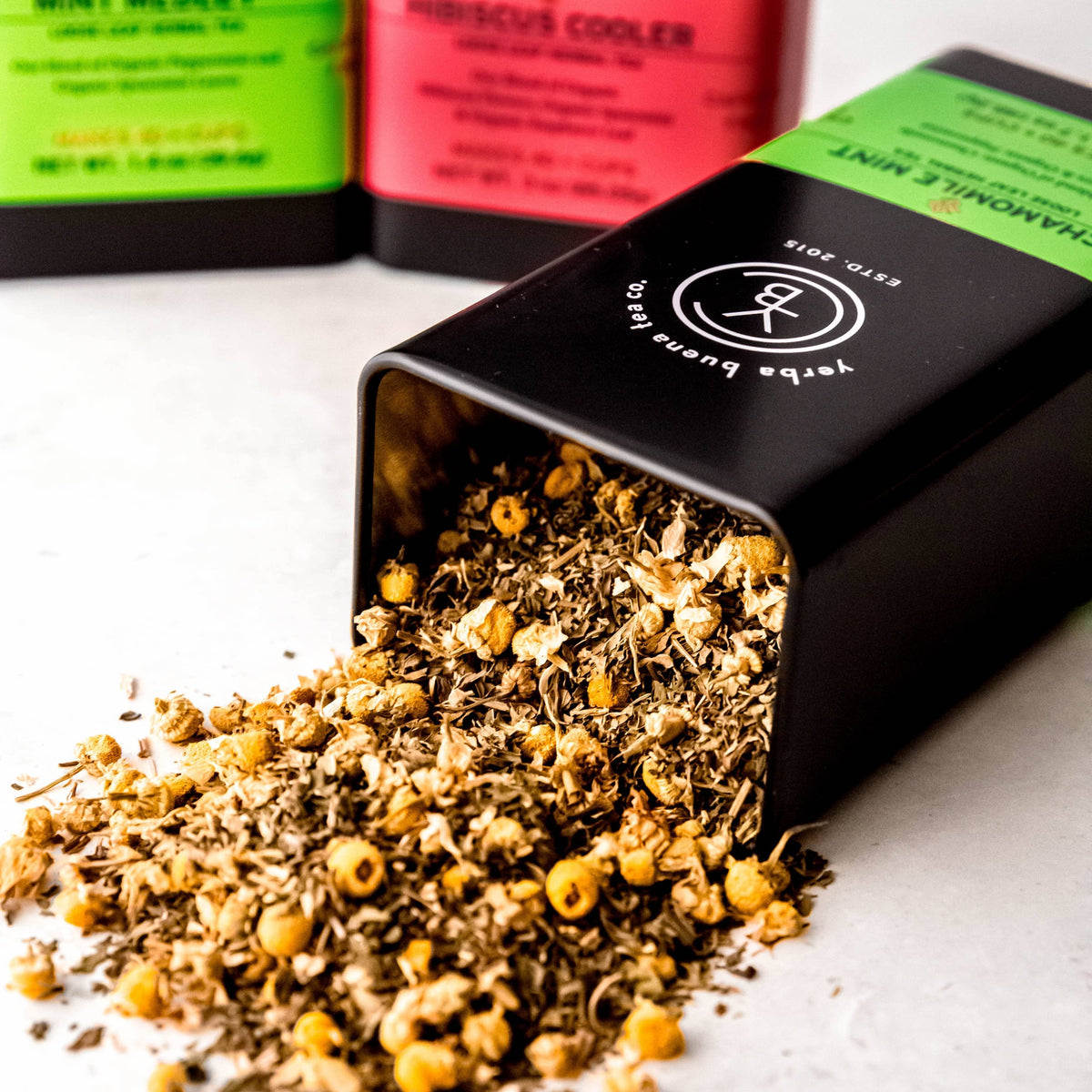
The classic evening cup. Its apigenin gently engages GABA-A receptors, which is why it's the most reached-for sleep herb in the world. NCCIH notes that rigorous clinical proof is still limited, but the tradition and the mechanism are both real, and it's exceptionally gentle. Speed: same night, subtle. Caution: if you're allergic to ragweed or daisies, chamomile can trigger a reaction. In our blends: Chamomile, Chamomile Lavender, and Good Night.
2. Kava Root
Kava's kavalactones are more potently calming than chamomile, with the best evidence for easing anxiety, the racing-mind kind that keeps you up. Speed: same night. Caution (important): kava has been linked to rare but serious liver injury. The U.S. FDA issued a consumer advisory in 2002, and NCCIH still flags the risk. Don't combine it with alcohol, avoid it if you have liver concerns, and don't use it daily without a break. We take this seriously enough to have written a whole guide: Is Kava Safe? In our blends: Good Night and No Worries. More on why we pair it with chamomile in our kava deep-dive.
3. Valerian Root
The most studied Western sleep herb, and also the most divisive. It works on GABA, but NCCIH reports clinical results are inconsistent and its value for insomnia is not established. Long-term safety is also uncertain. Some people find it powerfully sedating. Others get vivid dreams or morning grogginess. Speed: often needs several nights to weeks, not one cup. In our blends: we don't currently use valerian. We reach for kava and passionflower instead, which we find gentler and more reliable. (More on this in the FAQ, since "chamomile vs valerian" is a common question.)
4. Passionflower
A quiet workhorse. It supports GABA activity and pairs beautifully with stronger herbs, taking the edge off a busy mind without knocking you out. Speed: same night, subtle. In our blends: Good Night, where it sits alongside kava and chamomile.
5. Lavender
More than a scent. Lavender's linalool has calming effects whether you inhale it or drink it, and it's well studied for easing anxiety and supporting relaxation. Speed: same night, largely through aroma and mood. In our blends: Chamomile Lavender, Good Night, and our Lavender Ginger Mint.
6. Lemon Balm
A member of the mint family with a soft lemony flavor and a long history as a calming herb, often paired with other sedatives to round them out. The evidence is preliminary but promising for stress and mild sleeplessness. Speed: same night, gentle. In our blends: Good Night.
7. Ashwagandha
The outlier here, because it's an adaptogen, not a sedative. Rather than calming you tonight, it works over weeks to lower stress reactivity. A PLOS One meta-analysis of five randomized trials found a small but significant improvement in sleep, strongest in people with insomnia taking 600 mg or more daily for at least eight weeks. Speed: weeks, not nights. In our blends: we don't currently carry an ashwagandha tea. Our adaptogenic route is holy basil (tulsi) and kava. We compared the two in Ashwagandha vs. Kava.
How to choose: the sleep-tea comparison table
| Ingredient | What it may do | Speed | Best for | In which YBTCO blend |
|---|---|---|---|---|
| Chamomile | Gently engages GABA; eases into rest | Tonight (subtle) | A nightly, gentle ritual | Chamomile, Chamomile Lavender, Good Night |
| Kava root | Calms a racing, anxious mind | Tonight | Stress-driven sleeplessness | Good Night, No Worries |
| Valerian root | Sedating for some; mixed evidence | Days to weeks | Those who tolerate it well | Not in our blends |
| Passionflower | Takes the edge off; great companion herb | Tonight (subtle) | A busy mind, gentle help | Good Night |
| Lavender | Calms via linalool and aroma | Tonight | Winding down, mood | Chamomile Lavender, Good Night, Lavender Ginger Mint |
| Lemon balm | Soft, calming; rounds out blends | Tonight (gentle) | Mild stress and restlessness | Good Night |
| Ashwagandha | Adaptogen; lowers stress over time | Weeks | Chronic stress, the long game | Not in our blends (we use tulsi + kava) |
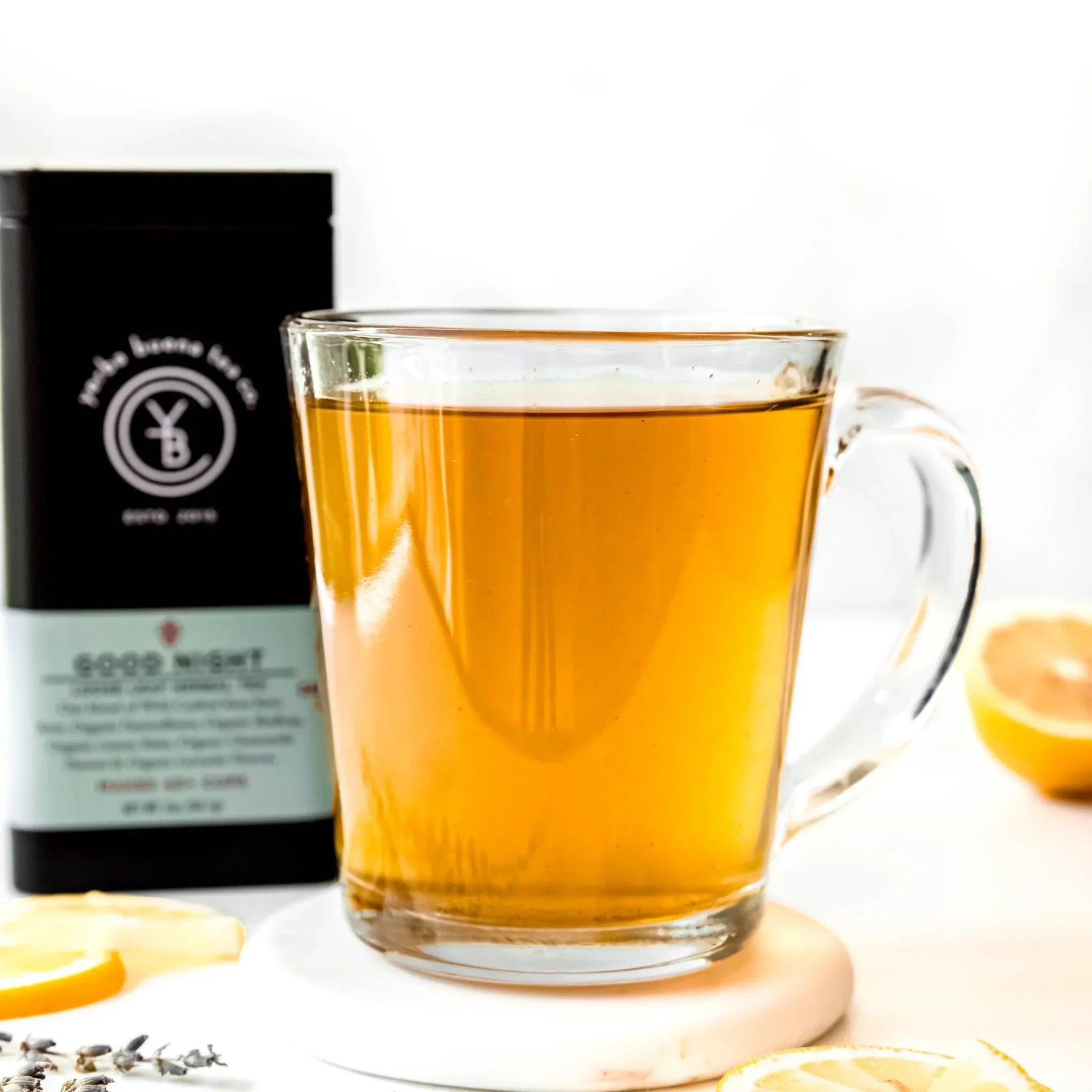
If you want one place to start, our Good Night blend is the most complete sleep formula we make, with kava, passionflower, chamomile, lavender, lemon balm, and skullcap in a single cup.
When to drink sleep tea
Timing matters more than people expect. Brew your cup 45 to 60 minutes before bed. That gives the herbs time to work and gives you a buffer so you're not making a bathroom trip the moment you drift off. Keep it caffeine-free (all of the above are), keep it warm, and make it the last thing you do with the lights low and the screens away. The cup and the wind-down are a team.
Who should be careful
Gentle doesn't mean risk-free. A few honest cautions:
- Kava and your liver. This is the big one. Kava has been linked to rare but serious liver injury (NIH Office of Dietary Supplements, LiverTox). Skip it if you drink alcohol heavily or have any liver condition, don't take it with medications processed by the liver, and don't drink it every single night. Read our full kava safety guide first.
- Valerian and medications. Valerian can add to the effect of sedatives, sleep medications, and alcohol. If you take any of those, talk to your doctor before combining.
- Pregnancy and breastfeeding. Many sleep herbs, including kava, valerian, and ashwagandha, are not recommended during pregnancy or nursing. If you're expecting, please check with your provider before reaching for any of these, and lean toward a simple, well-tolerated cup.
- Allergies. Chamomile can affect people sensitive to ragweed or daisies.
When in doubt, especially if you're on medication, pregnant, or managing a health condition, ask your doctor. Tea is a lovely tool, not a treatment.
Frequently asked questions
What is the best tea for sleep?
For most people, a chamomile-forward blend is the best place to start: gentle, well-tolerated, and easy to drink nightly. If stress and a racing mind are the problem, a kava-containing blend like Good Night tends to work better. The "best" tea is the one that matches why you are awake.
Is it safe to drink sleep tea every night?
Most gentle herbs (chamomile, lavender, lemon balm, passionflower) are fine for nightly use. Kava is the exception: because of the liver caution, it's better used a few nights a week rather than every night, and not alongside alcohol.
Is kava tea safe?
Many people use kava carefully and enjoy it without issue, but it carries a real, if rare, risk of liver injury. Avoid it with alcohol, with liver conditions, or with medications metabolized by the liver, and don't use it daily. We cover this in detail in Is Kava Safe?
Can I drink chamomile tea while pregnant?
Many providers consider occasional chamomile acceptable, but evidence is limited and large amounts are sometimes discouraged. Pregnancy is exactly the time to ask your own provider rather than rely on a blog. Note that kava, valerian, and ashwagandha are generally not recommended during pregnancy.
Which is stronger, valerian or kava?
Both are stronger than chamomile. Valerian is more sedating for the people it works on, but its effects are inconsistent and often build over time. Kava acts more on anxiety and tends to work the same night. Kava carries the liver caution. Valerian carries a medication-interaction caution.
Chamomile vs valerian for sleep: which is better?
Chamomile is gentler, better tasting, and easy to drink every night, ideal for winding down. Valerian is stronger but unpredictable and can cause grogginess or vivid dreams. Many people prefer to start with chamomile (or a chamomile-and-kava blend) and only consider valerian if gentler options fall short.
How long before bed should I drink sleep tea?
About 45 to 60 minutes before bed. That gives the herbs time to take effect and reduces the chance of a middle-of-the-night bathroom trip.
What is a good Sleepytime or Yogi Bedtime tea alternative?
If you like those blends but want organic, whole-leaf tea with a fuller herb profile, try our Chamomile Lavender for a simple nightly cup, or Good Night for a deeper, kava-and-passionflower formula. Both are caffeine-free and made with certified organic ingredients.
Ready to build your own bedtime ritual? Browse our Calm & Sleep collection, or gift the Bedtime Box to someone whose brain won't quiet down at 10pm.
Medical disclaimer: This article is for educational purposes only and is not medical advice. Herbal teas are not intended to diagnose, treat, cure, or prevent any disease. Statements about herbs have not been evaluated by the FDA. Talk to a qualified healthcare provider before using herbal teas, especially if you are pregnant, nursing, taking medication, or managing a health condition. Sources: NCCIH, NIH Office of Dietary Supplements, and peer-reviewed research linked throughout.