
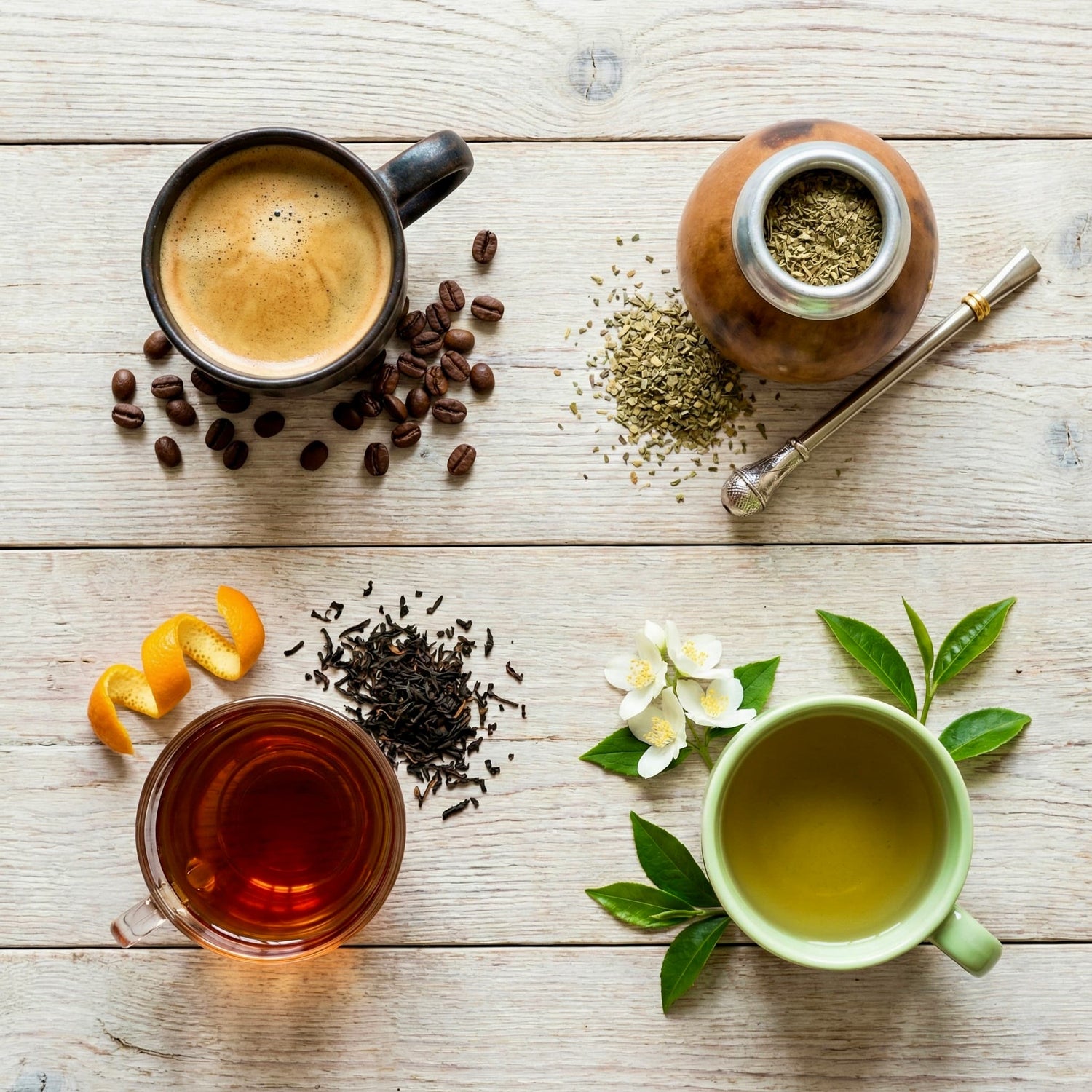
The short answer: an 8 oz cup of coffee has roughly 95 to 200 mg of caffeine. Most tea has less: black tea 40 to 70 mg, green tea 20 to 45 mg, and yerba mate 70 to 85 mg, while herbal tea has none. The number is only half the story. Tea also carries L-theanine, which softens caffeine into steady focus instead of a jittery spike.
If you have ever felt the coffee jitters, that shaky feeling before an afternoon crash, the real question is not just how much caffeine is in your cup. It is how that caffeine behaves once it is in you. Here is the full energy spectrum of your morning options.
The caffeine chart: tea vs coffee, by the cup
Caffeine shifts with how long you steep and how hot your water runs, but here is the typical breakdown for an 8 oz cup against a standard drip coffee.
| The drink | Avg. caffeine (8 oz) | The feeling |
|---|---|---|
| Drip coffee | 95-200 mg | High spike, fast crash |
| Yerba mate | 70-85 mg | Powerful, physical endurance |
| Black tea | 40-70 mg | Steady, robust alertness |
| Green tea | 20-45 mg | Gentle, focused clarity |
| Herbal tea | 0 mg | Calm, caffeine-free |
Want more energy from your tea? Use more leaf, not more time. An extra teaspoon raises the strength; a longer steep mostly adds bitterness (tannins), not caffeine.
The tea advantage: L-theanine
Black tea has about half the caffeine of coffee, so why have monks and martial artists reached for tea to focus for centuries? An amino acid called L-theanine, found almost only in the tea plant. It is associated with alpha brain-wave activity, the relaxed-alertness state, and it slows how fast caffeine lands, smoothing the spike and softening the crash. That is why a cup of Assam or Green Sencha can leave you sharp and calm rather than wired and anxious.
The powerhouse: yerba mate
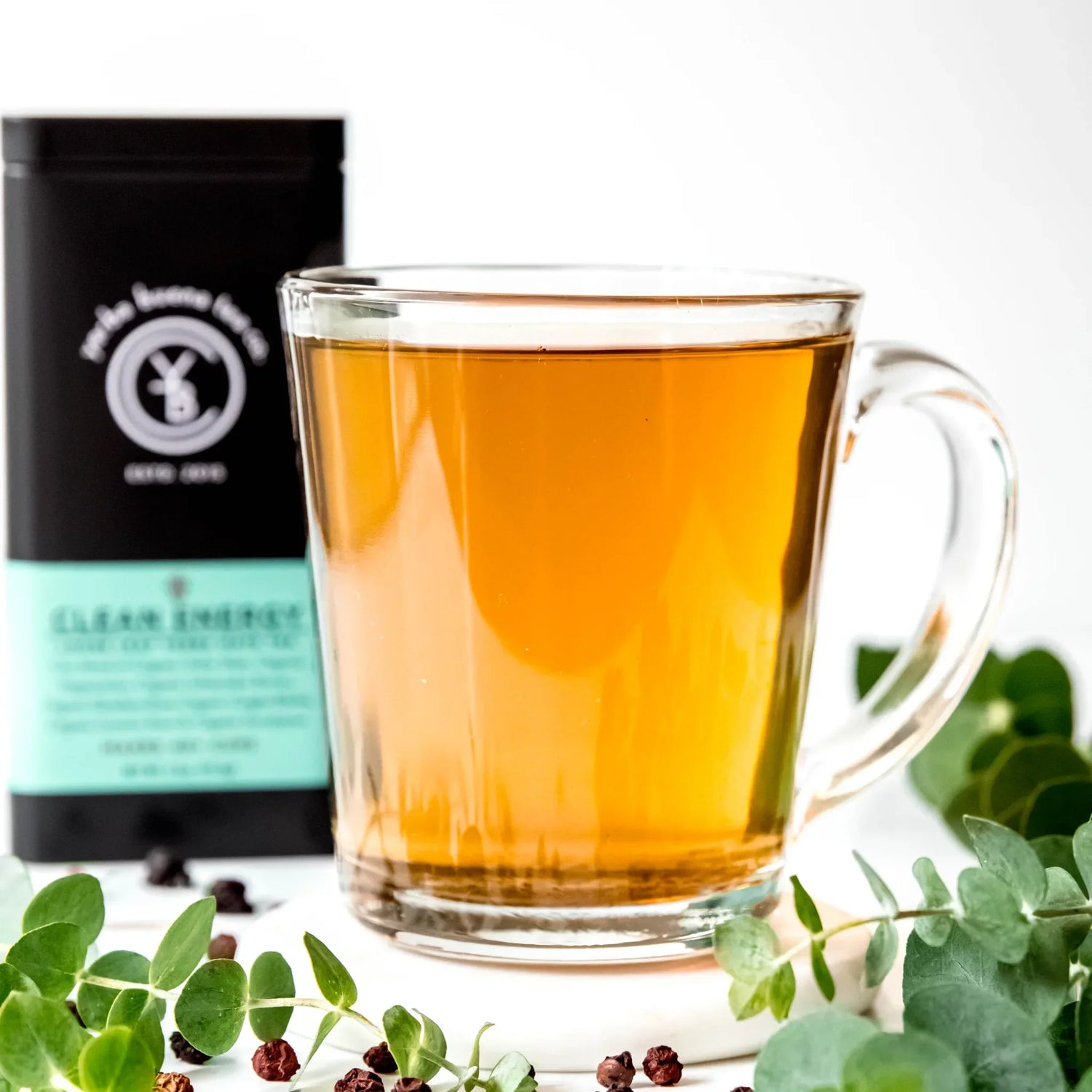
If you want a true coffee replacement that still packs a punch, look to South America. Yerba mate (the base of our Clean Energy blend) is not a tea leaf but a holly. It carries high caffeine alongside theobromine, the feel-good compound in dark chocolate, for a clean, sustained lift many athletes use for stamina. More in our guide to yerba mate.
The coffee alternative, without the buzz
Love the dark, roasted flavor of coffee but want to skip caffeine entirely? Our Herbal Coffee roasts dandelion and chicory root to mimic a dark roast, the ritual and the body without the stimulation. Browse more caffeine-free blends if that is your goal.
Frequently asked questions: tea vs coffee caffeine
Does tea have more caffeine than coffee?
By the dried leaf, tea holds more caffeine than coffee beans. By the cup, coffee wins, because you brew it hotter and use more of it. A cup of coffee (95 to 200 mg) usually beats a cup of black tea (40 to 70 mg).
Which type of tea has the most caffeine?
Among true teas, black sits highest, then oolong and green, with white tea generally lowest. Matcha runs higher than steeped green tea (around 60 to 70 mg) because you drink the whole leaf. Yerba mate, a different plant, lands near 70 to 85 mg.
How much caffeine is in green tea?
Roughly 20 to 45 mg per 8 oz cup, about a third of a coffee. Cooler water and a shorter steep keep it on the gentle end.
Is the caffeine in tea different from coffee?
The caffeine molecule is identical. What differs is the company it keeps: tea's L-theanine slows the caffeine curve, so the same milligram tends to feel steadier and calmer than it does in coffee.
What tea is the closest thing to coffee?
For strength, yerba mate or a bold Assam black tea. For the roasted flavor without caffeine, our Herbal Coffee.
Find your fuel. Browse organic yerba mate for the biggest lift, black tea for steady mornings, or read the full guide to the types of tea to see where each one sits.
0 comments