Product image 1, can be opened in a modal.
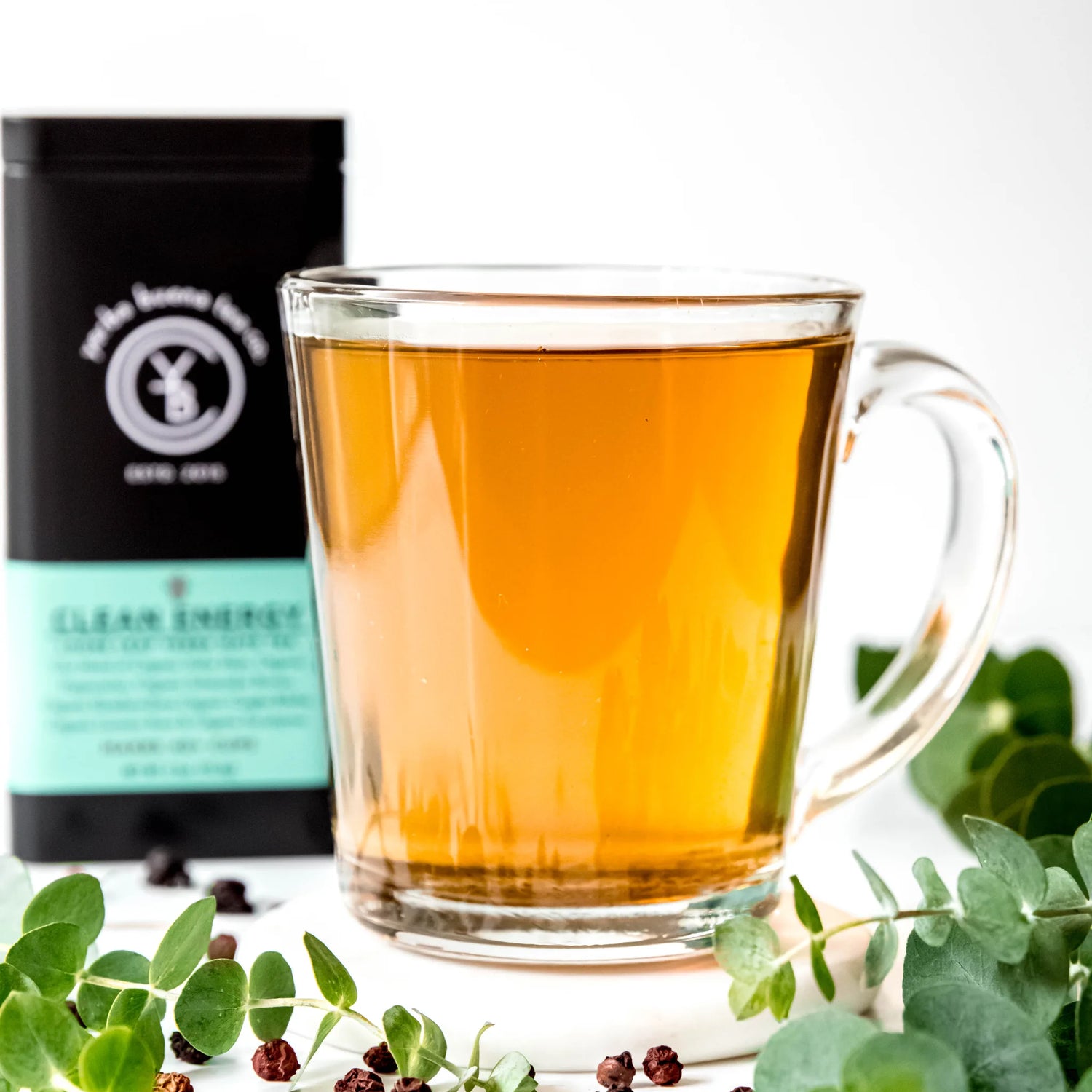
Loose leaf herbal tea blend with dried herbs and plant material scattered on white background, by Yerba Buena Tea Company.
Product image 2, can be opened in a modal.
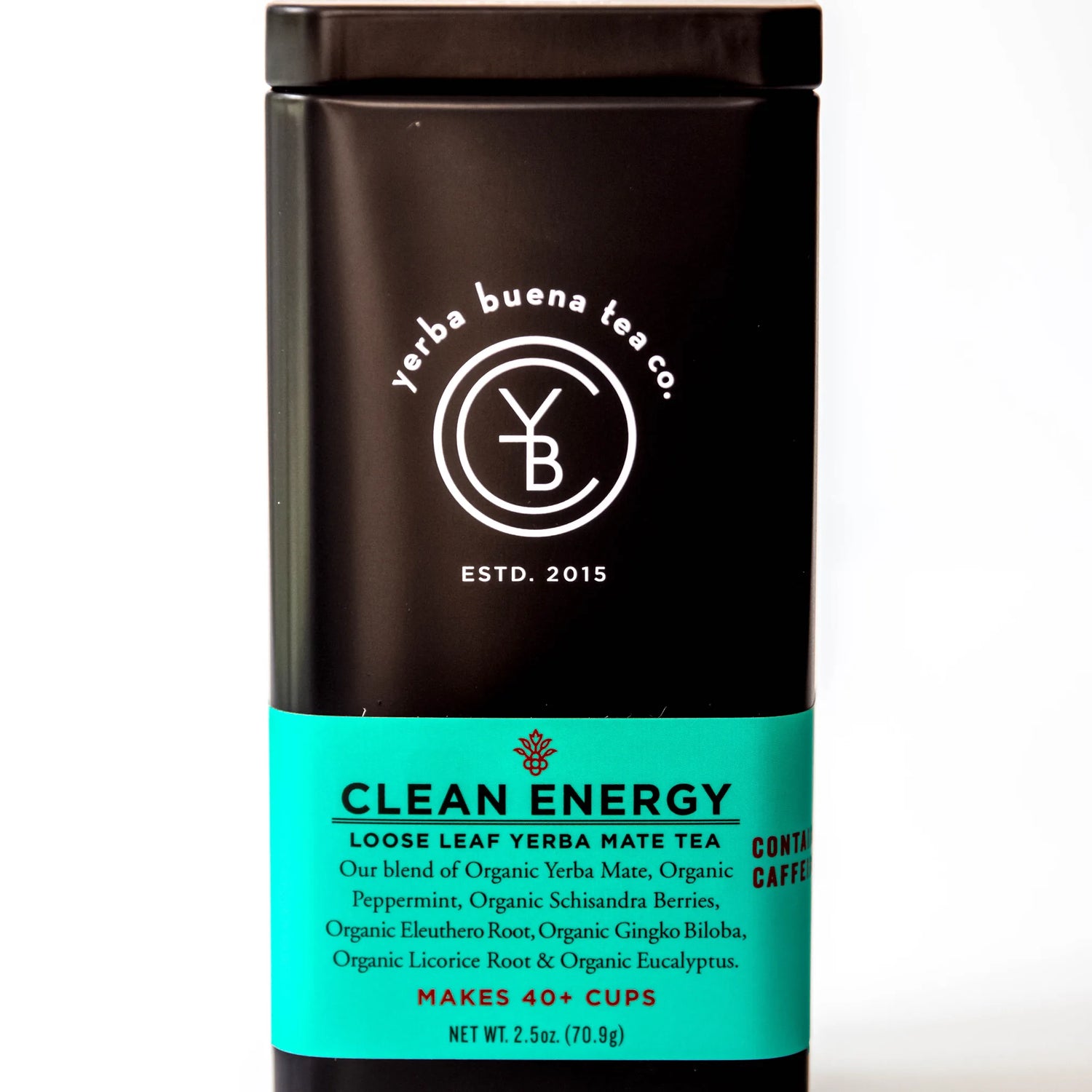
Brewed golden tea in a clear glass mug surrounded by fresh green leaves and packaging, by Yerba Buena Tea Company.
Product image 3, can be opened in a modal.
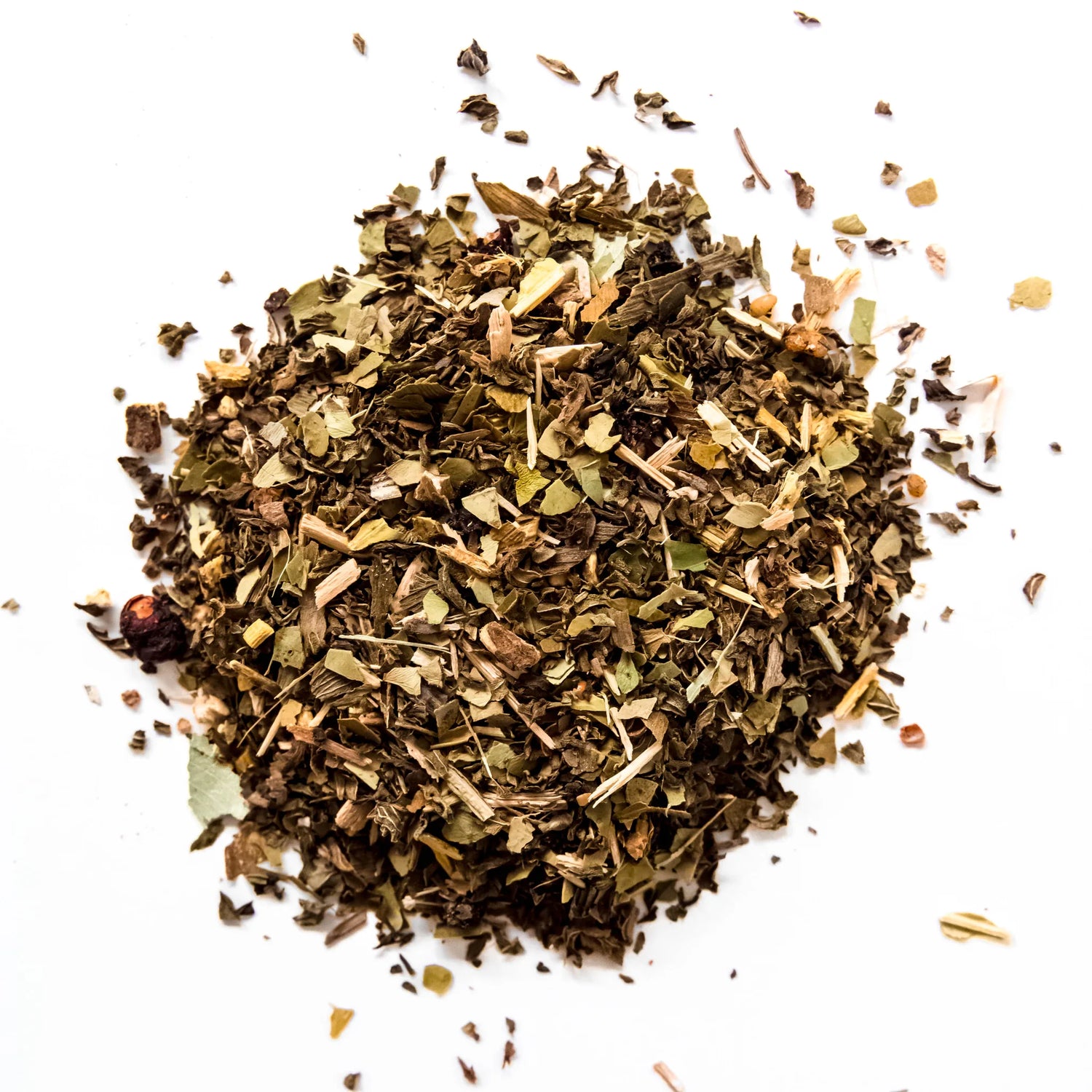
Clean Energy loose leaf yerba mate tea in dark canister with turquoise label band, by Yerba Buena Tea Company.

Organic Yerba Mate | Minty & Earthy | High Caffeine

Organic Clean Energy Yerba Mate

Blended in Oregon Mint Earthy

Brazilian Yerba Mate with peppermint, schisandra berries, and licorice root. The sustained-lift cup for the 3 PM wall and the morning that needs more than coffee.

Ingredients: Organic Yerba Mate, Organic Peppermint Leaf, Organic Schisandra Berries, Organic Eleuthero Root, Organic Ginkgo Biloba, Organic Licorice Root, Organic Eucalyptus Leaf.

Regular price $18.00 USD
Regular price Sale price $18.00 USD
Shipping calculated at checkout.
Size: Tea Tin
  • Free shipping $70+
  • Small business
  • Secure checkout
About Clean Energy

The sustained cup for the long work session.

Brazilian Yerba Mate is the base, and the base does the heavy lifting: roughly 65 to 75 milligrams of caffeine per 8-ounce cup, the range between a strong green tea and a light-roast coffee. Peppermint brightens the palate. Schisandra berries add a tart-sweet edge. Eleuthero root and ginkgo biloba deepen the herbal character, licorice root rounds the finish, and eucalyptus leaf lends a cool camphor note to the aroma. Seven ingredients, one job each. The cup tastes minty, earthy, lightly sweet, and drinks like something you'd make for a deadline, not a nap.

Why Yerba Mate drinks differently than coffee.

Yerba Mate is Ilex paraguariensis, a South American holly cultivated across Brazil, Argentina, Paraguay, and Uruguay. Gaucho tradition treats it as an all-day social drink: leaves packed into a hollowed gourd, hot water poured over, the cup passed and refilled among friends through the afternoon. The habit is built on steady sipping rather than a single jolt, and it's the habit this blend borrows. Alongside its caffeine, the leaf carries small amounts of theobromine, the alkaloid found in chocolate. Brew a pot, sip it across two hours, then re-steep the same leaves.

The herbs, and where they come from.

Eleuthero root has centuries of recorded use in Traditional Chinese Medicine, where it goes by the name ci wu jia. Ginkgo biloba is one of the oldest living tree species on the planet, with fossil relatives dating back some 270 million years and a place in Chinese tradition for more than a thousand years. Schisandra is the Chinese five-flavor berry, named for landing sour, sweet, salty, bitter, and pungent in a single taste. Peppermint and eucalyptus carry the aromatics: menthol and eucalyptol, the cooling notes you smell before the first sip.

Tasting Notes

Aroma: Bright peppermint over an earthy, grassy Mate base, with a cool camphor lift from the eucalyptus.

In the cup: Minty and vegetal up front. The Yerba Mate reads as earthy and slightly smoky, the way South American Mate traditionally does. The schisandra berries add a tart-sweet note that cuts through the middle. The licorice root rounds the finish without making the cup taste like candy.

Finish: Clean, slightly astringent, with a mint coolness that lingers. The cup leaves the palate feeling awake.

Iced: Cold-brew it for 8 hours and the mint becomes the dominant note. The earthiness softens. Drinks closer to an herbal energy drink than a traditional tea.

Why You'll Love It

Yerba Mate, the South American social stimulant: Cultivated and consumed across Argentina, Brazil, Paraguay, and Uruguay for centuries. The traditional preparation steeps the leaves in a hollowed-out gourd (also called a mate) and sips them through a filtered metal straw called a bombilla. The gourd gets refilled throughout the day, often shared in a circle, a ritual built on steady sipping over hours rather than a single caffeinated jolt. Alongside its caffeine, the leaf carries theobromine, the alkaloid found in chocolate.

Eleuthero, Ginkgo, and Schisandra, the tradition layer: Eleuthero root is a staple of Traditional Chinese Medicine, where it goes by the name ci wu jia. Ginkgo biloba is one of the planet's oldest living tree species, part of Chinese tradition for more than a thousand years. Schisandra is the five-flavor berry of Chinese tradition, named for landing sour, sweet, salty, bitter, and pungent in one taste. Old plants, long stories, and a tart-sweet depth you can taste in the cup.

Peppermint and Eucalyptus, the aromatics: Both carry volatile oils, menthol in peppermint and eucalyptol in eucalyptus, the cooling notes that reach you before the first sip. Peppermint has been Europe's after-dinner cup for centuries. Eucalyptus has scented traditions from Australia to the Mediterranean. In this blend they do the sensory work: the mint wakes the palate, the eucalyptus keeps the aroma crisp and cool.

Clean Energy loose leaf yerba mate tea in dark canister with turquoise label band, by Yerba Buena Tea Company.

Clean Energy

Regular price $18.00 USD
Regular price Sale price $18.00 USD
TeaBrazil

Organic Clean Energy Yerba Mate

Steep strong. Focus steady.

Caffeine: High
8.0 oz
Water
175°F
Temperature
1.0 tsp
Leaf
5 min
Steep Time
Re-Steep · Up to 2×
5 minutes at 175°F brings out the mint without overextracting the Mate into bitterness. The Mate base can handle a re-steep: add 2 minutes to the second infusion. Traditional gaucho preparation involves 5 to 10 refills of the same leaves throughout the day.
1
Cup

Craft Your Cup

A few notes from our teamakers.
The Deep Work Pot
Brew 2 heaping teaspoons in 16 ounces of 175°F water for 5 minutes. Strain. Sip over the course of a 2-hour work session. Re-steep the same leaves with an additional 2 minutes steep time when the pot runs out. Traditional gaucho preparation involves refilling the same leaves throughout the day; this is the desk-job version of that ritual.

Cold-Brew Energy Tonic
Place 2 tablespoons of leaves in 32 ounces of cold water. Refrigerate for 8 hours. Strain. Pour over ice with a squeeze of lime and a drizzle of honey. The cold extraction drops most of the bitterness and amplifies the mint. Drinks like a natural energy drink, closer to a tonic than a tea.

The Pre-Workout Cup
Brew 1.5 teaspoons in 8 ounces of 175°F water for 6 minutes, slightly longer than the standard brew for a stronger cup. Drink it 20 to 30 minutes before a morning run or gym session, the same way a strong cup of coffee gets used, with roughly 65 to 75 milligrams of caffeine and a cooling mint finish. Pair with a light breakfast.

Loose leaf herbal tea blend with dried herbs and plant material scattered on white background, by Yerba Buena Tea Company.

Your Questions About Clean Energy, Answered.

How much caffeine is in this compared to coffee?

Roughly 65 to 75 milligrams of caffeine per 8-ounce cup, which sits between a strong green tea and a light-roast coffee. An 8-ounce cup of drip coffee typically contains 95 to 120 milligrams. Yerba Mate also carries small amounts of theobromine, the alkaloid found in chocolate, and many drinkers describe the lift as steadier than coffee's.

What does Yerba Mate taste like?

Earthy, grassy, slightly smoky, with a vegetal bitterness that sits somewhere between green tea and a strong herbal infusion. Traditional South American Mate can be an acquired taste for people raised on softer teas. This blend softens the Mate with peppermint (which brightens the palate), schisandra berries (which add a tart-sweet note), and licorice root (which rounds the finish). If you've never had Mate before, expect something closer to a strong green tea with more body and a cooling mint aftertaste.

Is this safe to drink daily?

Yerba Mate has been consumed daily across South America for centuries as a social and work beverage, often refilled 5 to 10 times throughout the day. That said, high-caffeine products are not right for everyone. If you are pregnant, nursing, have a heart condition, or are sensitive to stimulants, consult a qualified healthcare practitioner before adding this to your routine. Licorice root in large quantities can affect blood pressure; the amount in this blend is culinary-level. When in doubt, ask your provider. They know your situation.