In the United States, we use the word "tea" as a catch-all for anything we steep in hot water. Robust English Breakfast, soothing Peppermint, it all gets called tea.
Ask a botanist (or a tea sommelier), though, and they'll tell you there's a real difference. It might seem like a technicality, but knowing the difference between "True Tea" and "Herbal Tea" is actually the secret to brewing a better cup, because they require different water temperatures and steeping times.
At Yerba Buena Tea Co., we celebrate both. Here's what's in your mug.
The "true" tea
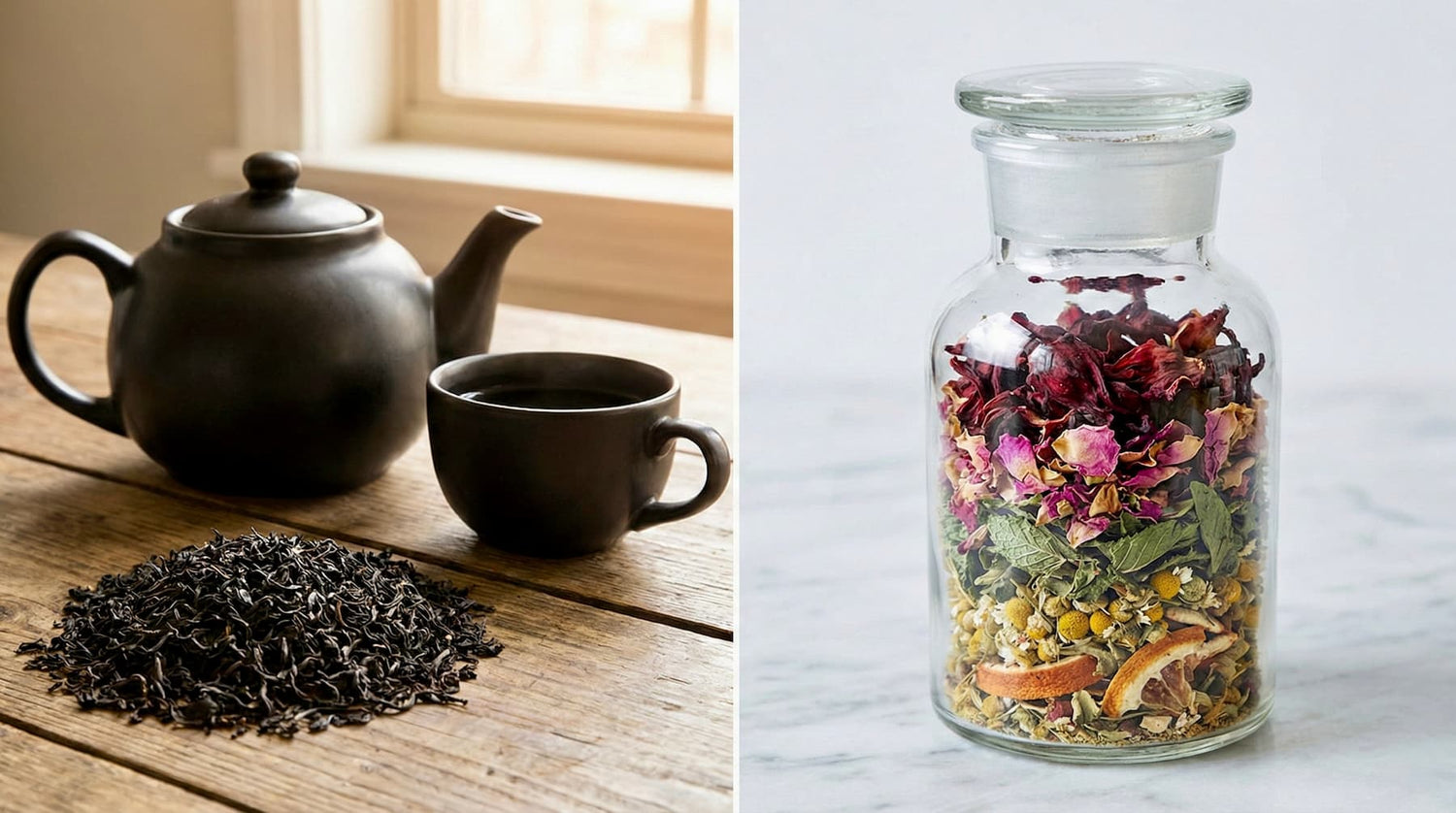
As we covered in our guide to the 5 Types of Tea, "true tea" must come from one specific plant species: Camellia sinensis.
This evergreen shrub gives us every Black, Green, White, Oolong, and Pu-erh tea. If the leaves in your cup came from this plant, it's tea. These teas naturally contain caffeine and antioxidants called flavonoids.
The "herbal" infusion (tisane)
If you brew anything else, roots, flowers, barks, seeds, or spices, you're technically drinking a Tisane (pronounced ti-zahn). In the industry, we also call these "Herbal Teas" or "Botanical Infusions."
Because tisanes skip the tea plant entirely, they're almost always naturally caffeine-free. We source organic botanicals from all over the world to create our herbal blends:
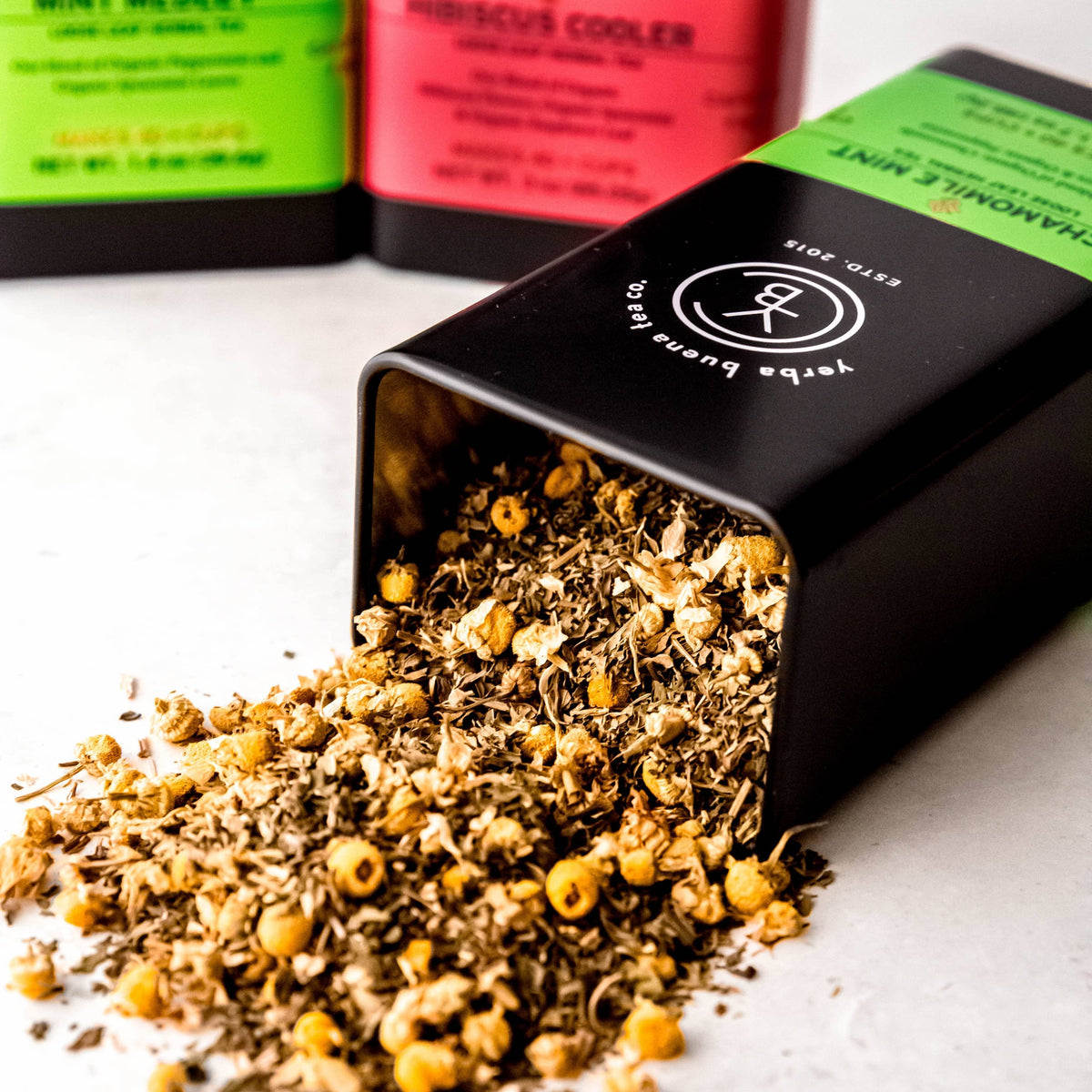
- Flowers: Chamomile, Hibiscus, Rose, Lavender. (Found in Four Flowers).
- Leaves: Peppermint, Spearmint, Raspberry Leaf, Lemon Balm. (Found in Refresh).
- Roots: Ginger, Turmeric, Licorice, Valerian. (Found in Turmeric Lemon Ginger).
- Seeds/Spices: Fennel, Cardamom, Fenugreek. (Found in Tummy Bliss).
Why the distinction matters
We aren't trying to be pedantic! Knowing if you're drinking a Tea or a Tisane changes how you should brew it.
True Tea (especially Green and White) is delicate. It has tannins that can turn bitter if the water is too hot or the steep goes too long.
Herbal Tisanes are tough. Roots and dried fruits need heat to release their flavor and essential oils. You generally want boiling water and a long steep time for herbals to get the full wellness benefits.
Cheat sheet: Tea vs. Tisane
| Category | True Tea | Herbal Tisane |
|---|---|---|
| Plant Origin | Camellia sinensis | Various (Mint, Chamomile, Rooibos) |
| Caffeine? | Yes (Always) | No (With rare exceptions like Mate) |
| Water Temp | 175°F - 200°F | 212°F (Rolling Boil) |
| Steep Time | 2-5 Minutes | 5-10+ Minutes |
Sommelier’s note: the exception
There is one famous "herbal" tea that contains caffeine: Yerba Mate. It comes from a holly tree in South America, not the tea plant, so it's technically a tisane, but it packs a caffeinated punch rivaling coffee! Check out our Yerba Mate Collection for a clean energy boost.
The best of both worlds
At our Oregon blending facility, we love breaking the rules. Some of our favorite blends pull from both sides of the line.
For example, our Rose & Green blends true Green Tea with organic Rose petals (a tisane ingredient). You get the gentle energy of tea with the aromatic beauty of a flower. Leaf or flower, choosing organic ensures your cup is pure, delicious, and restorative.