By the Yerba Buena Tea Co. team. Last updated September 2026.
If you reached for your usual Guayakí yerba mate and found a yellow can that now reads Yerba Madre, you're not imagining things, and you're not alone.
The short answer: Yerba Madre is the new name for Guayakí's yerba mate brand, announced in May 2025 as part of a regenerative-mission rebrand. The plant inside the can is the same. What changed is the name on the yellow can, and the story the company wants that name to tell.
The one-line difference
'Yerba mate' is the plant. 'Yerba Madre' is the brand formerly known as Guayakí. The leaf did not change. The label did.
Why does a name change deserve a whole post? Mostly because you shouldn't have to wonder whether the new can is the same tea (it is). The rebrand also signals a real move toward regenerative farming, which is worth understanding if you choose brands by their values. And if you're simply mate-curious, the name mix-up is as good a reason as any to learn what the plant actually is.
The story behind the switch is a good one, and it doubles as a quick lesson in what yerba mate really is and where whole-leaf, organic mate fits into the picture.
What happened to Guayakí?
On May 2, 2025, Guayakí Yerba Mate announced that it was changing its name to Yerba Madre. After nearly 30 years, the company decided its original name no longer told the whole story.
'Guayakí' came from the brand's very first partnership, formed in 2002 with the Aché people of Paraguay. Beautiful origin, but the business has grown a lot since then. Today it works with more than 250 farming families across Paraguay, Argentina, and Brazil. The team wanted a name that honored all of those communities, and the plant itself. According to the company's announcement, 'Yerba Madre' means 'Mother Herb,' a tribute to Mother Earth and to the Indigenous knowledge at the root of yerba mate culture.
The famous yellow can is staying, refreshed with original design touches. Cans, bottles, and packaging rolled over to the new name through the rest of 2025. So if you're seeing both names in the wild for a while, that's the transition in progress, not two different products.
Yerba Mate vs Yerba Madre: is the product different?
This is the question we hear most, so let's be direct: no, the product is not different. The rebrand changed the name on the label, not the leaf in the bag. If you loved Guayakí's mate, you'll recognize Yerba Madre's mate, because it's the same plant from the same kind of partner farms.
The first product to launch under the Yerba Madre name was its Traditional Air Dried Yerba Mate loose leaf, which became the first yerba mate in the world to earn Regenerative Organic Certified Gold status. More on what that means in a moment. The point for now: this was a rebrand of name and mission, not a reformulation of the tea.
It helps to remember that 'yerba mate' was never a brand to begin with. It's a plant, the way 'green tea' or 'chamomile' is a plant. Plenty of companies sell yerba mate, us included. Yerba Madre is one well-known brand of it. The rebrand changed that one brand's name, and nothing about the herb you can buy from anyone else.
What is yerba mate, exactly?
Quick primer, because the name confusion is a great excuse to fall in love with the plant.
Yerba mate (Ilex paraguariensis) is a species of holly native to the rainforests of South America. Its leaves are dried, aged, and steeped like tea, and it is the traditional daily drink of Argentina, Uruguay, Paraguay, and southern Brazil, where it is shared from a gourd through a metal straw called a bombilla.
What makes mate special is its energy. It carries caffeine alongside two gentler stimulants, theobromine (the feel-good compound also found in chocolate) and theophylline. Many people describe the result as a smooth, focused lift without the jittery spike or hard crash of coffee. We went deep on this in What is Yerba Mate? The Clean Energy Alternative to Coffee, and we charted exactly how its caffeine stacks up against coffee and tea in Caffeine 101: Coffee vs. Tea vs. Yerba Mate.
One more naming note, since it comes up: yerba mate is not the same as yerba buena, the wild mint that inspired our own name. If that one trips you up too, we untangled it in Yerba Buena vs. Yerba Mate.
Why 'Madre'? The regenerative mission behind the name
The new name carries more than sentiment. It points at the thing the company most wants to be known for now: regenerative agriculture.
Most farming, even careful organic farming, works hard to do less harm. Regenerative farming aims higher. It tries to leave the land better than it found it: rebuilding soil, protecting the rainforest canopy that wild mate grows under, and supporting the farmers and communities who tend it. The Regenerative Organic Certified standard rolls those ideas (soil health, animal welfare, and farmer fairness) into one of the most rigorous labels in food. Yerba Madre earning ROC Gold on its loose leaf is a genuine milestone for the category, and we're happy to give credit where it's due.
'Yerba Madre,' Mother Herb, is meant to carry that mission in the name itself. It's a generous, plant-first idea, and the kind of thing we're always glad to see in this corner of the tea world.
How Yerba Buena Tea Co. fits in
Here's where we tell you who we are, because the honest answer to 'should I switch?' is 'it depends on what you want.'
We're a small, woman-owned tea company in Oregon. We've always been yerba mate people, and we've always been organic, whole-leaf loose tea. We're not a canned, ready-to-drink brand, and we're not trying to be. The two things do different jobs. A cold can from the cooler is convenience. A pot of loose-leaf mate at your kitchen counter is a ritual, and usually a better value per cup.
We also keep our ingredient lists short and real. We blend with certified organic botanicals and we don't use 'natural flavors,' a catch-all term we explain in What Are 'Natural Flavors' in Tea. And because we sell whole leaf rather than tea bags or pre-canned mixes, you taste more of the plant, which we make the case for in Loose Leaf vs. Tea Bags.
If the rebrand made you curious about drinking more mate, here's the loose-leaf way to do it. Our Organic Yerba Mate collection is three blends, each built around the leaf:
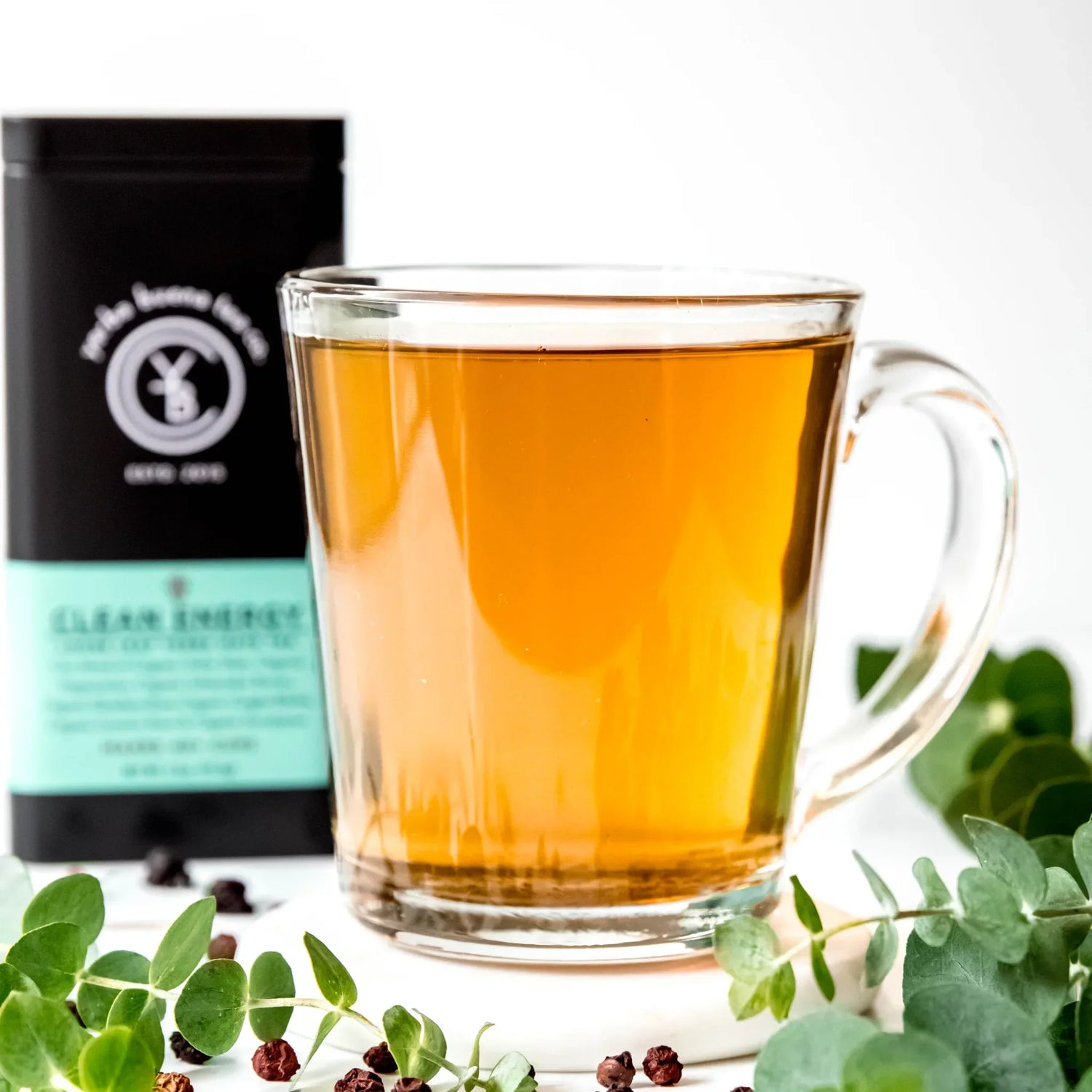
- Clean Energy pairs organic yerba mate with peppermint and energizing botanicals like schisandra, eleuthero, and ginkgo. This is our straight-ahead morning cup.
- Chocolate Mint Mate blends mate with roasted cacao, carob, peppermint, and vanilla. Think of it as a grown-up peppermint mocha that happens to give you a lift.
- Slim Mint combines green tea, yerba mate, and mint for a brighter, lighter energy.
We blend only with certified organic ingredients, though Yerba Buena Tea Co. isn't itself Regenerative Organic Certified (that badge is Yerba Madre's). What we offer is a different, complementary thing: small-batch, organic, whole-leaf mate blends from a tiny Oregon team that answers its own email.
Frequently asked questions
Why did yerba mate change its name?
The brand Guayakí changed its name to Yerba Madre in May 2025. After nearly 30 years and more than 250 farming partners across South America, the company wanted a name that reflected all of those communities and the plant itself, rather than its single first partnership. The plant called 'yerba mate' didn't change names. Only that one brand did.
Is Yerba Madre the same as yerba mate?
Not quite, and the difference matters. Yerba mate is the plant (Ilex paraguariensis). Yerba Madre is a brand that sells yerba mate, the one formerly called Guayakí. Many companies sell yerba mate, so 'Yerba Madre' and 'yerba mate' are not interchangeable.
What happened to Guayakí yerba mate?
Nothing happened to the tea. Guayakí simply rebranded as Yerba Madre on May 2, 2025. Same company, same yerba mate, same yellow can, new name and a sharpened focus on regenerative farming.
Is Yerba Madre the same product as Guayakí?
Yes. The rebrand changed the name and packaging, not the recipe. If you liked Guayakí's mate, Yerba Madre's mate is the same plant from the same network of partner farms.
What does 'Yerba Madre' mean?
'Yerba Madre' translates to 'Mother Herb.' It honors Mother Earth and the Indigenous knowledge behind yerba mate, and it reflects the company's regenerative mission.
Is Yerba Madre still organic?
Yes. In fact, its first loose-leaf product under the new name became the first yerba mate to earn Regenerative Organic Certified Gold status, a step beyond standard organic that also accounts for soil health and farmer fairness.
Does Yerba Buena Tea Co. sell yerba mate?
We do. We offer three organic, whole-leaf yerba mate blends (Clean Energy, Chocolate Mint Mate, and Slim Mint) in our Yerba Mate collection. We're a separate, Oregon-based company, not affiliated with Yerba Madre or Guayakí.
What is the difference between canned yerba mate and loose-leaf yerba mate?
Canned, ready-to-drink mate is brewed, sweetened, and sealed for grab-and-go convenience. Loose-leaf mate is the dried whole leaf that you steep yourself, which gives you control over strength and sweetness, more cups per dollar, and a fuller taste of the plant. Both are real yerba mate. They just fit different moments.
However you take your mate, hot from a gourd or cold from a can, you're part of a very old, very good tradition. If you want to drink it whole-leaf and organic, our Yerba Mate collection is a lovely place to start.