By the Yerba Buena Tea Co. team. Reviewed and updated September 2026. For education, not medical advice (full note at the end).
The short answer: for most healthy adults, kava is generally considered safe in moderation, especially when it's noble-variety root brewed with water, the traditional way. Its everyday side effects are usually mild (drowsiness, headache, dizziness, and stomach upset). The serious concern is rare but real. Kava has been linked to liver injury, so if you have liver problems, drink alcohol regularly, take sedatives, or are pregnant, you should skip it. With kava, quality and preparation are everything.
Kava (Piper methysticum) is having a moment, in Portland kava bars and functional wellness teas alike. People are rediscovering what Pacific Islanders have known for some 3,000 years: it's one of nature's most effective tools for relaxation. With that popularity comes real questions about safety, and because we use organic kava in our Good Night and Muscle Ease blends, we'd rather give you the honest, sourced picture than look away from it.
What is kava?
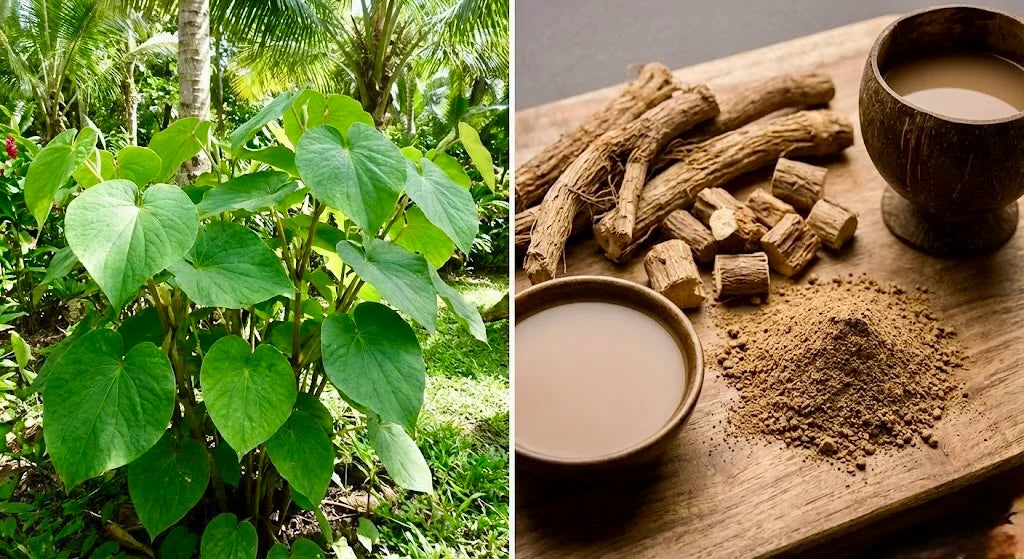
Kava is a shrub native to the South Pacific, including Vanuatu, Fiji, and Tonga. The root is ground and mixed with water into a ceremonial drink used for relaxation and connection. Unlike tea (Camellia sinensis), kava has no caffeine. Its active compounds are kavalactones, which produce calming, mildly numbing, and gently euphoric effects.
Kava side effects: what to expect
Most people who drink properly made kava notice only mild, short-lived effects. A few are worth knowing before you start.
Common and mild: drowsiness or grogginess, headache, dizziness, and stomach upset or nausea, more likely at higher doses. A brief numb or tingling feeling on the lips and tongue is normal and harmless. That's the kavalactones at work.
With heavy, long-term use: a reversible skin condition called kava dermopathy can develop, leaving skin dry, scaly, or yellowish. It clears once you cut back. Very heavy, prolonged use has also been linked to changes in blood-cell counts.
Rare but serious: kava has been associated with liver injury, including hepatitis and, in rare cases, liver failure. Stop immediately and see a doctor if you notice yellowing of the skin or eyes, dark urine, severe abdominal pain, or unusual fatigue. The National Center for Complementary and Integrative Health (NCCIH) still flags this risk, and the U.S. FDA issued a consumer advisory about it in 2002.
The big question: kava and liver health
If you search 'is kava safe,' liver toxicity is the first concern you'll meet. The honest answer holds two true things at once.
On one hand, a 2016 review by the World Health Organization and FAO re-examined the early liver-injury reports and concluded that kava carries an 'acceptable level of risk' when it's prepared the traditional way, water extraction using the root of a noble plant. The early cases were strongly associated with two avoidable problems:
- Poor-quality material: using stems and leaves (the aerial parts) instead of the root. These contain alkaloids like pipermethystine that can be toxic.
- Non-traditional extracts: using ethanol or acetone to concentrate kavalactones far above natural levels.
On the other hand, NCCIH and the FDA still caution that severe liver injury, while rare, has been reported, and not only with bad material. So the responsible read is 'kava is reasonably safe for healthy adults when it is noble root, water-brewed, and used in moderation, and genuinely risky for some people,' not 'kava is harmless.' If you have any liver condition or unexplained liver-test changes, avoid it. (Source: FAO & WHO kava safety review, 2016.)
Kava vs. alcohol: how it works
People compare kava to alcohol because both relax you socially, but they behave differently in the body.
- Alcohol acts broadly on the central nervous system, often dulling thinking and coordination.
- Kava works mainly on specific GABA-A receptors. Studies suggest it can ease anxiety without the heavy cognitive impairment of alcohol.
- The morning after: kava is less likely to cause a dehydration-style hangover, though high doses can leave you groggy or tired the next day.
One rule matters most here: never mix kava with alcohol. Both are processed by the liver, and together they add avoidable stress to it.
Is kava addictive?
Kava is not considered physically addictive the way nicotine or opioids are, though heavy, daily, long-term use can build dependence-like habits. Some regular drinkers describe the opposite of tolerance, a so-called 'reverse tolerance,' where they seem to need less over time, not more. This is widely reported in the kava community but is anecdotal and not established by clinical research, so treat it as folklore, not fact.
Who should avoid kava
Kava is a potent botanical. Treat it with respect, and skip it entirely if any of these apply:
- Liver concerns: any liver disease or unexplained liver-test abnormalities.
- Drinking alcohol: do not combine the two.
- Medications: talk to your clinician first if you take benzodiazepines, anticonvulsants, or other sedatives. Kava can amplify them.
- Pregnancy and nursing: avoid it, out of an abundance of caution.
- Before driving or machinery: kava can cause drowsiness.
The 'Noble' difference
Sourcing is our safety priority. We use noble kava root only. Noble varieties are the traditional cultivars consumed safely for centuries. We avoid 'tudei' (two-day) varieties, which are cheaper but higher in flavokavains, compounds tied to adverse effects and lingering grogginess, and we use the root only, never the stems or leaves.
The verdict
Sourced correctly (noble root, water-brewed) and used in moderation by healthy adults, kava is generally regarded as safe, and it's a genuinely lovely way to wind down. It stays a quiet favorite in our Good Night sleep blend and our No Worries calm blend. If you want the deeper story on why we pair it with chamomile, see our kava for sleep guide, and for how it compares to another calming root, read Ashwagandha vs. Kava.
Frequently asked questions about kava
Is kava safe?
For most healthy adults, yes, in moderation, when it is noble-variety root brewed with water. The main risk is rare liver injury, so people with liver problems, anyone drinking alcohol or taking sedatives, and those who are pregnant or nursing should avoid it.
What are the side effects of kava?
Usually mild: drowsiness, headache, dizziness, and stomach upset, plus a harmless numb tongue. Heavy long-term use can cause dry, scaly skin (kava dermopathy). Rarely, kava has been linked to serious liver injury.
Is kava bad for your liver?
It can be, rarely. Severe liver injury is uncommon and was strongly tied to poor-quality material (stems and leaves) and concentrated extracts, but NCCIH and the FDA still flag the risk. Use noble root, brew with water, never mix with alcohol, and avoid kava entirely if you have any liver condition.
Is kava addictive?
It is not physically addictive like nicotine or opioids, though heavy daily use can become habit-forming. Used occasionally and in moderation, it carries low dependence risk.
Can you drink kava every day?
Occasional or moderate use is the safest pattern. Daily, heavy, long-term use raises the odds of side effects like kava dermopathy, so most guidance suggests keeping it to moderate amounts and taking breaks.
What should you not mix with kava?
Alcohol, first and foremost, since both stress the liver. Also avoid combining kava with sedatives, benzodiazepines, or anticonvulsants without medical guidance, because it can intensify their effects.
Disclaimer: This article is for education, not medical advice, and is not intended to diagnose, treat, or cure any condition. Talk with your healthcare provider before starting any new herbal routine, especially if you have a health condition or take medication.