
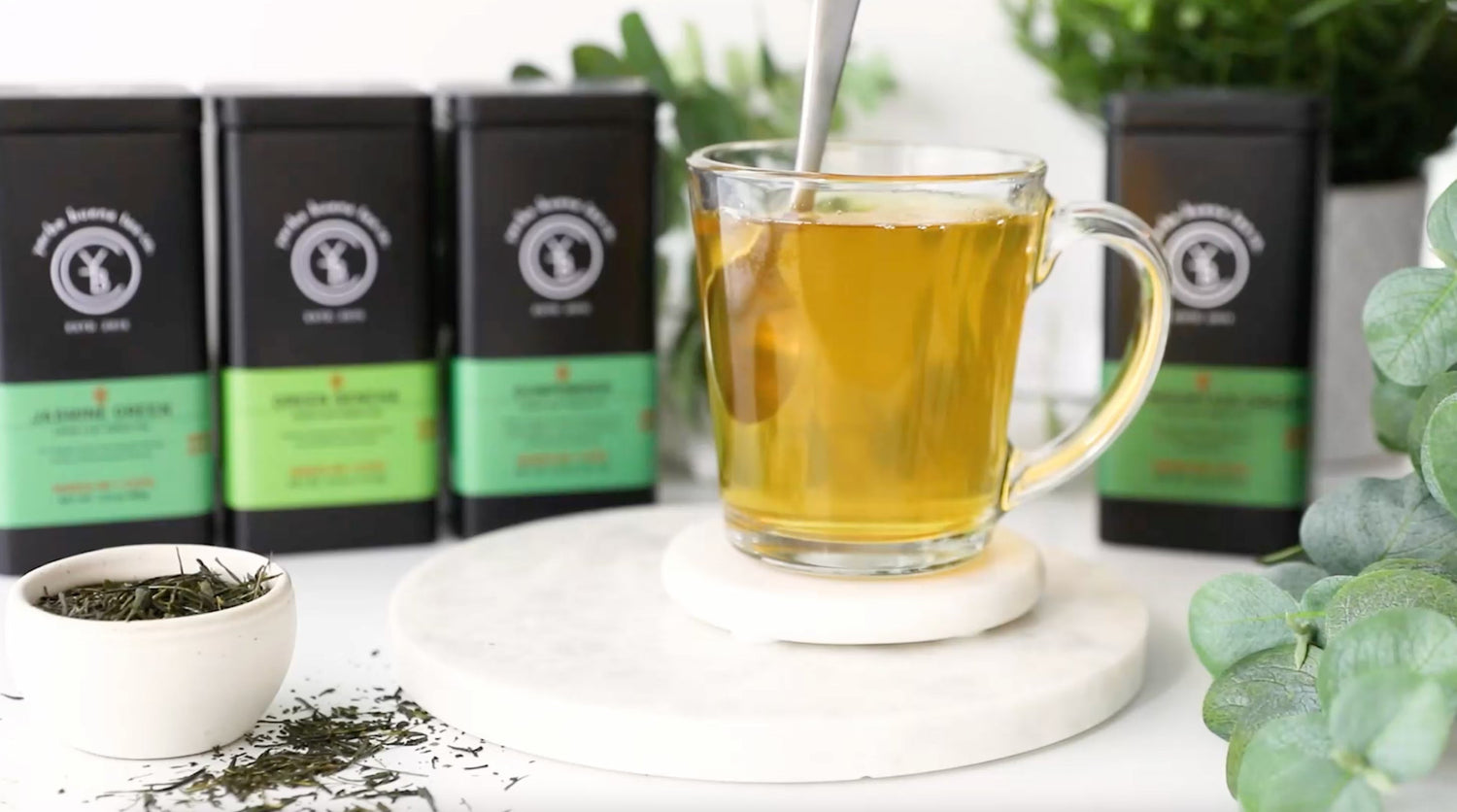
By the Yerba Buena Tea Co. team. Updated June 2026.
The short answer: green tea turns bitter for two reasons, water that is too hot and steeping too long. Green leaves are delicate, so boiling water scorches them and floods the cup with bitter tannins. Brew at 175°F for 2 to 3 minutes and the same tea turns sweet, grassy, and smooth. Cooler water, less time, better cup.
We hear it all the time in our shop: 'I want to be healthy, but I just can't drink green tea. It is too bitter.' Here is the good news: you don't hate green tea. You are just burning it.
Green tea is the most delicate of all the types of tea. Brewed correctly, it should taste sweet, vegetal, nutty, and incredibly smooth. If your cup makes you pucker, something went wrong in the brewing, and it is an easy fix.
The culprit: boiling water
The number-one mistake is treating green tea like black tea. Black tea leaves are fully oxidized and hardy, so they can handle (and need) boiling water at 212°F to open up.
Green tea leaves are fresh and delicate. Pouring boiling water on them is like cooking spinach with a flamethrower. It scorches the leaves instantly and releases a rush of tannins, the natural compounds that taste astringent, all at once, drowning out the tea's natural sweetness.
The magic number: 175°F
To coax the sweet, complex flavors out of green tea without the bitterness, you need cooler water, around 175°F to 180°F.
No thermometer? No problem. Boil your water, take the kettle off the heat, open the lid, and let it sit for about 5 minutes before pouring. That simple pause is the difference between a bitter cup and a blissful one.
The second culprit: time
Green tea is a fast extractor. An herbal tea might need 7 minutes to show its full character, but green tea gives its best quickly.
- Standard green tea: steep 2 to 3 minutes.
- Delicate Japanese greens: sometimes 1 minute is plenty.
Leaving the bag or infuser in your mug while you sip, the classic over-steep, will pull out a bitter, dry, mouth-puckering finish every time.
How to choose a forgiving green tea
If you are ready to try again, quality matters. Tea bags are often filled with 'dust,' the broken particles that dump bitterness all at once. Whole loose leaf releases its flavor slowly and smoothly. Three forgiving styles to start with:
- The classic savory: Sencha. A traditional steamed Japanese green. At 175°F it tastes like fresh spring grass and sweet umami.
- The floral gateway: Jasmine Green. We scent organic green tea with real jasmine blossoms, and the floral sweetness softens the earthiness. A perfect first green tea.
- The comfort cup: Genmaicha. Known as 'popcorn tea,' it blends green tea with toasted brown rice for a warm, nutty, forgiving cup. Browse the full green tea collection for more.
The cold brew trick
Still worried about bitterness? Cold brew it. Cold water draws out the sweetness slowly while leaving behind most of the bitter tannins, and it pulls less caffeine too. Put loose leaves in a pitcher of cold water in the fridge overnight, and you will wake up to the smoothest, sweetest green tea you have ever tasted. We walk through the ratios and timing in our guide to making iced tea.
Frequently asked questions
Why is my green tea bitter?
Almost always one of two things: your water was too hot, or you steeped too long. Green leaves are delicate, so boiling water and long steeps release a flood of astringent tannins. Cooler water (175°F) and a shorter steep (2 to 3 minutes) fix it.
What temperature should I brew green tea?
Around 175°F to 180°F, well below boiling. No thermometer? Boil, then let the open kettle rest about 5 minutes before you pour.
How long should I steep green tea?
2 to 3 minutes for most green teas, and as little as 1 minute for delicate Japanese greens like sencha. Pull the leaves out when the timer goes; leaving them in is the most common cause of bitterness.
Is green tea supposed to be bitter?
No. Good green tea, brewed right, is sweet, grassy, and smooth with at most a gentle edge. Harsh, puckering bitterness is a brewing problem, not the tea being 'authentic.'
How do I fix green tea that is already bitter?
You cannot un-bitter a finished cup, but you can rescue the session: add a splash of cool water to dilute it, or cold brew the same leaves next time. Then drop your water temperature and steep time on the next pour.
Why is bagged green tea so bitter?
Most tea bags hold broken 'dust' and fannings with huge surface area, so they release tannins fast and bitter. Whole loose leaf extracts more slowly and gently, which is why the same variety tastes smoother loose.
That is the whole secret: cooler water, less time, whole leaf. Get those three right and green tea stops being the cup you tolerate and becomes the one you reach for.

0 comments