By the Yerba Buena Tea Co. team. August 2026.
The quick version: steep 1 tablespoon of Houjicha in ¾ cup of just-boiled water for 3 minutes. Stir in a tablespoon of honey while the tea is hot, then top with ½ cup of frothed milk. Toasty, caramel-smooth, and naturally low in caffeine. The full recipe card is just below.
The tea everyone is suddenly asking about
Hojicha is a Japanese green tea that gets roasted after harvest, and the roast changes everything. Grassy turns toasty and bright turns caramel. The brewed cup pours a warm amber-brown that looks more like a light coffee than a green tea, and it drinks like the flavor of roasted hazelnuts learned to relax.
The story starts in 1920s Kyoto, where a tea merchant began roasting unsold leaves and stems over charcoal rather than letting them go to waste. The thrift experiment became a beloved style of its own, the everyday evening tea of Japanese households. A century later it is having its moment here, and honestly, we get why. If matcha is the focused morning, hojicha is the exhale after.

Hojicha or houjicha?
Both, happily. They are two romanizations of the same Japanese word, ほうじ茶, where “hoji” means roasted and “cha” means tea. Our tin says Houjicha. Your search bar probably says hojicha. Either spelling lands you the same toasty cup.
Why boiling water works here
Here is the part that surprises green tea drinkers: you can pour water straight off the boil. Delicate greens like sencha turn bitter when scalded, which is the mistake behind most bitter green tea. Roasting changes the leaf's chemistry, so hojicha shrugs off the heat and rewards it with deeper toast. At latte strength, 3 minutes is the sweet spot. If you want it bolder under the milk, add an extra half tablespoon of leaf rather than extra time.

Sweeten while it's hot
Honey and roasted tea were made for each other, the same toasted-sugar family of flavors meeting in the cup. Stir it into the hot tea before the milk goes in so it dissolves completely. The recipe calls for a tablespoon. If you take your lattes lighter, start with a teaspoon and taste your way up.
The froth
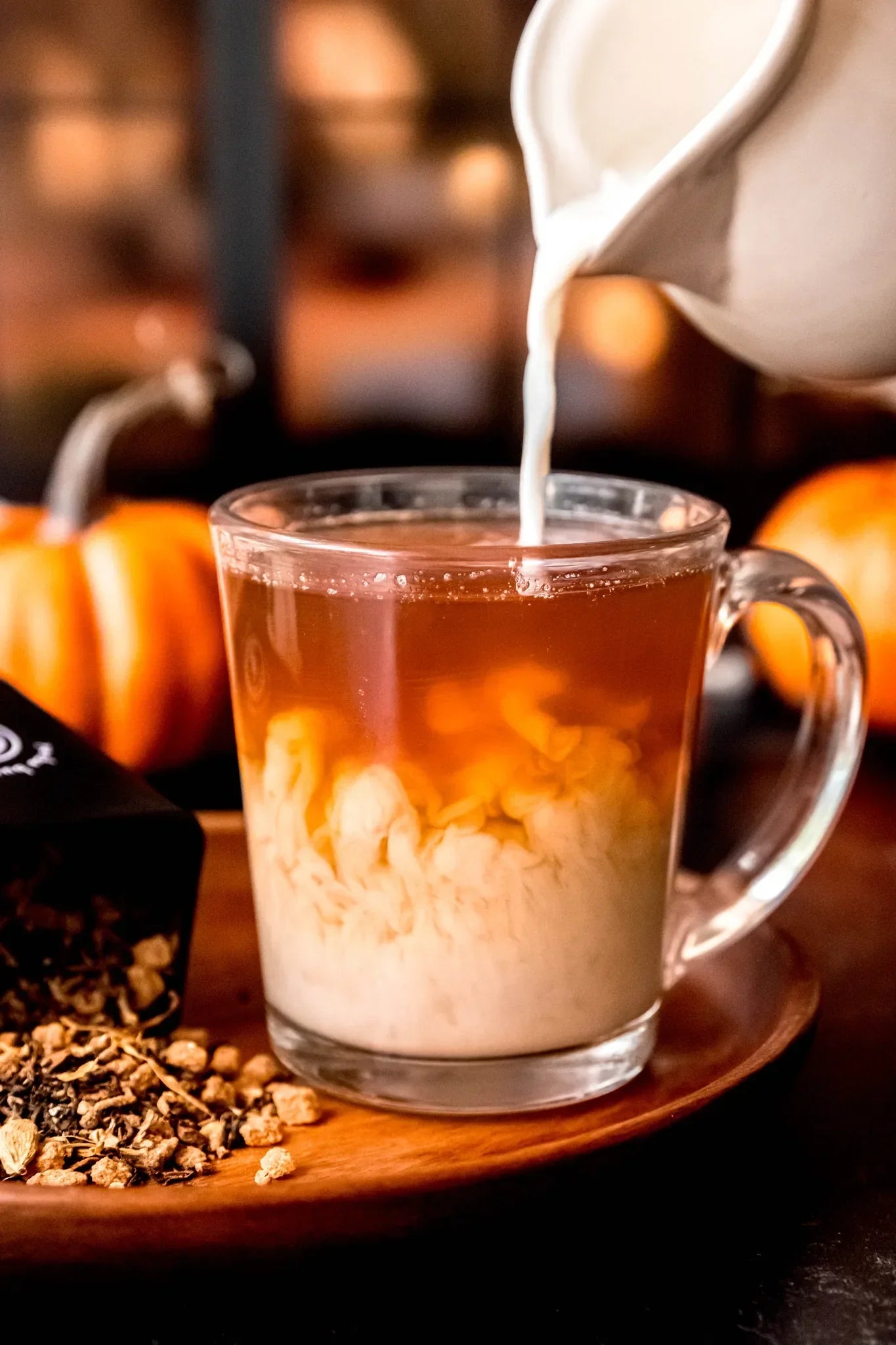
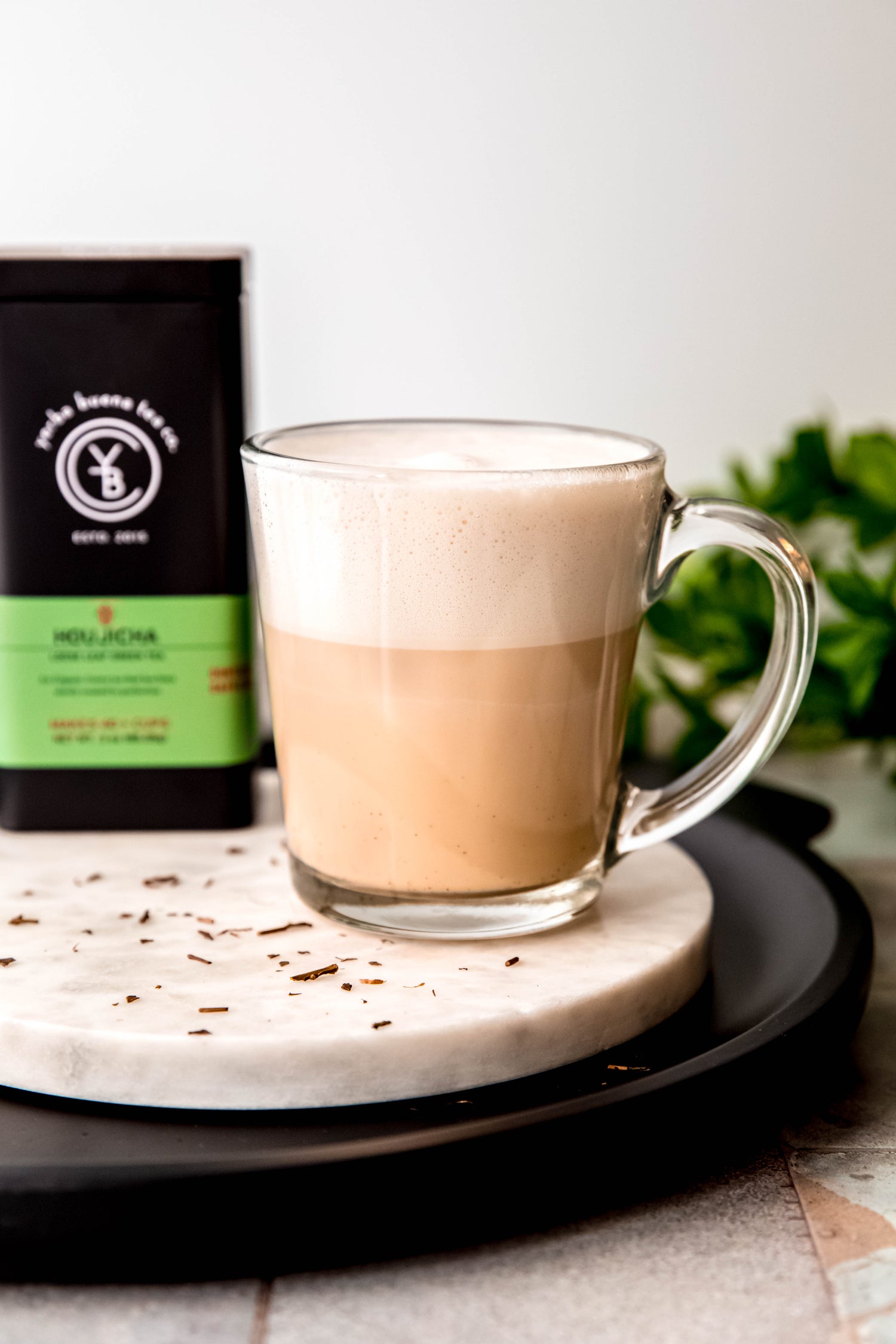
Froth ½ cup of milk and pour it slowly over the sweetened tea. Barista oat milk brings a gentle sweetness that flatters the roast. Whole dairy gives more body and a taller foam cap. Watch the pour in a clear glass and you get the whole show: caramel below, cream above, and that marbled moment in between.

Make it iced
Brew the same 3 minutes, stir in the honey hot, then chill the tea completely before it meets ice. Cold tea over cold ice keeps the flavor at full strength, so give it 20 minutes in the refrigerator, pour over a full glass, and top with cold milk. The toasty notes carry beautifully cold, which is part of why this drink refuses to stay a winter thing.
If you love this cup
Two neighbors in the roasted family are worth meeting. Our Green Fusion blends houjicha with mint for a cooler finish, and Genmaicha pairs green tea with toasted rice for the same nutty comfort in a lighter cup. Both live in the green tea collection. Hojicha sits on the low end of the caffeine scale, and our tea vs. coffee caffeine chart shows exactly where, which makes this the latte that still lets you sleep. And if the frothed milk is your favorite part, the London Fog does the same thing with Earl Grey.

The full recipe, with the iced timing in the notes, is in the card below.
Frequently asked questions
What is hojicha?
Hojicha is Japanese green tea that has been roasted, traditionally over charcoal, which turns the flavor toasty, nutty, and gently caramel with very little bitterness. It originated in 1920s Kyoto as a way to use unsold leaves and stems, and it brews a warm amber-brown cup.
What is the difference between hojicha and matcha?
Both come from the same plant, Camellia sinensis. Matcha is shade-grown green tea ground into a bright green powder and whisked whole into water. Hojicha is roasted leaf, steeped and strained like any loose tea, with a toasty flavor and a fraction of matcha's caffeine. Matcha drinks like espresso. Hojicha is closer to a mellow pour-over.
How much caffeine is in hojicha?
Hojicha is naturally low in caffeine, made from later-harvest leaves and stems and then roasted, which is why it earned its place as Japan's evening tea. A hojicha latte lands well below a cup of coffee and below most green teas. Our caffeine chart has the numbers.
Is houjicha the same as hojicha?
Yes. Hojicha and houjicha are two English spellings of the same Japanese tea, ほうじ茶. Our tin uses Houjicha, and both spellings refer to the same roasted green tea.
Can I make a hojicha latte iced?
Absolutely. Brew and sweeten as written, chill the tea completely, then pour over a full glass of ice and top with cold milk. Chilling first keeps the flavor at full strength.
Blended in our Salem, Oregon kitchen.