Product image 1, can be opened in a modal.
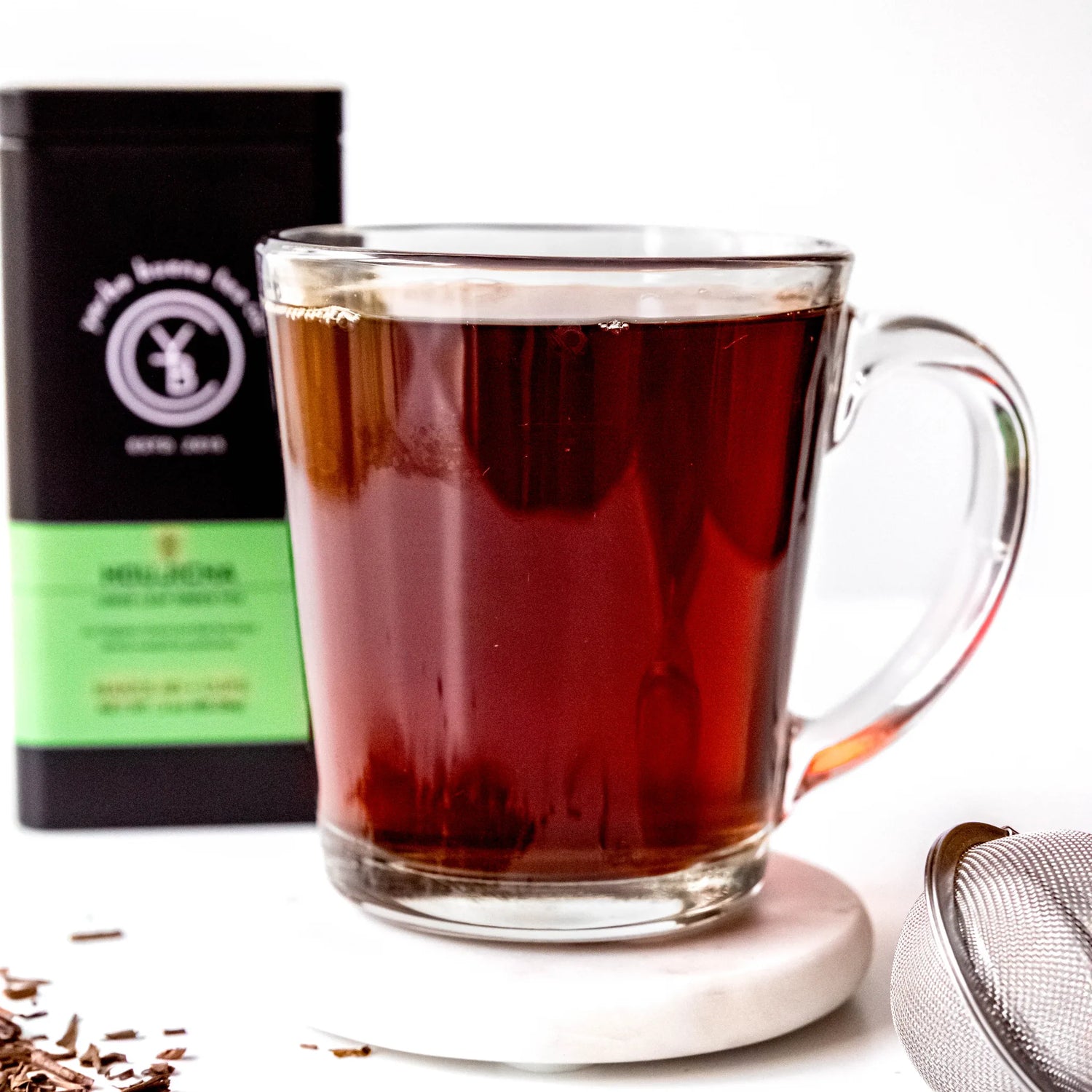
Loose leaf houjicha tea with roasted brown pieces scattered on white background, by Yerba Buena Tea Company.
Product image 2, can be opened in a modal.
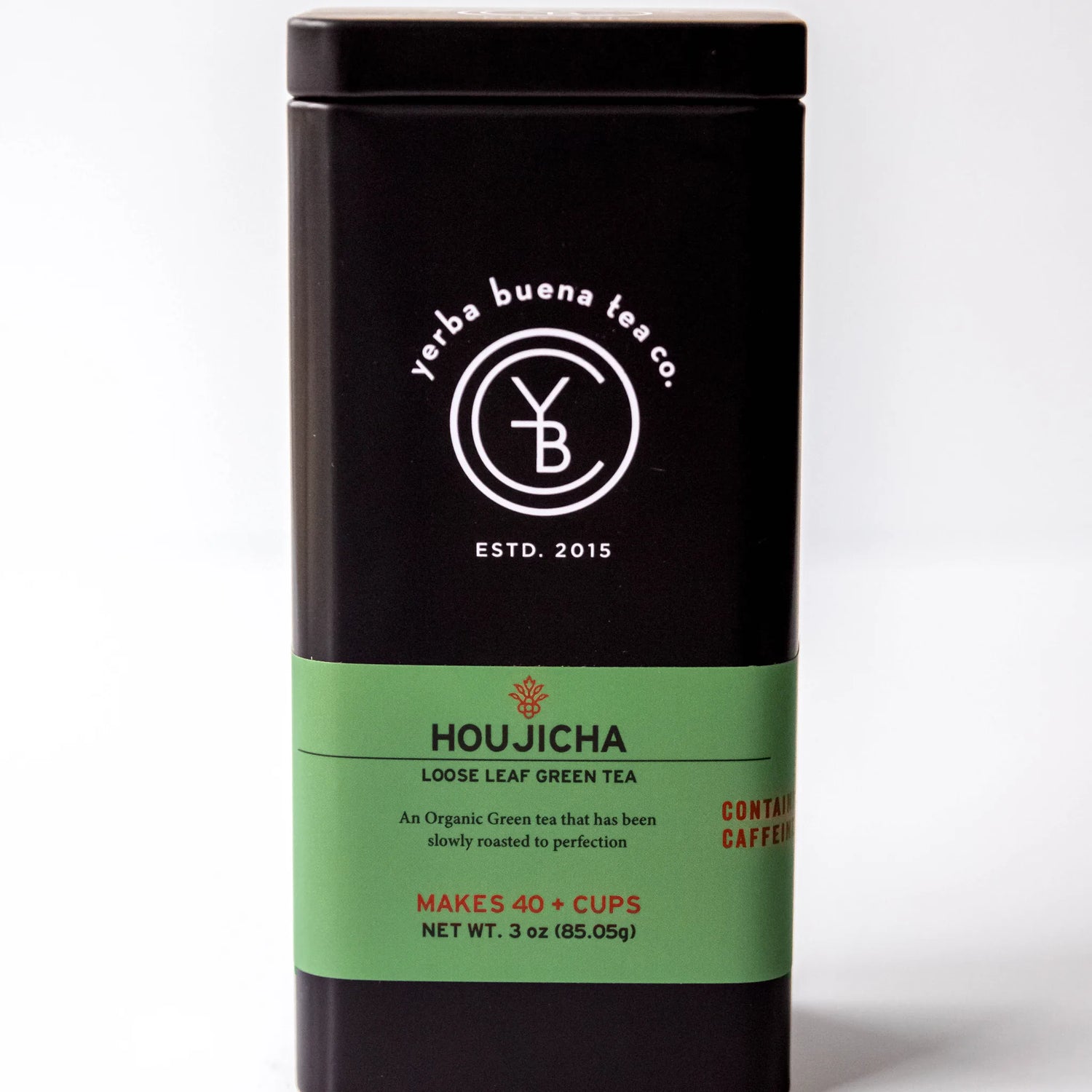
Brewed dark red houjicha tea in glass mug with black and green packaged pouch behind it, by Yerba Buena Tea Company.
Product image 3, can be opened in a modal.
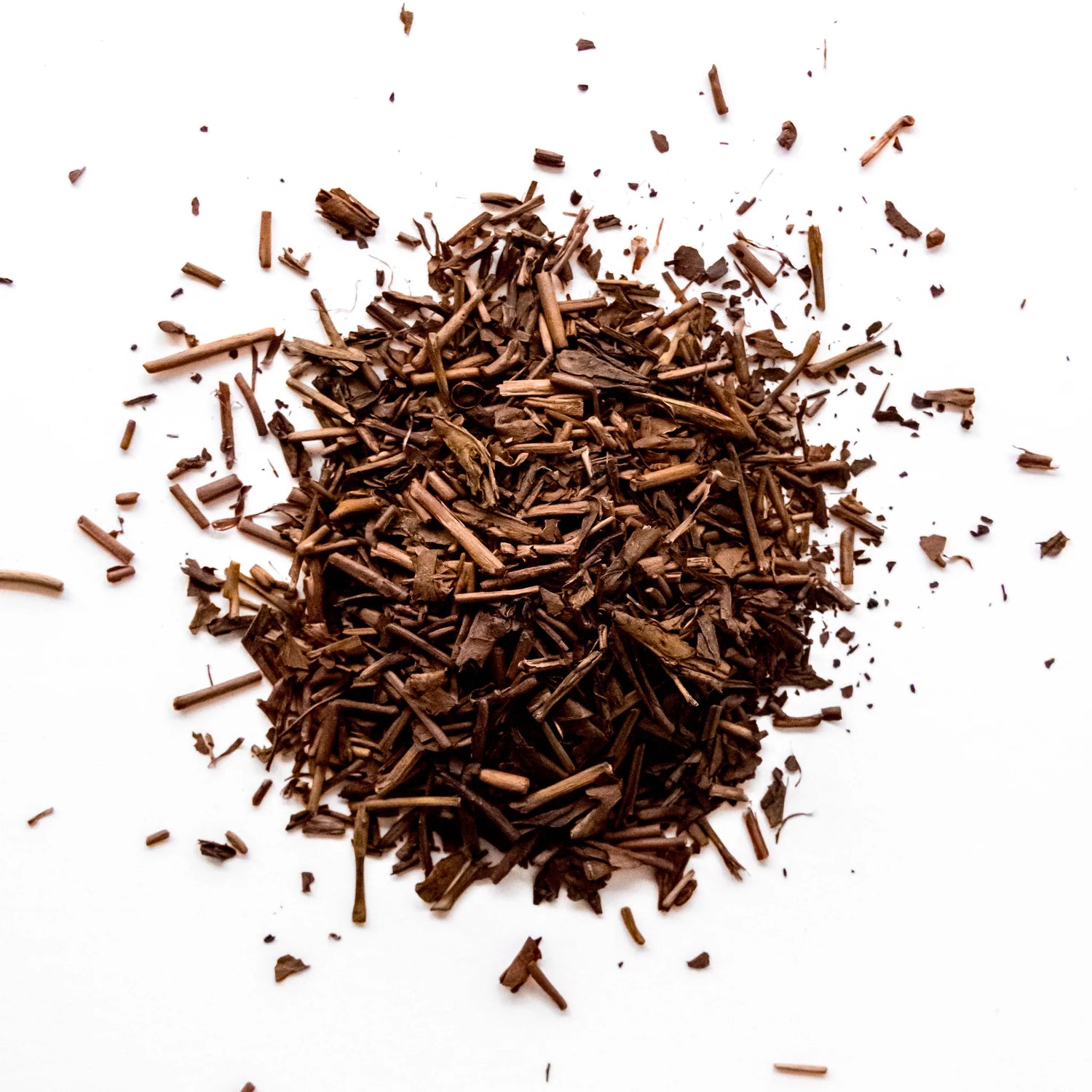
Houjicha loose leaf green tea in a black cylindrical canister with green label band, by Yerba Buena Tea Company.

Organic Green Tea | Toasty & Nutty | Low Caffeine

Organic Houjicha Roasted Green Tea

Grown in Japan Toasted Earthy

Japanese green tea roasted over high heat until the leaves turn brown and the flavor shifts from vegetal to cocoa, caramel, and toasted hazelnut. The evening green tea.

Ingredients: Organic Green Tea.

Regular price $18.00 USD
Regular price Sale price $18.00 USD
Shipping calculated at checkout.
Size: Tea Tin
  • Free shipping $70+
  • Small business
  • Secure checkout
About Houjicha

The green tea for people who don't like green tea.

Houjicha is a Japanese green tea roasted over high heat in porcelian pots until the leaves turn reddish-brown and the flavor transforms. The vegetal, grassy character of steamed green tea disappears. What emerges tastes like cocoa, caramel, and toasted nuts. Smooth, naturally sweet, with a clean finish that carries zero astringency. The roasting process also breaks down most of the caffeine and tannins, which makes this the rare green tea you can drink at night.

The tea includes both leaves and stems. In Japanese tea nomenclature, stem-inclusive teas are called kukicha. The stems carry more L-theanine than the leaves, an amino acid that contributes a creamy sweetness to the cup. The stems also roast differently than the leaves, which adds textural complexity to the flavor.

Houjicha showed up in Kyoto in the 1920s as a way to use older leaves and stems that didn't make the grade for premium sencha. The roasting covered the roughness. What started as thrift tea became a staple: gentle on the stomach, hydrating without stimulating, served in Japanese schools and hospitals for exactly that reason. Warm, toasty, comforting.

Organic Ingredients
  • Organic Green Tea
Tasting Notes

Aroma: Roasted barley, toasted bread, a hint of coffee. Warm and inviting, like stepping into a bakery in the morning.

In the cup: Sweet and savory at once. The dominant notes are toasted hazelnut and caramel, with a deeper, woody undertone. The stems contribute a creamy sweetness that rounds the roasted edge.

Finish: Clean, smooth, comforting. Zero bitterness, even when overstepped.

Why You'll Love It

The macrobiotic staple: Houjicha shows up as the house tea in the macrobiotic diet, a Japanese dietary philosophy developed by George Ohsawa in the 1930s that emphasizes whole grains, fermented foods, and gentle teas. The low caffeine and low tannin profile make it hydrating without being stimulating, which is why it also appears as the default tea in Japanese hospitals, schools, and senior care facilities.

Using the whole plant: Houjicha often includes the stems of the tea plant, making it a form of kukicha. The stems are richer in L-theanine than the leaves. L-theanine is an amino acid that promotes a calm, focused mental state and contributes a creamy, sweet flavor to the cup. It is the same compound that gives matcha its reputation for relaxed alertness.

The evening ritual: In Kyoto, houjicha lattes rival matcha lattes in café popularity. The roasted flavor pairs naturally with steamed milk and a touch of maple syrup, creating a drink that tastes like a roasted marshmallow in a cup. The low caffeine makes it a bedtime drink, not a morning one.

Houjicha loose leaf green tea in a black cylindrical canister with green label band, by Yerba Buena Tea Company.

Houjicha

Regular price $18.00 USD
Regular price Sale price $18.00 USD
TeaJapan

Organic Houjicha Roasted Green Tea

Steep roasted. Sip warmth.

Caffeine: Low
8.0 oz
Water
180°F
Temperature
1.0 tsp
Leaf
3 min
Steep Time
Re-Steep · Up to 2×
Houjicha forgives. Oversteep it by a minute or two and it stays smooth, with no bitterness. The roasting process drops the tannins low enough that timing matters less than it does with other green teas. Use full boiling water if you want a stronger, more coffee-like cup.
1
Cup

Craft Your Cup

A few notes from our teamakers.
Houjicha Latte
Brew 2 teaspoons in 6 ounces of water at 180°F for 5 minutes. Strain. Add 6 ounces of steamed oat or whole milk and a small drizzle of maple syrup. The roasted flavor pairs naturally with the milk fat and the maple bridges into dessert territory. The Kyoto café staple, made at home.

Cold-Brew Houjicha
Steep 2 teaspoons in 16 ounces of cold water in the fridge for 8 hours. Strain. Pour over ice. The cold extraction drops the roasted intensity and brings forward the natural sweetness of the stems. Drinks like a toasted-barley water with a creamy finish. Refreshing without being stimulating.

Houjicha Overnight Oats
Brew 1 cup of strong houjicha (double the usual leaf amount, steep 5 minutes). Let it cool to room temperature. Mix with rolled oats, chia seeds, and a drizzle of honey. Refrigerate overnight. The toasted, nutty flavor infuses the oats. Top with sliced banana and a sprinkle of cinnamon. Breakfast that tastes like dessert.

Loose leaf houjicha tea with roasted brown pieces scattered on white background, by Yerba Buena Tea Company.

Your Questions About Houjicha, Answered.

Why is it brown if it's green tea?

The roasting process. Japanese green tea starts as steamed leaves, which keeps them green. Houjicha takes those same leaves and roasts them over high heat in porcelain pots until they turn reddish-brown. The heat caramelizes the natural sugars in the leaf and transforms the flavor from vegetal to toasty. Same plant, different process, completely different cup.

How much caffeine does it have?

Significantly less than sencha or matcha. The high heat of the roasting process breaks down most of the caffeine and tannins. Exact caffeine content varies by batch and steep time, but houjicha typically sits at about one-third the caffeine of a standard green tea. That is why it shows up as an evening tea in Japan, safe to drink before bed.

Is it smoky like Lapsang Souchong?

No. Lapsang Souchong is smoked over pine wood fires, which gives it a campfire, bacon-like flavor. Houjicha is roasted in porcelain pots, a dry-heat process that produces toasted, nutty, caramel notes. The flavor reads as bread crust or roasted barley, not smoke. Different process, completely different outcome.