Product image 1, can be opened in a modal.
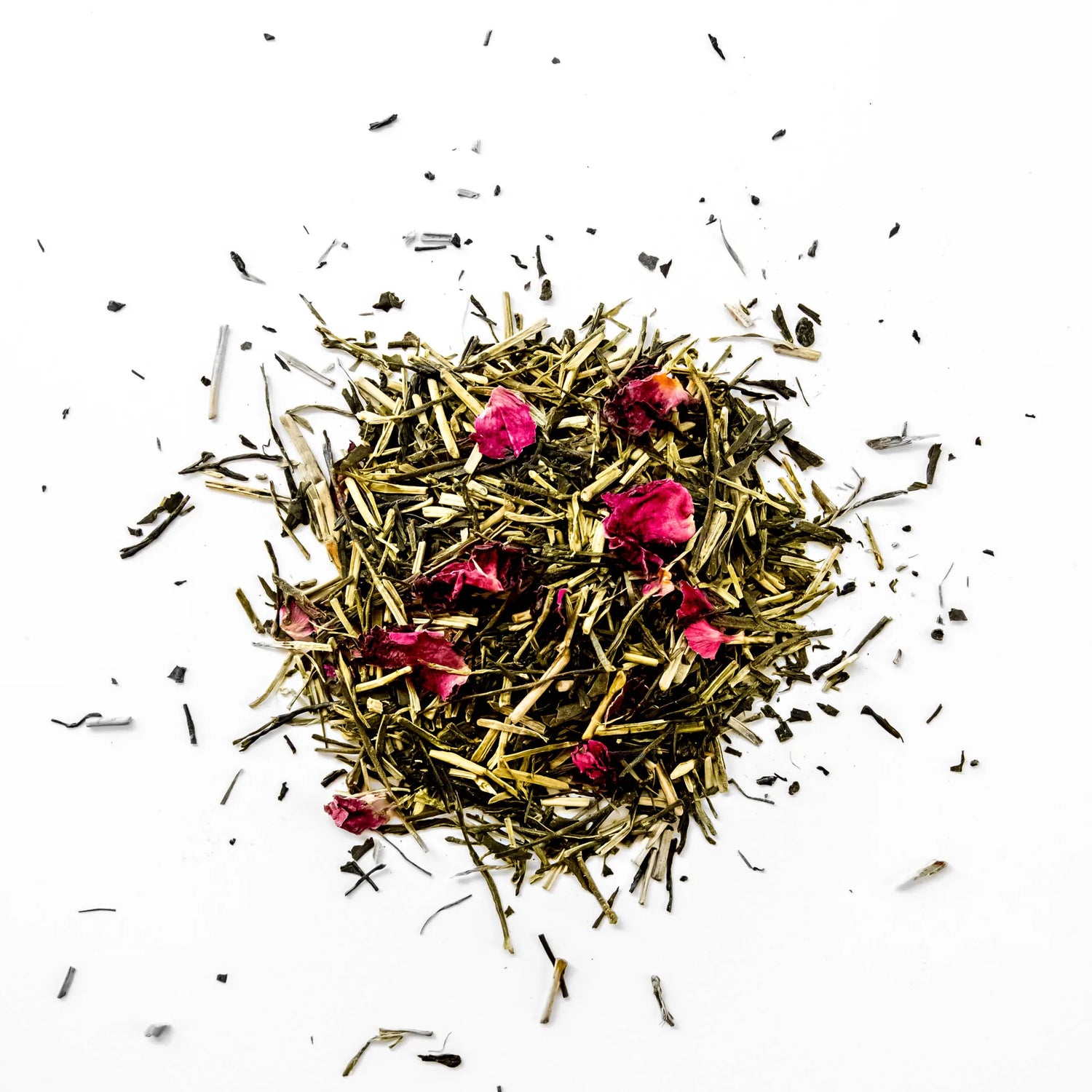
Loose leaf green tea blend with dried rose petals scattered on white background, by Yerba Buena Tea Company.
Product image 2, can be opened in a modal.
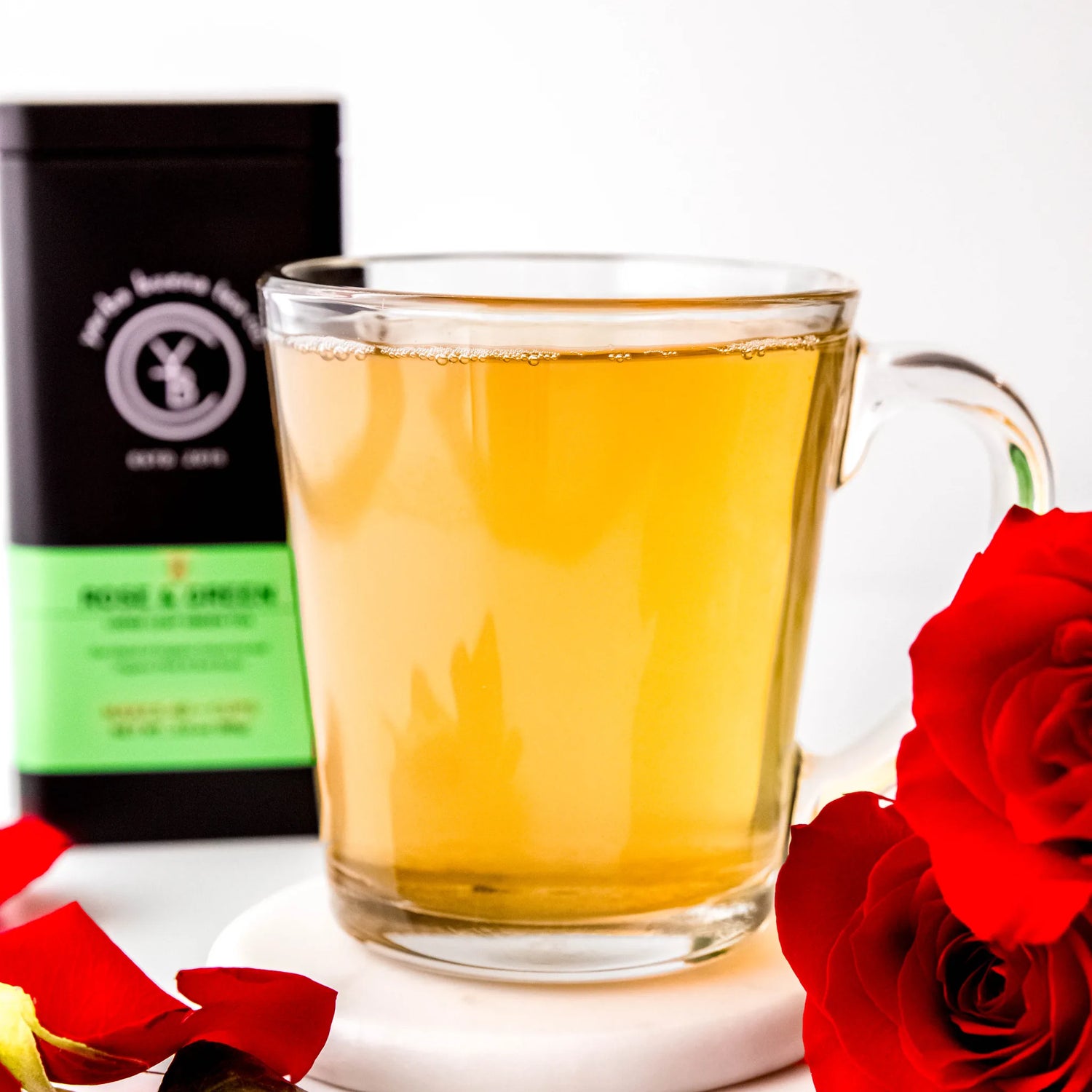
Brewed golden tea in clear glass mug surrounded by red rose petals and black pouch packaging, by Yerba Buena Tea Company.
Product image 3, can be opened in a modal.
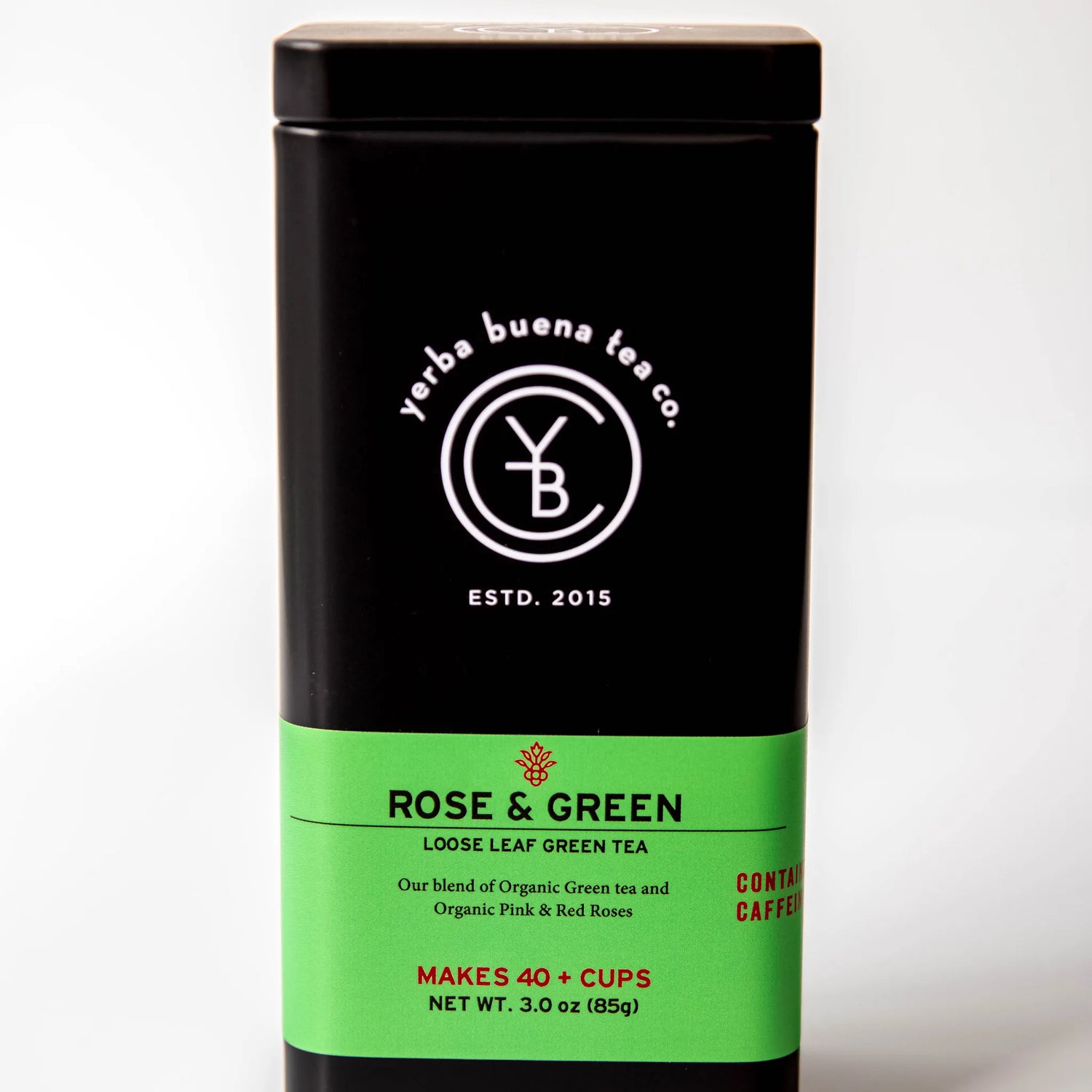
Rose & Green loose leaf green tea in black canister with bright green label band, by Yerba Buena Tea Company.

Organic Green Tea | Floral & Creamy | Low Caffeine

Organic Rose & Green Tea

Grown in Japan Floral Grassy

Japanese twig tea, blended with rose petals. The stems hold the sweetness, the petals hold the elegance.

Ingredients: Organic Green Tea, Organic Rose Petals.

Regular price $18.00 USD
Regular price Sale price $18.00 USD
Shipping calculated at checkout.
Size: Tea Tin
  • Free shipping $70+
  • Small business
  • Secure checkout
About Rose & Green

The stem-and-petal cup that drinks like a macaron.

This is Kukicha, Japanese twig tea, blended with whole organic rose petals. Kukicha is made from the stems and stalks of the tea plant, not the leaves. The stems hold less caffeine and almost no bitterness. What they do hold is L-theanine, the amino acid that gives Japanese green teas their savory, umami character. In the cup, that translates to a creamy, nutty sweetness that tastes almost milky. The rose petals sit on top of that base, not over it, so the floral notes read as soft and edible rather than soapy or perfumed.

Why the stem matters.

Most floral teas fail because they pair delicate flowers with low-grade, astringent tea bases. The dry, bitter base fights the floral notes, and the cup tastes cosmetic. Kukicha solves that problem by bringing natural sweetness and a savory backbone. The stems bridge the gap between the vegetal character of green tea and the floral character of rose. The cup holds together without sugar, without milk, without anything added.

The after-dinner moment.

Low caffeine, high comfort. The stems contain about one-quarter the caffeine of leaf-grade green tea, which makes this the evening cup. Brew it after dinner when you want something elegant but gentle. The rose aroma works on the nervous system the way aromatherapy traditions have known for centuries: it slows people down. Creamy, floral, visually stunning.

Organic Ingredients
  • Organic Green Tea
  • Organic Rose Petals
Tasting Notes

Aroma: Sweet and nutty, with a soft floral overlay. Steamed hazelnuts meeting fresh rose petals.

In the cup: Creamy and smooth. The Kukicha stems lead with a savory, umami sweetness. The rose follows with a delicate floral note that tastes edible, not perfumed. Almost like a rose macaron.

Finish: Soft and lingering, with zero astringency. The sweetness stays.

Why You'll Love It

Kukicha, the twig tea: In Japan, Kukicha is the tea made from the stems and stalks of the tea plant, separated during the production of Sencha and Gyokuro. The stems are naturally lower in caffeine and higher in L-theanine, the amino acid responsible for the savory, umami character of Japanese green teas. Kukicha has been the everyday tea of Japanese tea-growing families for centuries, valued for its gentle sweetness and lack of bitterness.

Rose petals, whole and organic: We use whole organic rose petals, not essential oils or flavorings. The petals steep into the cup with a delicate floral note that stays soft and edible. In Western herbalism, rose has been the flower of the heart and the nervous system, with aromatherapy traditions using the scent to calm and center. In the cup, the petals bring visual elegance and a floral sweetness that pairs naturally with the creamy Kukicha base.

The low-caffeine evening ritual: Because the stems contain about one-quarter the caffeine of leaf-grade green tea, this is the cup for late afternoon or early evening when you want something more substantial than herbal tea but gentler than a standard green. The moment after dinner, the slow Sunday afternoon, the wind-down before bed.

Rose & Green loose leaf green tea in black canister with bright green label band, by Yerba Buena Tea Company.

Rose & Green

Regular price $18.00 USD
Regular price Sale price $18.00 USD
TeaJapan

Organic Rose & Green Tea

Steep soft. Sip elegance.

Caffeine: Low
8.0 oz
Water
175°F
Temperature
1.0 tsp
Leaf
3 min
Steep Time
Re-Steep · Up to 2×
3 minutes at 175°F. The stems need gentle heat to release their sweetness without pulling any bitterness. Use 1 teaspoon per 8 ounces. The rose petals open slowly; give them the full time.
1
Cup

Craft Your Cup

A few notes from our teamakers.
Rose Latte
Brew 1.5 teaspoons in 6 ounces of 175°F water for 3 minutes. Strain. Top with 4 ounces of steamed oat or almond milk and a small drizzle of honey. The milk amplifies the creamy character of the Kukicha, and the honey bridges the floral notes into dessert territory. Best in a wide cup, so you can see the pink petals settle.

Iced Rose & Green with Lychee
Cold-brew 2 teaspoons in 12 ounces of cold water for 6 to 8 hours in the fridge. Strain. Pour over ice with 2 ounces of lychee juice and a squeeze of lime. The lychee and rose share a floral character, and the lime keeps the sweetness in check. Drinks like a spa mocktail.

Rose Panna Cotta Infusion
Steep 3 tablespoons of leaves in 2 cups of warm heavy cream for 20 minutes. Strain. Use the infused cream as the base for panna cotta. The rose and Kukicha both infuse into the fat, and the result is a delicate, floral dessert that tastes more sophisticated than the recipe implies. Garnish with a single fresh rose petal.

Loose leaf green tea blend with dried rose petals scattered on white background, by Yerba Buena Tea Company.

Your Questions About Rose & Green, Answered.

Does it taste like soap or perfume?

No. That soapy taste comes from pairing rose with low-grade, astringent tea bases, or from using synthetic rose flavorings instead of real petals. The nutty, savory character of the Kukicha stems grounds the floral notes so the rose tastes sweet and edible, not cosmetic. The cup reads as a dessert tea, not a bath product.

Why does it look like sticks and stems?

That is the Kukicha. We use the stems and stalks of the tea plant intentionally. The stems are naturally sweeter and less bitter than the leaves, with a creamy, umami character that makes the tea smooth without any additives. In Japan, Kukicha has been the everyday tea of tea-growing families for centuries. The stems are the secret to the cup's lack of astringency and its unique mouthfeel.

Is it truly low in caffeine?

Yes. The stems of the tea plant contain about one-quarter the caffeine of the leaves. While this is not a caffeine-free herbal tea, it is gentle enough for late afternoon or early evening. Most customers who are sensitive to caffeine have no trouble drinking it after 3 or 4 PM.