Product image 1, can be opened in a modal.
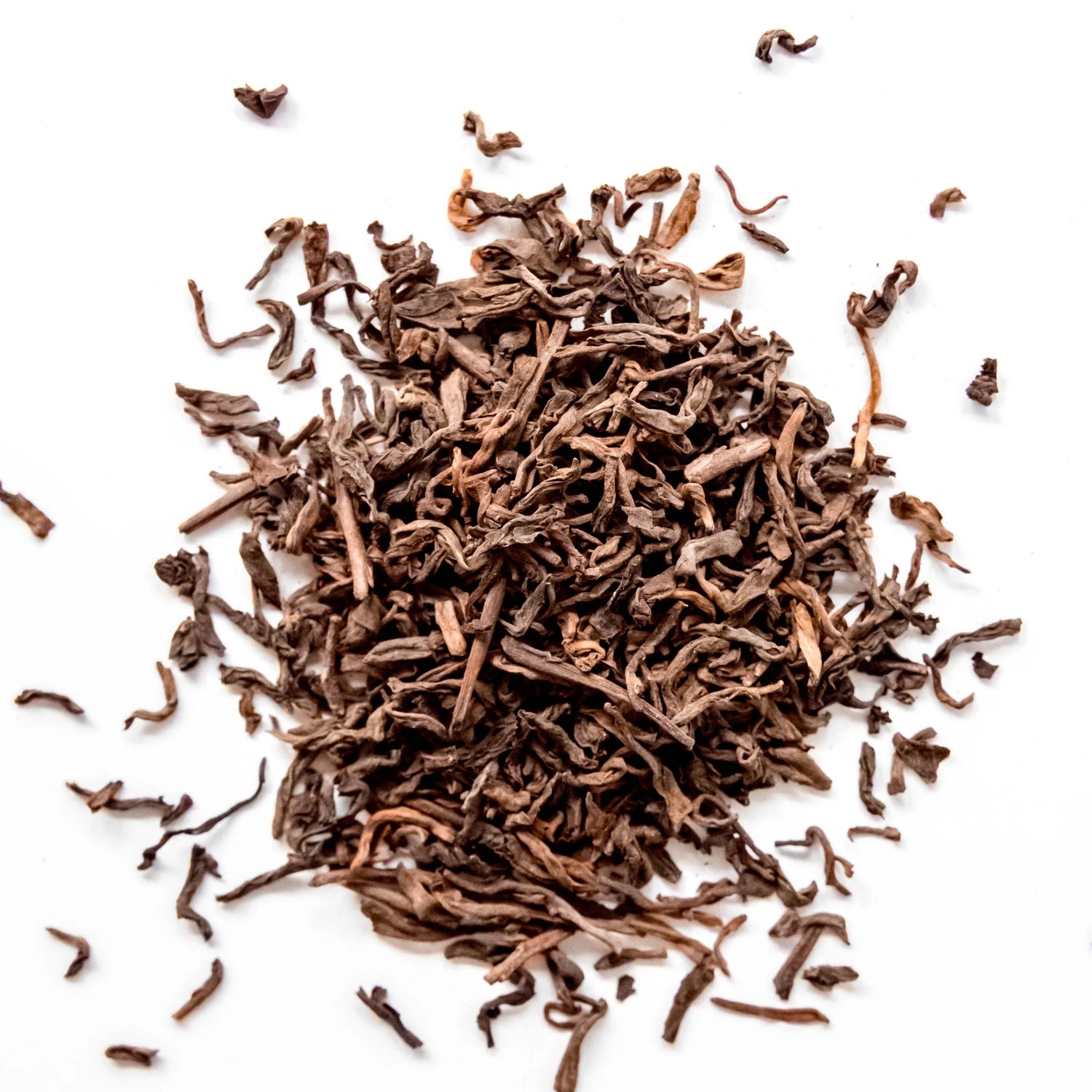
Loose leaf pu-erh tea with dark brown curled leaves scattered on white background, by Yerba Buena Tea Company.
Product image 2, can be opened in a modal.
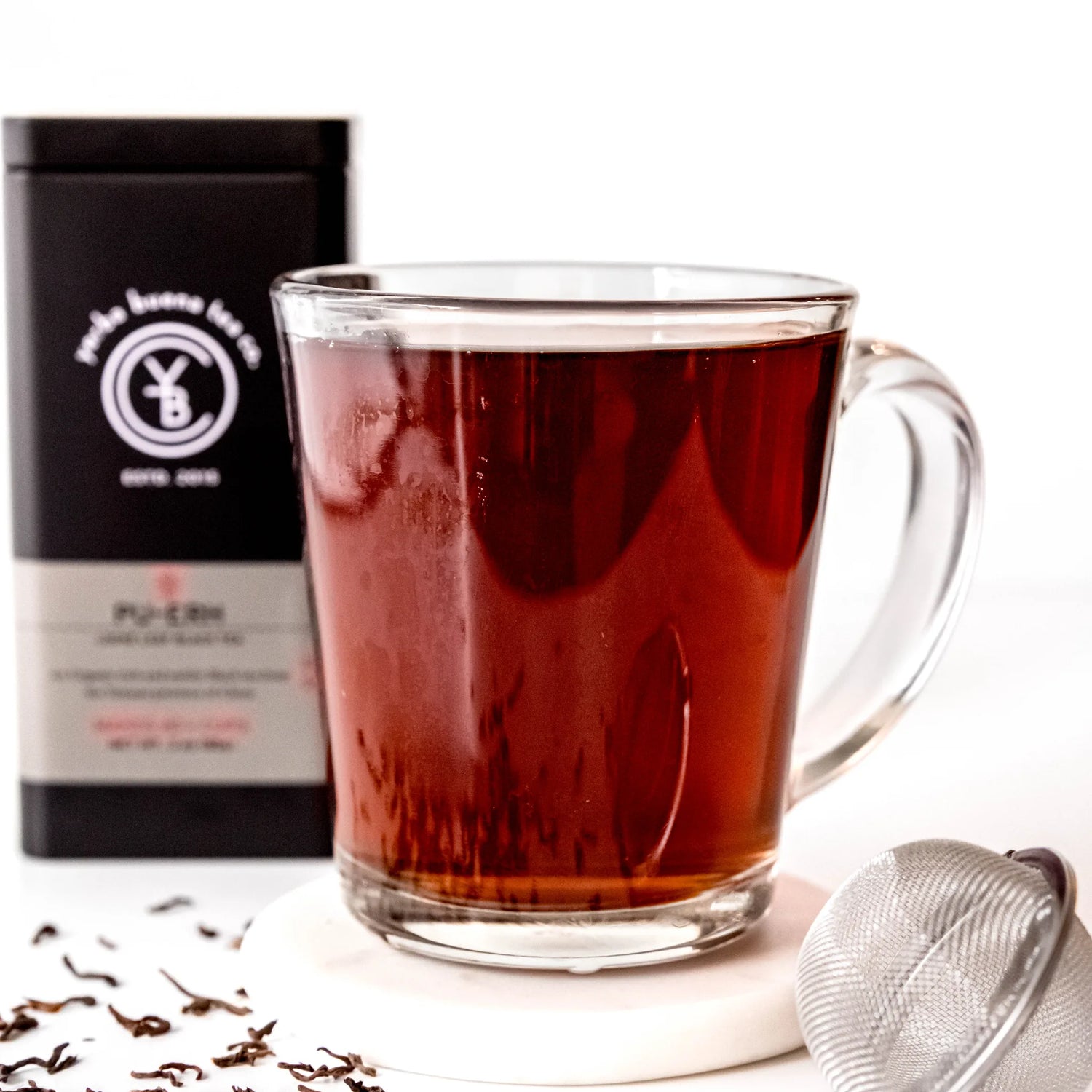
Deep red brewed pu-erh tea in clear glass mug beside black canister and loose tea leaves, by Yerba Buena Tea Company.
Product image 3, can be opened in a modal.
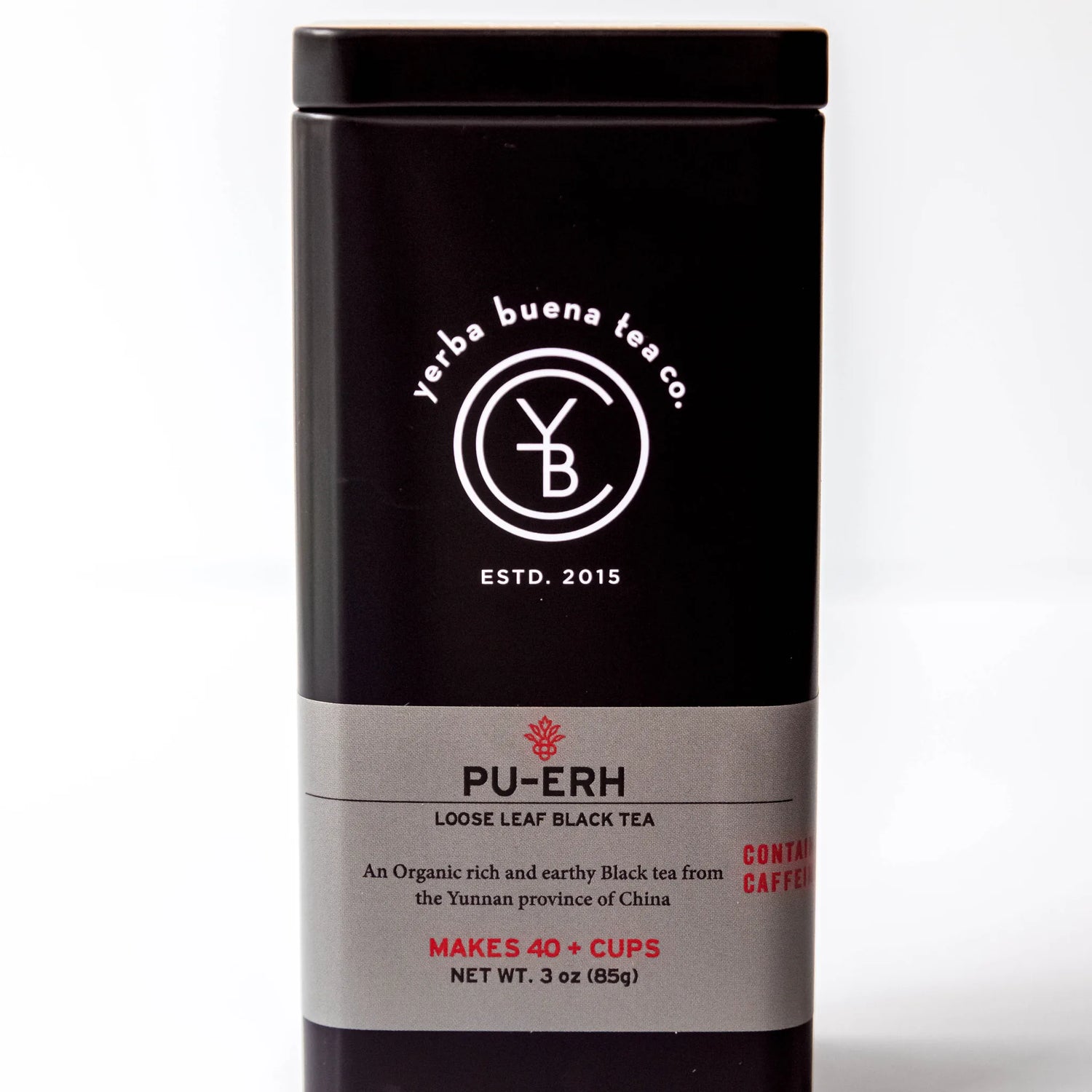
Pu-Erh loose leaf black tea in a black canister with gray label band, by Yerba Buena Tea Company.

Organic Pu'erh Tea | Earthy & Smooth | Medium Caffeine

Organic Pu'erh Fermented Tea

Grown in China Earthy Bold

A fermented tea from Yunnan, aged until smooth. The thick, earthy cup coffee drinkers reach for when they want tea.

Ingredients: Organic Pu’erh Tea.

Regular price $18.00 USD
Regular price Sale price $18.00 USD
Shipping calculated at checkout.
Size: Tea Tin
  • Free shipping $70+
  • Small business
  • Secure checkout
About Pu'erh

The fermented tea that drinks like broth.

Pu'erh (pronounced "poo-air") is a fermented tea from Yunnan province in southwestern China. The broad leaves are piled, moistened, and allowed to ferment under controlled conditions in a process called "wo dui," or wet-piling. This is the shu (cooked) style, which accelerates fermentation that would otherwise take years. The result is a dark, thick liquor with zero astringency and a savory, almost mushroom-like richness. The smoothest tea most people ever taste.

Why Yunnan, why fermentation.

Yunnan sits at the southwestern edge of China, close to the borders of Myanmar, Laos, and Vietnam. The region is home to some of the oldest tea trees in the world, with broad leaves that contain more polyphenols than the typical tea plant. Those polyphenols are what make most teas astringent. Fermentation converts them into theabrownins, the compounds that give Pu'erh its dark color, smooth body, and probiotic character. The process also produces lovastatin, a naturally occurring compound that traditional Chinese herbalism credits with breaking down fats and oils in the digestive tract.

The rinse matters.

Pu'erh needs to be woken up. Pour boiling water over the leaves and immediately pour it off. Discard that first rinse. It clears any dust from the fermentation process and opens the leaf for extraction. Then brew your real cup. Earthy, coating, sweet on the finish.

Organic Ingredients
  • Organic Pu’erh Tea
Tasting Notes

Aroma: Deep and earthy. Damp forest floor, autumn leaves, a whisper of cocoa and old wood.

In the cup: Thick and savory. The liquor is as dark as coffee but tastes like mushroom broth, sweet earth, and a finish that coats the palate. Zero bitterness.

Finish: Smooth and coating, with a lingering sweetness that sits underneath the earthy notes.

Why You'll Love It

The traditional after-meal cup: In Yunnan and across China, Pu'erh is the tea served after heavy meals, particularly those rich in fats and oils. Traditional Chinese Medicine describes Pu'erh as "warming" and credits it with aiding the breakdown of dietary fats. The fermentation process produces lovastatin, a naturally occurring compound also found in red yeast rice, which has been studied in modern research for its role in lipid metabolism.

The probiotic character: Fermentation transforms the tea leaf the same way it transforms cabbage into kimchi or milk into yogurt. The microbial activity during wo dui fermentation produces beneficial compounds that support gut health. It is not a probiotic in the modern supplement sense, but it shares the logic of fermented foods that have been part of traditional diets for centuries.

The coffee substitute:For coffee drinkers who want the heavy mouthfeel and caffeine of a dark roast without the acidity, Pu'erh is the closest thing tea offers. Thick, smooth, coating, with a savory depth that reads more like broth than a typical tea.

Pu-Erh loose leaf black tea in a black canister with gray label band, by Yerba Buena Tea Company.

Pu'erh

Regular price $18.00 USD
Regular price Sale price $18.00 USD
TeaYunnan, China

Organic Pu'erh Fermented Tea

Rinse once. Steep ancient.

Caffeine: Medium
8.0 oz
Water
212°F
Temperature
1.0 tsp
Leaf
4 min
Steep Time
Re-Steep · Up to 3×
Always rinse. Pour boiling water over 1 teaspoon of leaves, then immediately pour it off. Discard that rinse. Now brew your real cup: 4 minutes at full boil. The rinse clears the dust and wakes the leaf. Skip it and the cup tastes muted.
1
Cup

Craft Your Cup

A few notes from our teamakers.

The Morning Pu'erh Ritual
Rinse 1 heaping teaspoon with boiling water, discard. Brew the same leaves for 4 minutes at full boil. Drink the first cup straight. Re-steep the same leaves for 5 minutes for cup two, 6 minutes for cup three. Each steep gets darker and sweeter. A single tablespoon of leaves can carry you through the whole morning.

Pu'erh After the Big Meal
Brew 1.5 teaspoons in 8 ounces of boiling water (after the rinse) for 5 minutes. Drink hot, about 20 minutes after a heavy, fatty meal. The traditional Yunnan after-dinner cup. The thick, coating liquor settles the stomach and cuts through the richness. Thanksgiving, Christmas dinner, the Sunday roast.

Pu'erh with Milk and Honey
Brew double-strength (2 teaspoons, 5 minutes after the rinse). Add 2 ounces of whole milk or oat milk and a small drizzle of honey. The milk rounds the earthy notes into something closer to a dark-roast latte. The honey bridges the savory and sweet. A comforting, grounding cup.

Loose leaf pu-erh tea with dark brown curled leaves scattered on white background, by Yerba Buena Tea Company.

Your Questions About Pu'erh, Answered.

Why does it taste earthy?

The earthy flavor comes from the fermentation process. During wo dui (wet-piling), the leaves are piled and moistened, and microbial activity transforms the tea's chemical structure. The same process that makes kimchi taste like kimchi and makes aged cheese taste like aged cheese. It is an acquired taste, like scotch or blue cheese. Once it clicks, most people crave it.

Is this good for people who normally drink coffee?

Yes. Pu'erh is the closest thing to coffee in the tea world. It has the heavy mouthfeel, the dark liquor, the medium caffeine, and none of the acidity that bothers some coffee drinkers' stomachs. It also re-steeps well, so one tablespoon of leaves can give you three or four cups over the course of a morning.

Does it really help with digestion?

In Traditional Chinese Medicine, Pu'erh is classified as a "warming" tea and is traditionally served after heavy, fatty meals to aid digestion. The fermentation process produces lovastatin, a compound also found in red yeast rice, which modern research has studied for its role in lipid metabolism. Whether it "helps" depends on individual digestion, but the tradition of drinking it after rich meals has centuries of use behind it. For specific digestive concerns, consult a qualified healthcare practitioner.