
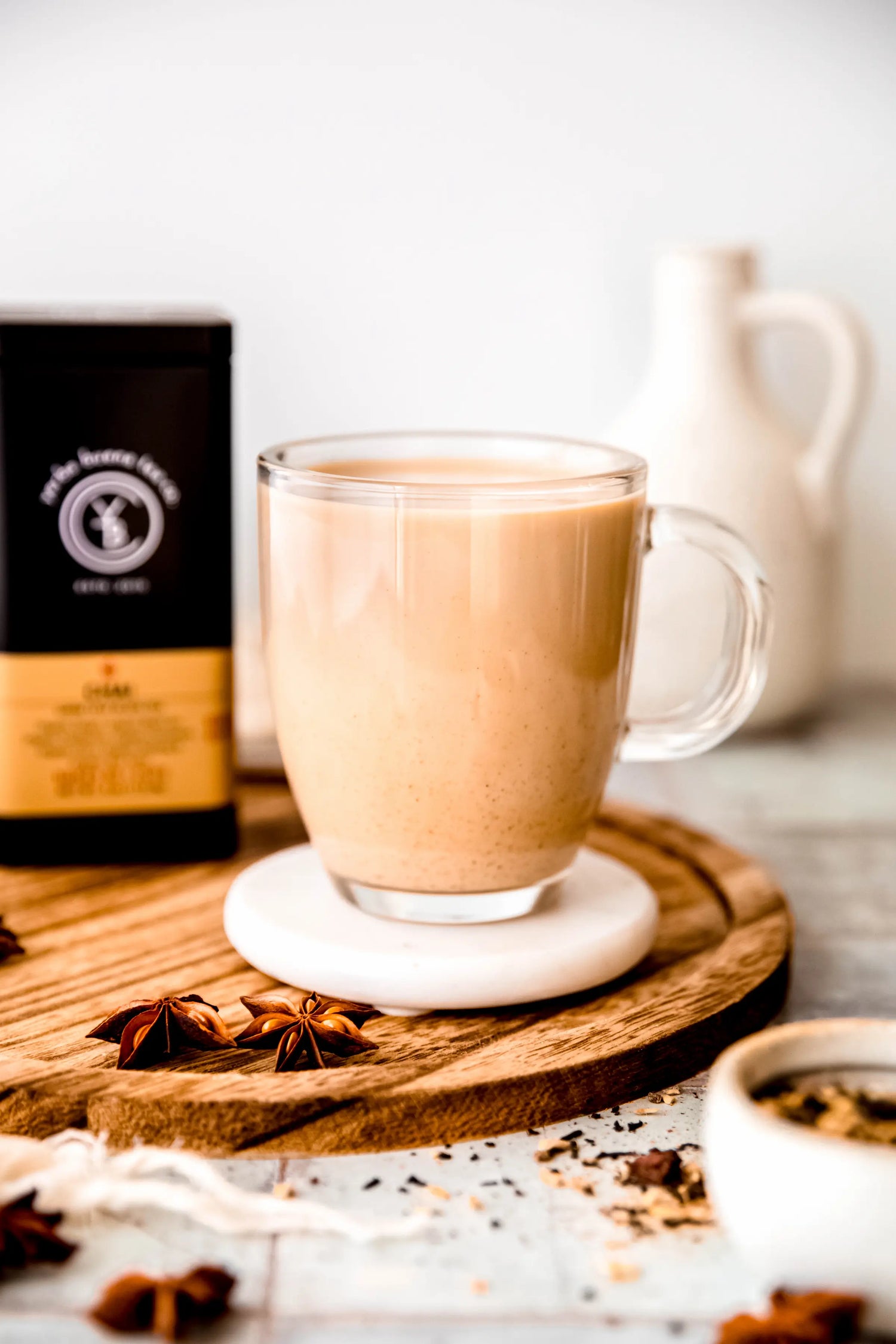
There is "Chai Tea" (which just translates to "Tea Tea"), and then there is Masala Chai, the real thing. The difference isn't just in the ingredients, it is in the brewing method.
While our Simple Chai Latte is perfect for busy mornings, the traditional stovetop method (known as decoction) is how you get that thick, velvety, deeply spiced cup you'd find at a roadside chaiwala stall in India. This recipe walks you through the authentic process step by step.

What Makes Stovetop Masala Chai Different
In Western tea brewing, we are taught never to boil the leaves. But Masala Chai is the exception, and for good reason.
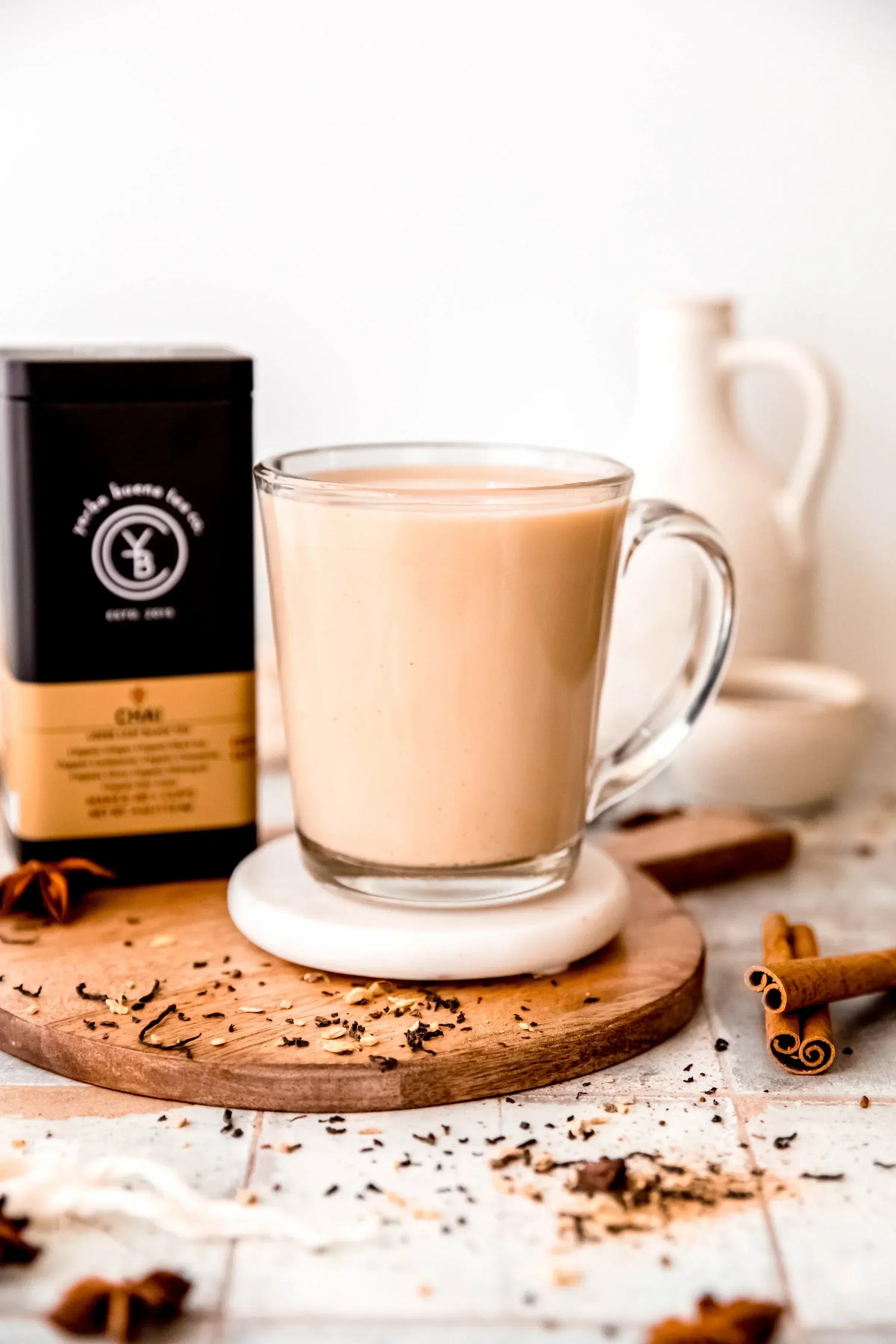
Our Organic Chai is packed with chunks of dried ginger root, cinnamon bark, and cardamom pods. These are hard, woody spices. A simple steep in hot water barely scratches the surface of their flavor. To truly wake them up, they need direct, rolling heat. By simmering the tea directly in the water (and then the milk), you extract essential oils and volatile compounds that a standard steep leaves behind entirely.
This is why a cup of stovetop Chai tastes so much deeper and more aromatic than anything made with a tea bag or a pump of syrup at a coffee shop.

The "Double Boil" Technique
The secret to the creamy texture is boiling the milk. In this recipe, you boil the water and tea first, then add the milk and bring it to a boil again. This two-stage process caramelizes the natural lactose sugars in the milk, creating a rich sweetness and body that you simply cannot replicate with a microwave or a frother.
If you are using oat milk, it works beautifully here the natural starches thicken the chai even further. Whole dairy milk is the traditional choice, but oat milk is our favorite plant-based alternative for stovetop brewing.

Why Sweetness is Non-Negotiable
Authentic Chai always includes sweetener. It isn't about making the drink sugary, the sweetener acts as a flavor conductor, bridging the gap between the heat of the ginger, the warmth of the cinnamon, and the astringency of the black tea. Without it, the spices can taste flat and "dry." We add the sugar during the boil so it fully dissolves and integrates into the liquor.
Organic cane sugar works best, but you can also try jaggery or honey (add honey after straining to preserve its raw properties).

Tips for the Perfect Cup
A few things we have learned after making hundreds of batches:
- Watch the pot. Milk rises fast once it hits a boil. Keep a spoon in the pot and stir constantly during the simmer to prevent a messy boil-over.
- Use a small saucepan. A smaller pot keeps the tea concentrated. A wide pan spreads it too thin.
- Don't skip the boil. Simmering is not the same as boiling. You need a true, vigorous boil on the water stage to crack open those spices.
- Strain well. A fine-mesh sieve catches all the leaf and spice particles. Nobody wants gritty Chai.
Stovetop Chai vs. Chai Latte: What's the Difference?
A Chai Latte the kind you get at most cafes is typically made by steeping a tea bag or concentrate in hot water, then topping it with steamed milk. It is lighter, milkier, and the spice flavor tends to sit on the surface.
Stovetop Masala Chai is fundamentally different. The tea, spices, water, milk, and sweetener all cook together in one pot. The flavors meld, the milk caramelizes, and every sip is deeply infused from start to finish. It is a bolder, richer drink, and once you try it this way, it is hard to go back.
Stovetop Chai vs. Chai Latte: What's the Difference?
A Chai Latte is made by steeping the tea in hot water (like a standard infusion), then adding steamed milk on top. It is lighter and quicker to make our Simple Chai Latte recipe takes just 5 minutes and doesn't need a stovetop.
Stovetop Masala Chai is fundamentally different. The tea, spices, water, milk, and sweetener all cook together in one pot. The flavors meld, the milk caramelizes, and every sip is deeply infused from start to finish. It is a bolder, richer drink and once you try it this way, it is hard to go back.
Both methods use the same Organic Chai the difference is in the ritual. The latte is your weekday go-to. The stovetop method is for when you have 12 minutes and want the full experience.
0 comments