By the Yerba Buena Tea Co. team. Updated September 2026.
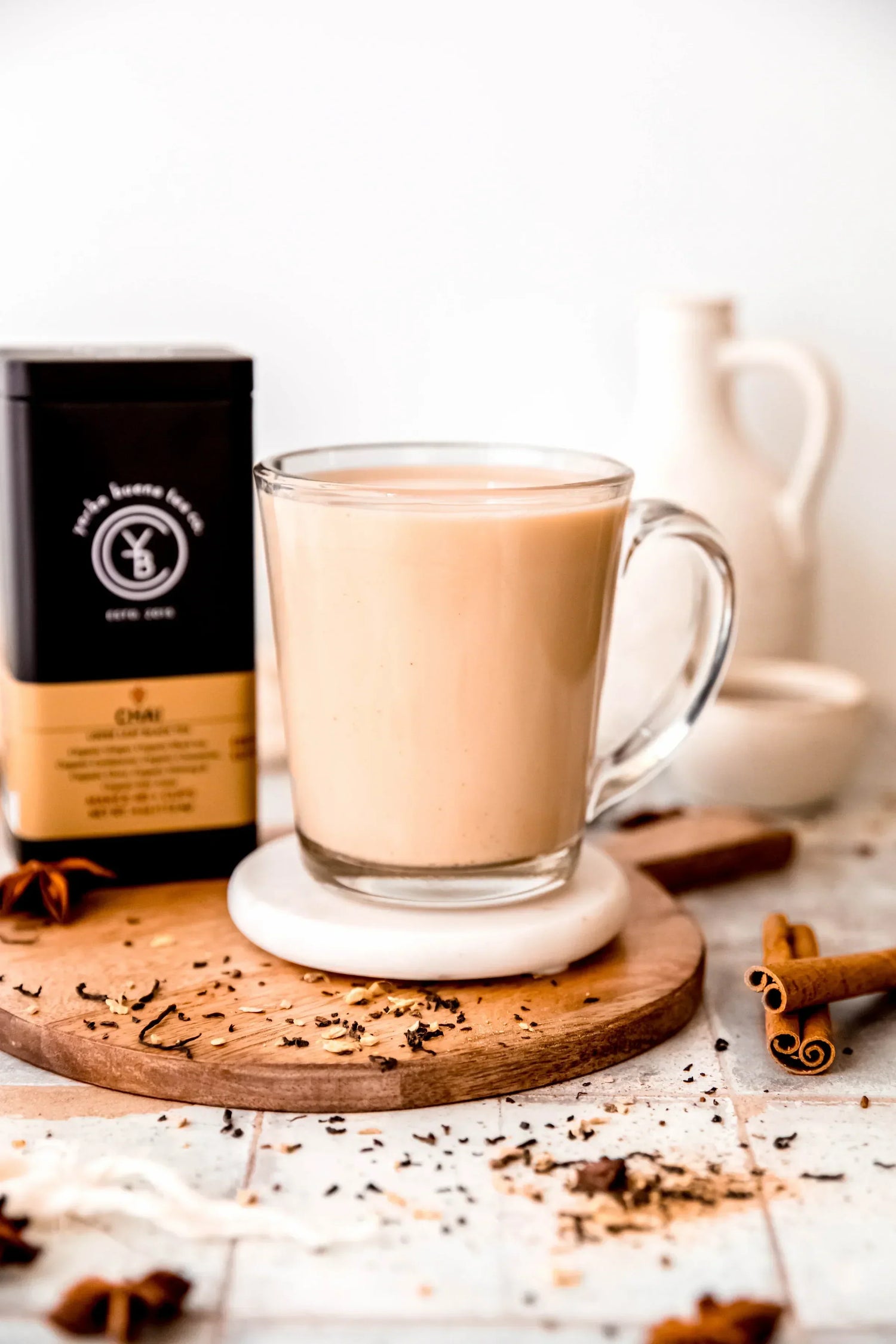
The quick version: a chai latte is spiced black tea topped with steamed milk. To make one at home in 5 minutes without a stovetop, steep 1 tablespoon of our Organic Chai in a cup of just-boiled water for 5 to 10 minutes (a strong concentrate), stir in your sweetener while it's hot, and top with warm, frothed milk. The full recipe is in the card below.
We all love the ritual of a traditional stovetop chai (simmering spices and milk in a pot for 12 minutes), but sometimes you just need a chai latte now.
The problem is that most 'quick' chai options (boxed concentrates, powdered mixes, syrup pumps) are packed with sugar and artificial flavorings. They lack the depth of real ginger, cardamom, and cinnamon.
This Simple Chai Latte method bridges that gap. It's the busy-morning way to get a barista-quality latte using real, organic loose-leaf Chai in just a few minutes, without ever turning on the stove.

Why this steep-and-top method works
Instead of boiling the tea in milk (the traditional stovetop way), we treat the chai spices like a standard infusion, with one key difference: we steep it longer than a normal black tea.
While a standard Earl Grey might get bitter after 4 minutes, our Organic Chai is robust enough to handle a 5 to 10 minute steep. That extra time lets the hard spices (cinnamon bark, ginger root, cardamom pods) crack open and release their oils into the water. The result is a concentrated, deeply flavored base that holds its own once you add the milk.

Why you should add sweetener
You might be tempted to skip the sugar, but add at least a little. Spices like clove and cardamom can taste dry and astringent on their own. A small amount of cane sugar, honey, or maple syrup rounds them out. It draws the warm spice notes forward and makes the drink feel creamy and full-bodied before the milk even goes in.
Stir it in while the tea is piping hot so it dissolves completely. If you prefer honey, this method is ideal. There's no active boil to destroy its raw character.

Finishing your latte
For a true latte feel, don't just pour in cold milk. Warming your milk first, until it's steaming but not boiling, keeps the drink hot and helps it mix smoothly with the tea concentrate. We prefer oat milk here for its naturally creamy body and how well it froths, but whole dairy milk or almond milk work too.
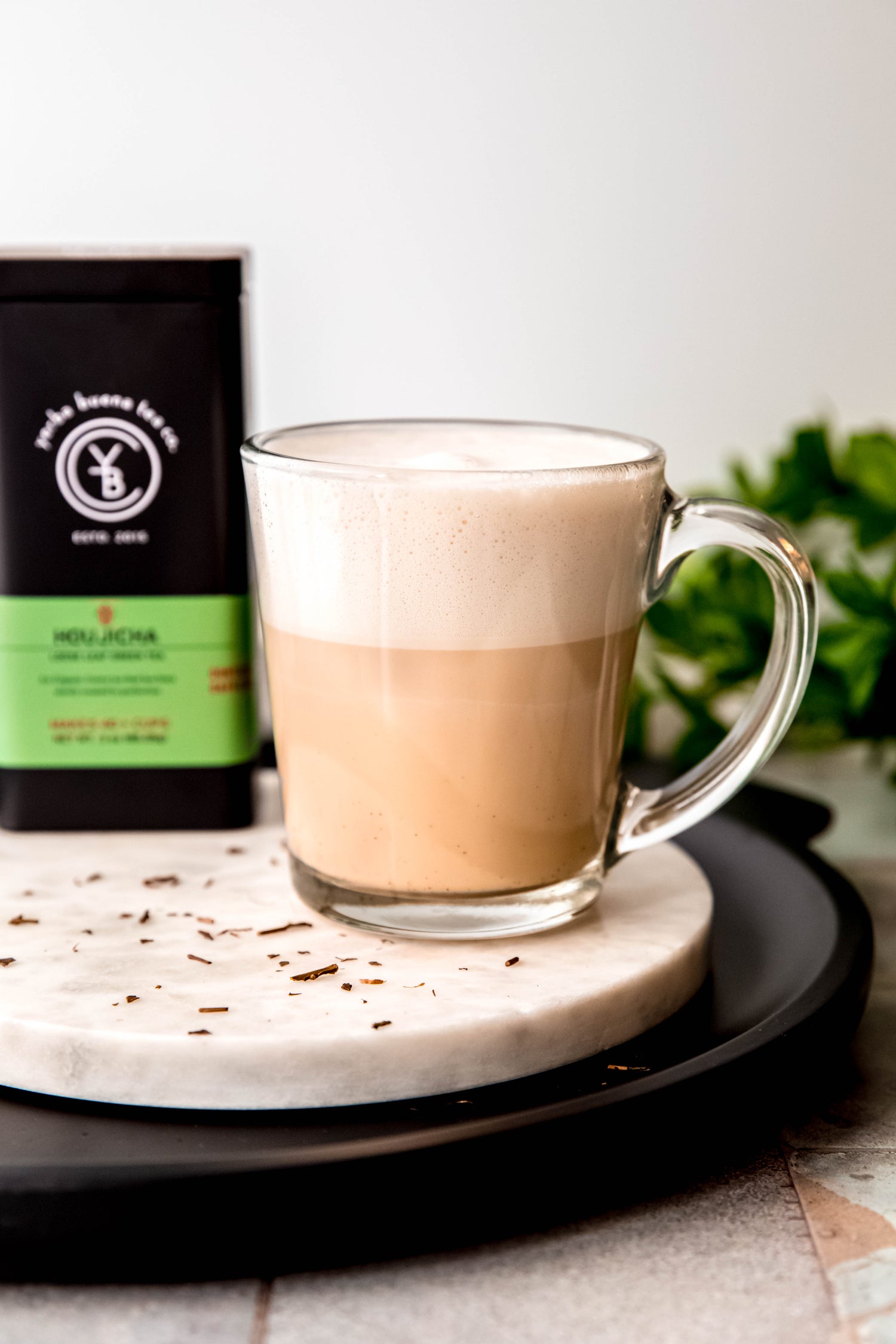
If you have a milk frother, use it. A layer of microfoam on top turns a simple mug of chai into something that looks and feels like a cafe drink.

When to use the stovetop method instead
This latte method is built for speed. But if you have 12 minutes and a saucepan, the traditional stovetop method makes a noticeably richer, more aromatic cup. Boiling the tea right in the milk caramelizes the sugars and pulls even more depth from the spices.
Think of it this way: this chai latte is your Monday-through-Friday go-to, and the stovetop version is your weekend ritual. Both use the same loose-leaf Chai. The difference is in the method.
Ready to make yours? The full recipe is in the card below.
Frequently asked questions
What is a chai latte?
A chai latte is spiced black tea (chai) topped with steamed or frothed milk and a little sweetener. The spices, usually ginger, cardamom, cinnamon, and clove, give it its warm, cozy flavor.
What is the difference between a chai latte and masala chai?
A chai latte steeps the tea and tops it with steamed milk, lighter and faster. Masala chai simmers the tea, milk, and spices together on the stovetop for a deeper, richer cup. Same tea, different method.
Can I make a chai latte iced?
Yes. Brew the chai concentrate, sweeten it while hot, let it cool, then pour over ice and top with cold milk. The same chill-it-right approach as our guide to making iced tea.
Is a chai latte caffeinated?
Yes. It's built on black tea, so a cup has roughly 40 to 70 mg of caffeine, about half a coffee. See our tea vs coffee caffeine chart for the full breakdown.
What milk is best for a chai latte?
Oat milk is our favorite. It's naturally creamy and froths beautifully. Whole dairy milk is the classic choice, and almond or soy work too.