Product image 1, can be opened in a modal.
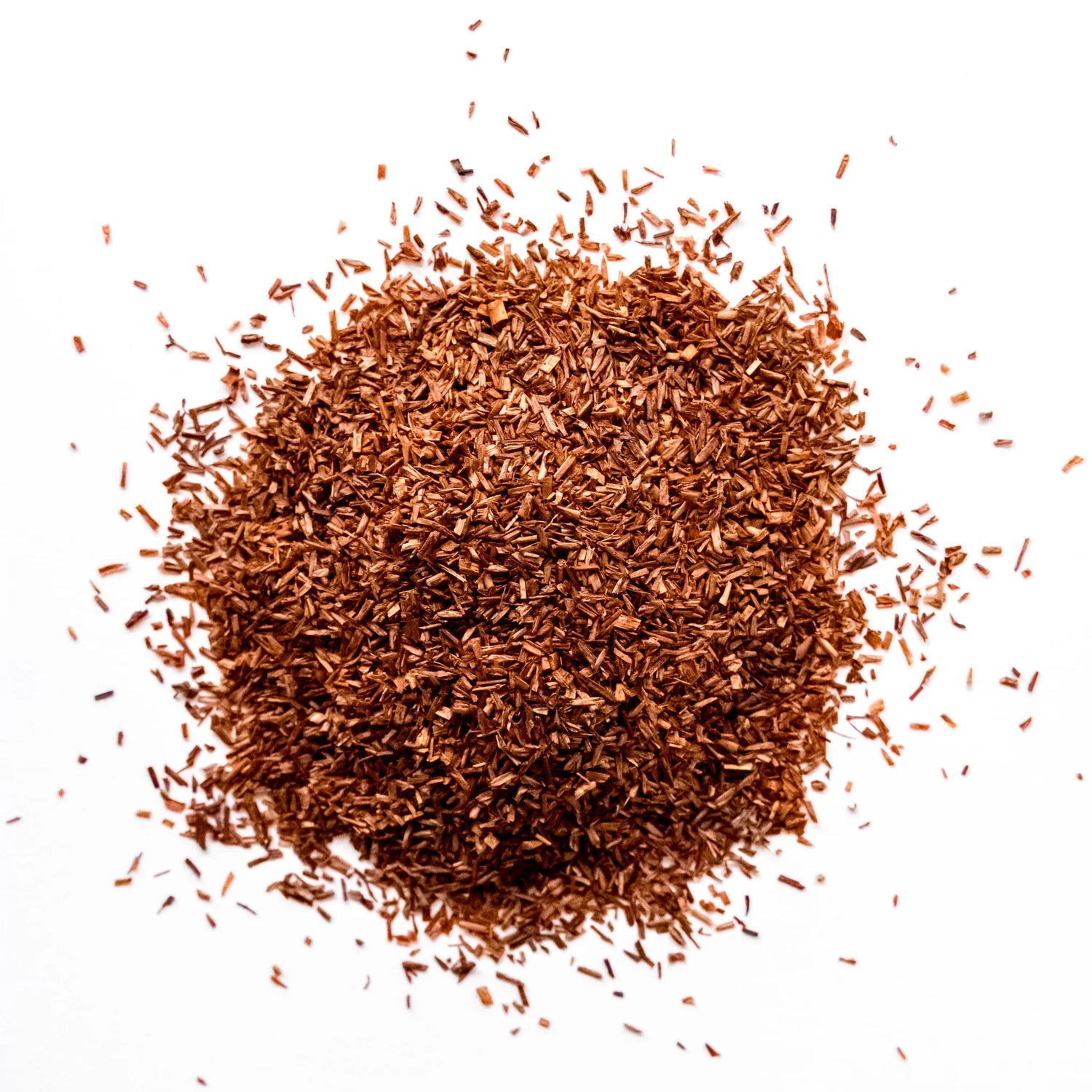
Loose leaf red rooibos tea scattered in a pile against a white background, by Yerba Buena Tea Company.
Product image 2, can be opened in a modal.
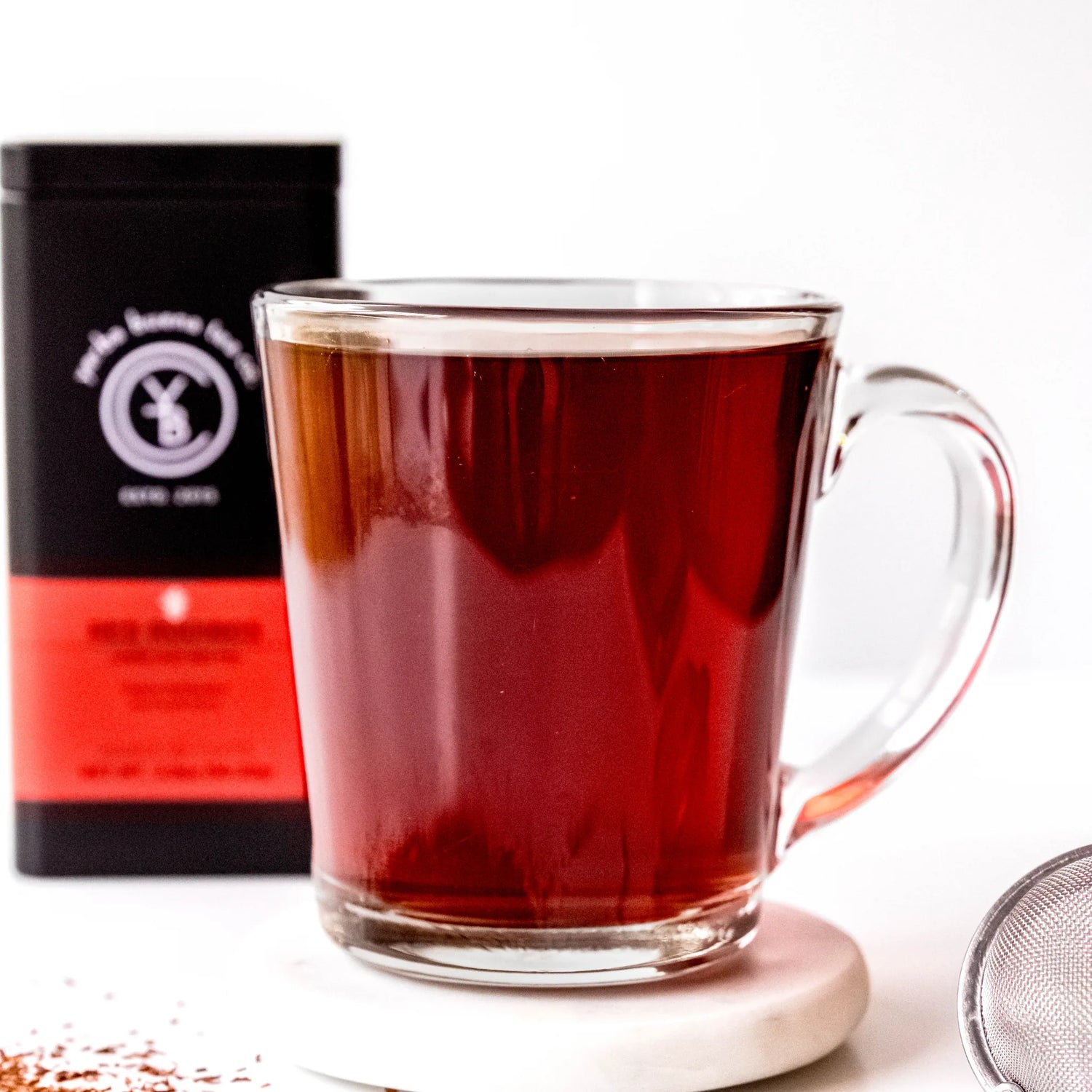
Brewed red rooibos tea in clear glass mug with black packaging box behind it, by Yerba Buena Tea Company.
Product image 3, can be opened in a modal.
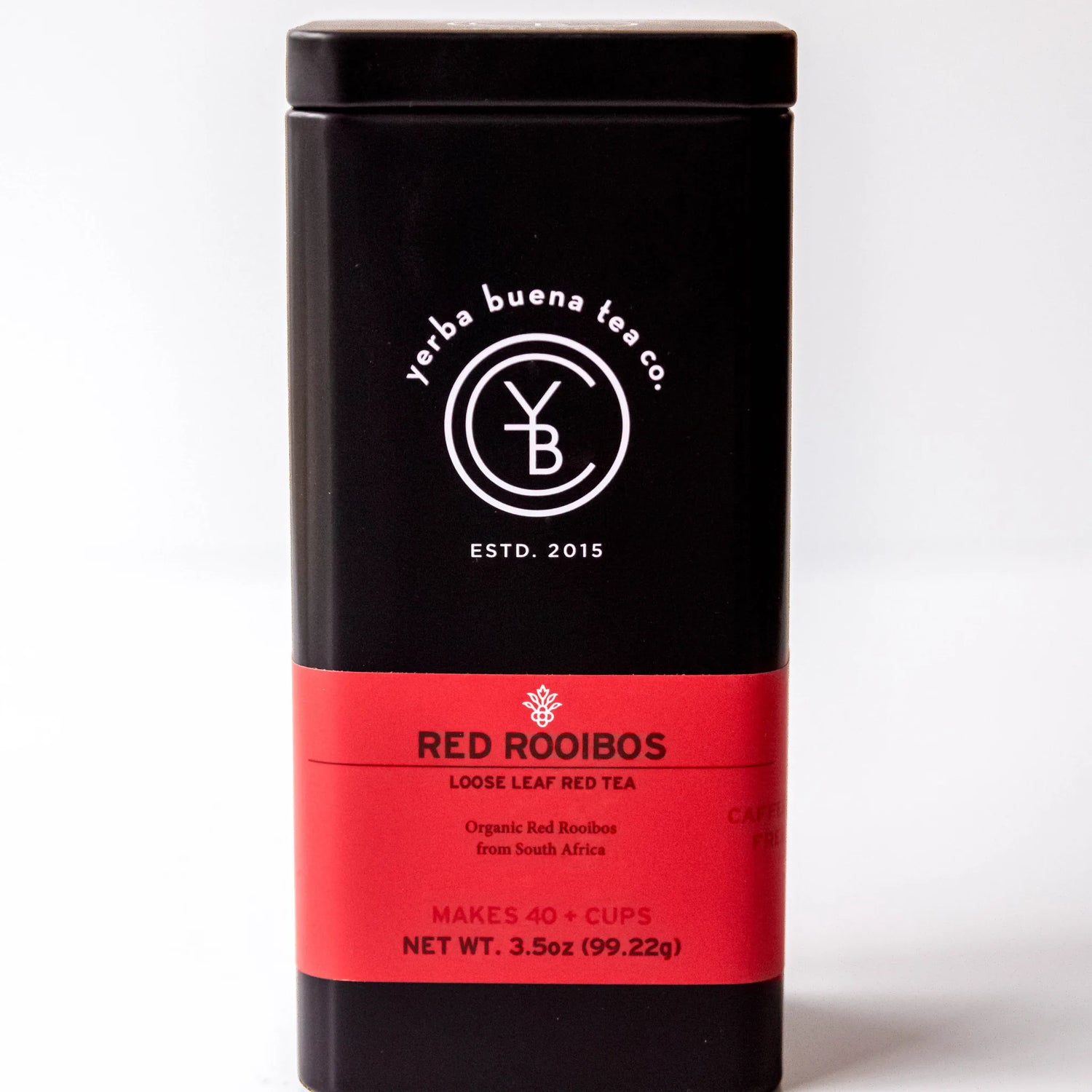
Black metal canister with red label displaying Red Rooibos loose leaf red tea, by Yerba Buena Tea Company.

Organic Rooibos Tea | Sweet & Earthy | Caffeine-Free

Organic Red Rooibos Tea

Grown in South Africa Earthy Sweet

The South African red bush tea, grown only in the Cederberg mountains. Naturally sweet, mineral-dense, impossible to oversteep.

Ingredients: Organic Red Rooibos.

Regular price $18.00 USD
Regular price Sale price $18.00 USD
Shipping calculated at checkout.
Size: Tea Tin
  • Free shipping $70+
  • Small business
  • Secure checkout
About Red Rooibos

The tea that hydrates like water but tastes like dessert.

Red Rooibos is not tea at all, botanically speaking. It comes from Aspalathus linearis, a shrub that grows only in the Cederberg mountain range of South Africa, about 200 kilometers north of Cape Town. The needles get harvested, bruised to oxidize, then sun-dried until they turn the deep amber-red that gives the plant its name. The result is a naturally sweet, mineral-rich infusion that has been the national drink of South Africa for over three centuries.

Rooibos contains almost zero tannins, which is what makes black and green teas go bitter when oversteeped. This tea never goes bitter. Steep it for 5 minutes or 50 minutes, and the cup stays smooth. The flavor reads as honey, vanilla, a touch of pipe tobacco warmth. The body is dense and coating, closer to a light broth than a tisane.

The mineral content is what made Rooibos a folk remedy long before modern herbalism caught up. Magnesium, calcium, zinc, iron. South African mothers have given it to colicky babies and endurance athletes for generations. The same cup works for a toddler learning to drink from a real mug and a runner rehydrating after a long trail.

Organic Ingredients
  • Organic Red Rooibos
Tasting Notes

Aroma: Sweet and woody, with notes of honey and a faint pipe-tobacco warmth. Smells richer than most herbal teas.

In the cup: Smooth, full-bodied, naturally sweet. Vanilla and honey notes dominate. The body coats the palate the way a light broth does, dense without being heavy.

Finish: Clean, hydrating, with a lingering sweetness that never needs sugar.

Why You'll Love It

The Cederberg origin: Rooibos grows in commercial volume in one region: the Cederberg mountains of South Africa, where the altitude, soil, and climate create the only conditions the shrub thrives in. The indigenous Khoisan people have harvested it for centuries. Dutch settlers adopted it in the 1700s as a black tea substitute when European imports were scarce. By the 1930s, it became South Africa's national drink.

The mineral profile: Rooibos contains magnesium, calcium, zinc, and iron in measurable amounts. South African folk tradition uses it as a hydration support for athletes, a digestive soother for babies with colic, and a safe daily cup for pregnant women. The low-tannin profile means it does not interfere with iron absorption the way black tea can.

The impossible-to-oversteep cup: Tannins are what make tea go bitter. Rooibos has almost none. Steep it for 5 minutes or 50 minutes, and the cup stays smooth and sweet. The most forgiving tea in the world.

Black metal canister with red label displaying Red Rooibos loose leaf red tea, by Yerba Buena Tea Company.

Red Rooibos

Regular price $18.00 USD
Regular price Sale price $18.00 USD
TeaCederberg, South Africa

Organic Red Rooibos Tea

Steep ruby. Sip forever.

Caffeine: None
8.0 oz
Water
212°F
Temperature
1.0 tsp
Leaf
6 min
Steep Time
Re-Steep · Up to 2×
Steep 6 to 8 minutes for full flavor extraction, or leave the leaves in the pot and sip all afternoon. It never goes bitter. Add milk and honey for a caffeine-free latte base, or cold-brew overnight for an iced red tea that drinks like a dessert.
1
Cup

Craft Your Cup

A few notes from our teamakers.

Red Rooibos Latte
Brew 1.5 teaspoons in 6 ounces of full-boil water for 6 minutes. Strain. Top with 6 ounces of steamed oat or whole milk and a drizzle of honey. The natural sweetness of the Rooibos meets the creaminess of the milk. Dust with cinnamon. The caffeine-free latte that drinks like the real thing.

Iced Red Rooibos with Vanilla
Cold-brew 2 teaspoons in 16 ounces of cold water for 8 hours in the fridge. Strain. Pour over ice with a splash of vanilla extract and a teaspoon of honey. The vanilla amplifies the natural vanilla notes already in the Rooibos. Drinks like a dessert tea, no sugar needed.

Red Rooibos Overnight Oats
Brew 1 cup of double-strength Rooibos (2 teaspoons, 8 ounces, 6 minutes). Let cool. Mix with 1 cup of rolled oats, 1 tablespoon of chia seeds, and a drizzle of maple syrup. Refrigerate overnight. The Rooibos infuses the oats with a honey-vanilla warmth. Top with fresh fruit in the morning.

Loose leaf red rooibos tea scattered in a pile against a white background, by Yerba Buena Tea Company.

Your Questions About Red Rooibos, Answered.

What does Rooibos taste like?

Smooth, sweet, and warming. The dominant notes are honey and vanilla, with a subtle woody undertone that reads like pipe tobacco or toasted grain. The body is full and coating, closer to a light broth than a watery tisane. It tastes richer than most herbal teas, and it never needs sugar.

Is Rooibos safe for kids and pregnancy?

Rooibos is caffeine-free and low in tannins, which makes it a traditional choice in South Africa for babies with colic and pregnant women seeking a daily hydration cup. That said, any dietary changes during pregnancy or for children should be discussed with a qualified healthcare provider. We are tea people, not medical professionals.

How do you pronounce Rooibos?

ROY-boss. The word comes from Afrikaans and translates as Red Bush, a reference to the needles of the Aspalathus linearis shrub that turn deep red during oxidation. It is the national drink of South Africa and has been for over 300 years.