Product image 1, can be opened in a modal.
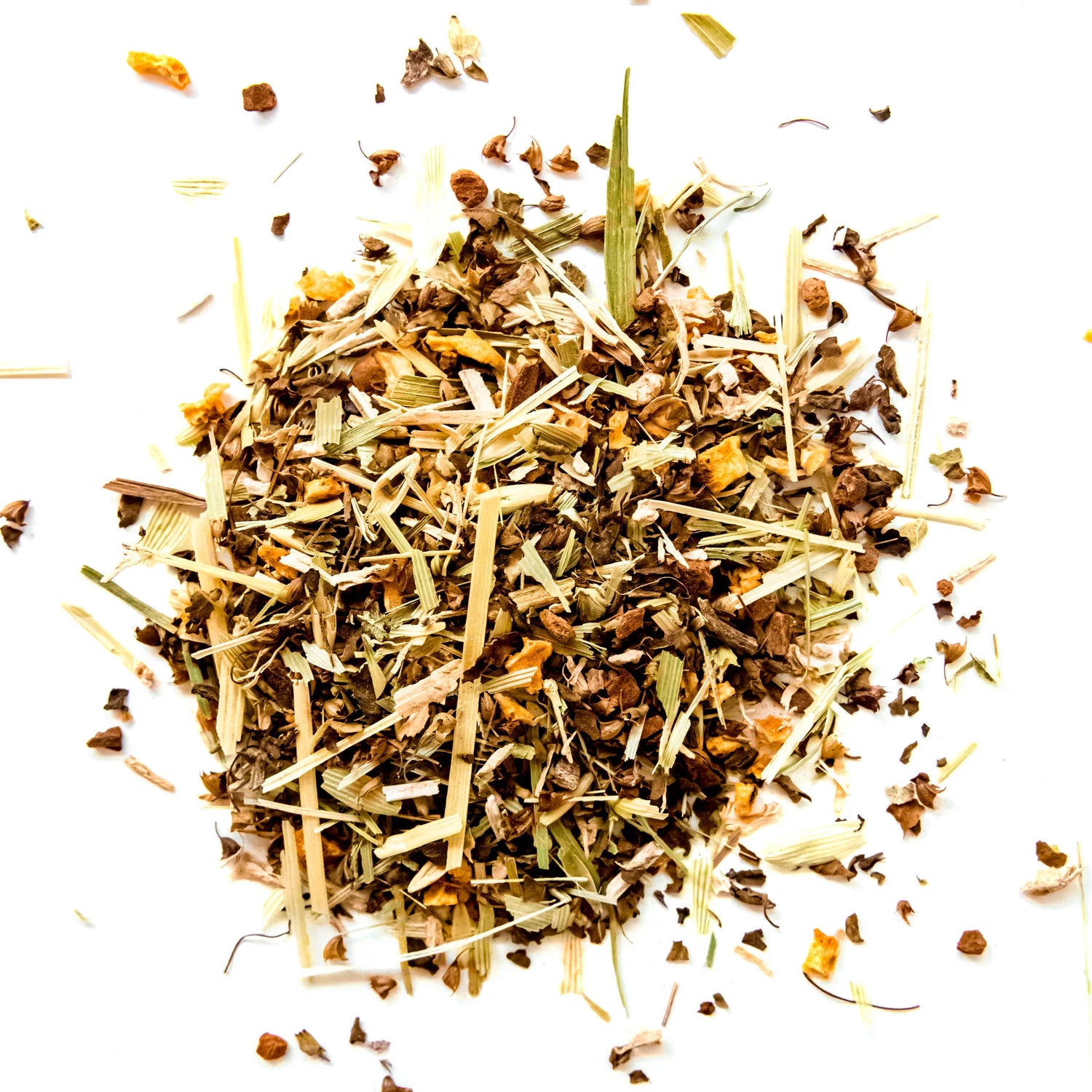
Loose leaf herbal tea blend with dried grasses, flowers, and botanical pieces scattered on white background, by Yerba Buena Tea Company.
Product image 2, can be opened in a modal.
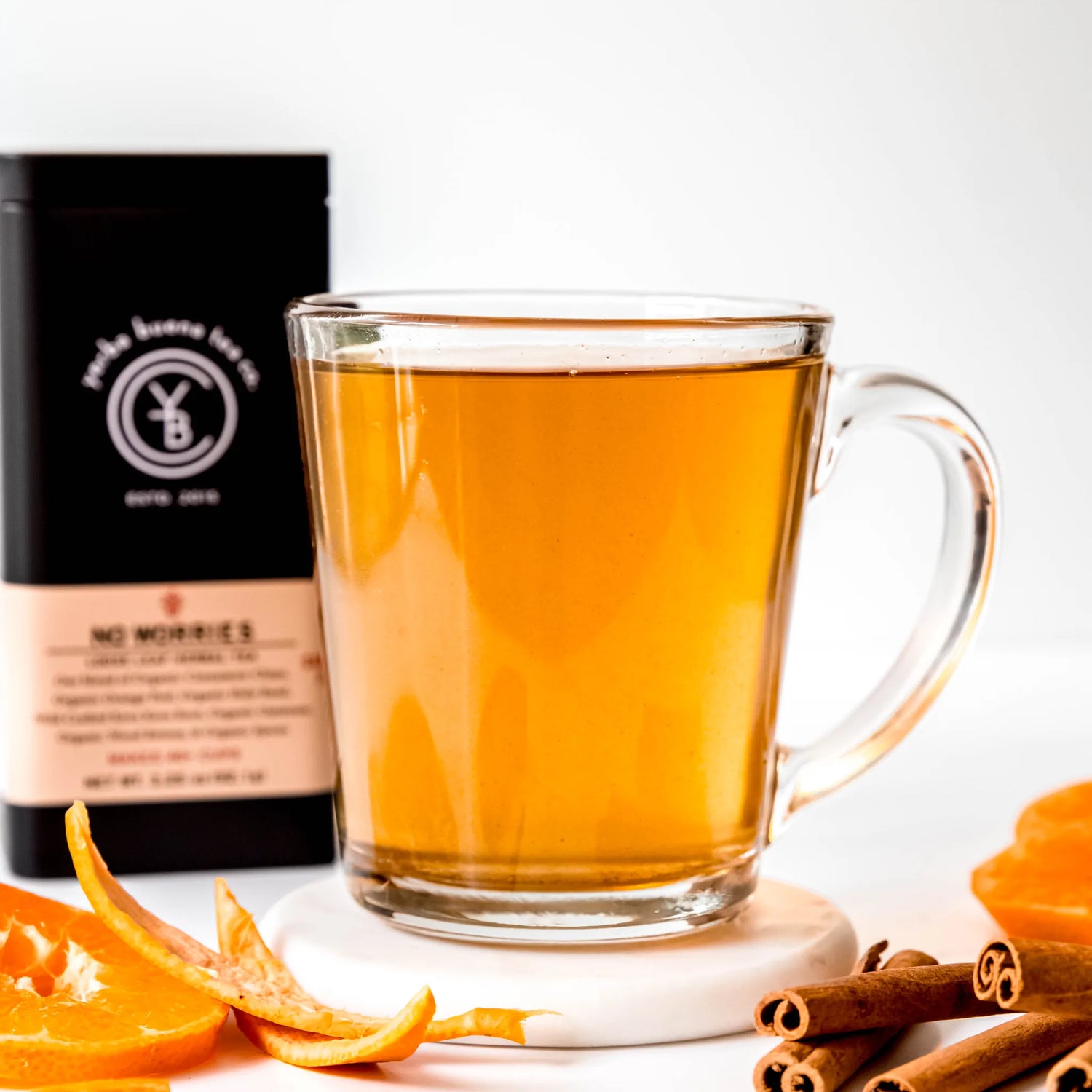
Brewed golden tea in clear glass mug surrounded by orange peel and cinnamon sticks with packaging, by Yerba Buena Tea Company.
Product image 3, can be opened in a modal.
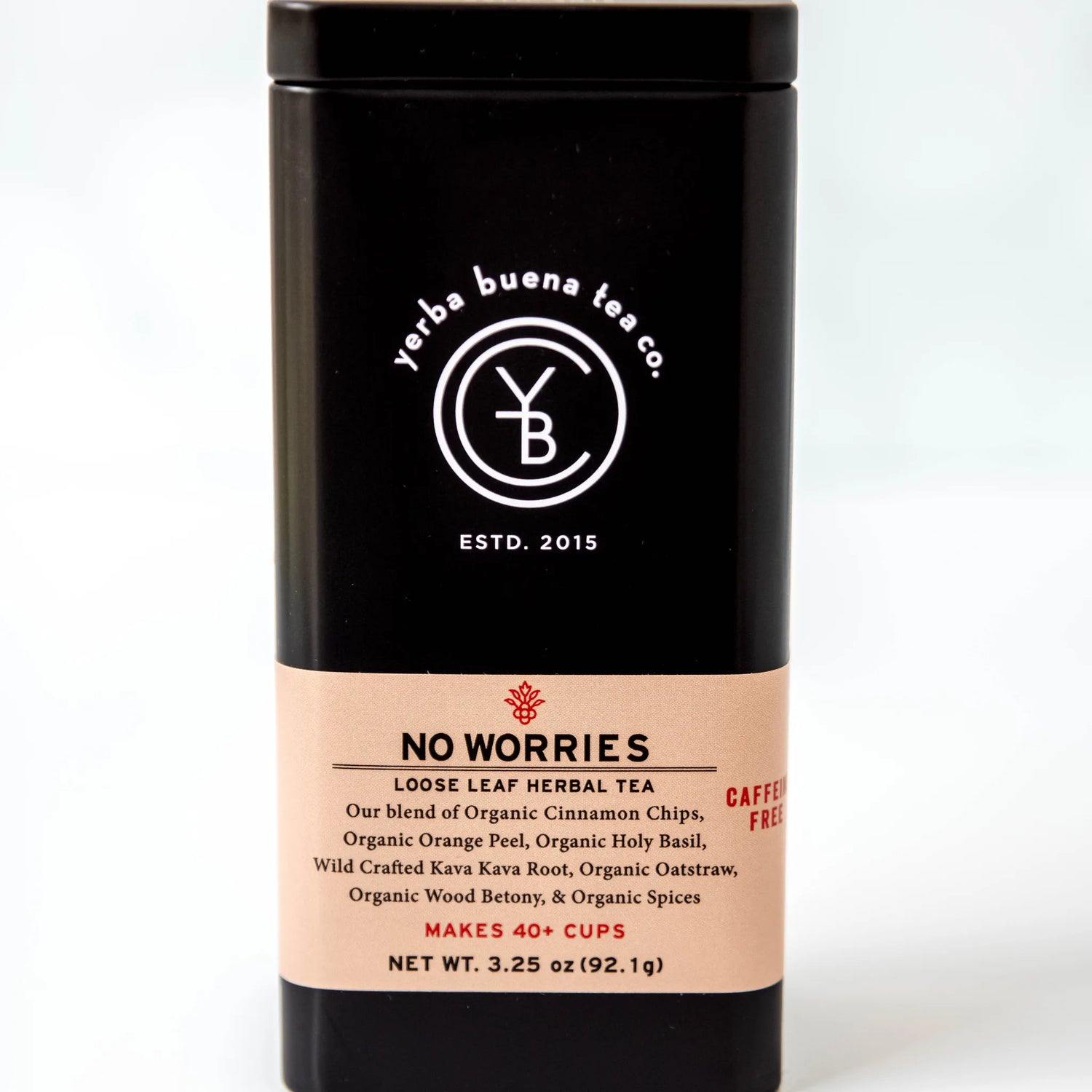
No Worries loose leaf herbal tea in a black cylindrical canister with cream label, by Yerba Buena Tea Company.

Organic Herbal Tea | Spiced & Grounding | Caffeine-Free

Organic No Worries Herbal Tea

Blended in Oregon Spicy Sweet

Kava root quiets the nervous system. Holy basil and oatstraw nourish it. The cup for high-stress afternoons when you need to stay sharp.

Ingredients: Organic Cinnamon Bark, Organic Orange Peel, Organic Holy Basil, Organic Kava Root, Organic Oatstraw, Organic Wood Betony, Organic Spices.

Regular price $18.00 USD
Regular price Sale price $18.00 USD
Shipping calculated at checkout.
Size: Tea Tin
  • Free shipping $70+
  • Small business
  • Secure checkout
About No Worries

The nervine blend that calms you down without putting you out.

Three actions, working together. Kava root contains kavalactones, compounds that bind to GABA receptors in the brain and produce a mild anxiolytic effect within 20 to 30 minutes. The nervous system downshifts. The shoulders drop. Holy basil and oatstraw are nervines, herbs that Western herbalism has used for centuries to nourish and restore the nervous system over time, not just in the moment. Cinnamon, orange peel, and warming spices give the cup its grounding sweetness. The result is a tea that takes the edge off stress without fogging the brain.

Why nervines, not sedatives.

Most calming teas lean on sedative herbs like valerian or passionflower, which knock you out. This blend uses nervines instead: herbs that feed the nervous system rather than suppress it. Oatstraw has a tradition in Western herbalism as a restorative for frazzled nerves. Wood betony shows up in medieval herbals as a remedy for what the texts called "frantic" energy. The kavalactones in kava root produce relaxation without drowsiness in most people, which is why Pacific Island cultures have used kava as a ceremonial drink for clear-headed gatherings. The cup calms, but it doesn't sedate.

How to use it.

Steep 1.5 teaspoons in 8 ounces of full-boil water for 7 minutes. Drink hot. Use it to mark the transition between work and home, or as the cup that closes the browser tabs in your brain during a high-stress afternoon. Best in the late afternoon or early evening, when you need to downshift but still have dinner to make or people to show up for. Blended in our Salem, Oregon kitchen.

Organic Ingredients
  • Organic Cinnamon Bark
  • Organic Orange Peel
  • Organic Holy Basil
  • Organic Kava Root
  • Organic Oatstraw
  • Organic Wood Betony
  • Organic Spices
Tasting Notes

Aroma: Warm and spicy. Cinnamon and orange peel up front, with a sweet, earthy undertone from the holy basil and oatstraw.

Flavor: Grounding and warming. The cinnamon leads, followed by the citrus brightness of the orange peel. The holy basil adds a soft, herbaceous sweetness. The kava root sits underneath, earthy and slightly numbing.

Finish: Smooth, with a pleasant tingling sensation on the tongue from the kavalactones in the kava. The warming spices linger.

Why You'll Love It

Kava root, the anxiolytic:

Piper methysticum has been the ceremonial drink of Pacific Island cultures for over 3,000 years, used in Fiji, Vanuatu, Samoa, and Tonga as a social beverage that produces relaxation and clear-headedness. The active compounds, kavalactones, bind to GABA receptors in the brain and produce a mild anxiolytic effect. Modern clinical studies have documented kava's effectiveness for stress relief, though the FDA requires a warning about liver health (see FAQ). The root produces a mild numbing sensation on the tongue, a sign the kavalactones are present.

Holy basil and oatstraw, the nervines: Both herbs fall under the category Western herbalism calls "nervines": plants that nourish and restore the nervous system over time. Holy basil (Tulsi) is one of the most revered herbs in Ayurvedic tradition, used as an adaptogen to help the body manage stress. Oatstraw has been a folk remedy in European herbalism for nervous exhaustion since at least the 17th century. Both work on a longer timeline than kava, building resilience with steady use.

Wood betony, the frantic-energy herb: Medieval European herbals mention wood betony as a remedy for what the texts called "frantic" or "overactive" energy. The herb has a tradition as a grounding agent, used when the mind won't slow down.

*FDA Warning: Ask a healthcare professional before use if you have had liver problems, frequently use alcoholic beverages, or are taking any medication. Kava-containing dietary supplements have been associated with liver-related injuries.

No Worries loose leaf herbal tea in a black cylindrical canister with cream label, by Yerba Buena Tea Company.

No Worries

Regular price $18.00 USD
Regular price Sale price $18.00 USD
TeaSalem, Oregon

Organic No Worries Herbal Tea

Steep grounding. Sip steady.

Caffeine: None
8.0 oz
Water
212°F
Temperature
1.5 tsp
Leaf
7 min
Steep Time
1
Cup

Craft Your Cup

A few notes from our teamakers.

The Commuter's Cup
Brew 1.5 teaspoons in 8 ounces of full-boil water for 7 minutes as soon as you finish your last work task. Sip it hot while you close the laptop, change out of work clothes, or walk around the block. The ritual marks the transition between work and home. The kava drops the shoulders. The warming spices ground you back into your body.

The Sunday Scaries Cup
Brew double-strength (2 teaspoons, 8 minutes) on Sunday evening when the dread of Monday starts creeping in. Drink it while you prep for the week or sit with a book. The holy basil and oatstraw take the edge off the anticipatory anxiety. The kava quiets the mental rehearsal of tomorrow's meetings.

No Worries with Honey and Milk
Brew 1.5 teaspoons for 7 minutes. Stir in 1 teaspoon of honey while the tea is still hot. Add a splash of oat milk or whole milk. The fat rounds the warming spices into something almost dessert-like. The honey bridges the cinnamon and orange. Drinks like a hug in a cup.

Loose leaf herbal tea blend with dried grasses, flowers, and botanical pieces scattered on white background, by Yerba Buena Tea Company.

Your Questions About No Worries, Answered.

Does this make you sleepy?

Kava produces relaxation without drowsiness in most people, which is why Pacific Island cultures use it as a ceremonial drink for clear-headed social gatherings. The blend calms the nervous system without fogging the brain. That said, kava affects everyone differently. Try it at home first before using it during work hours or before driving.

Is kava safe?

Kava has been used safely in Pacific Island cultures for over 3,000 years. However, the FDA requires a warning: kava-containing dietary supplements have been associated with liver-related injuries in rare cases. Do not use if you have liver problems, frequently use alcoholic beverages, or are taking medication. Consult a healthcare professional before use if you have any concerns.

Can I drink this every day?

Most herbalists recommend using kava intermittently rather than daily, as a tool for high-stress periods rather than a daily baseline. The nervines in the blend (holy basil, oatstraw, wood betony) support daily use, but kava is better reserved for the afternoons when the nervous system needs immediate support. If you're looking for a daily calming tea, consider chamomile or tulsi blends instead.