Product image 1, can be opened in a modal.
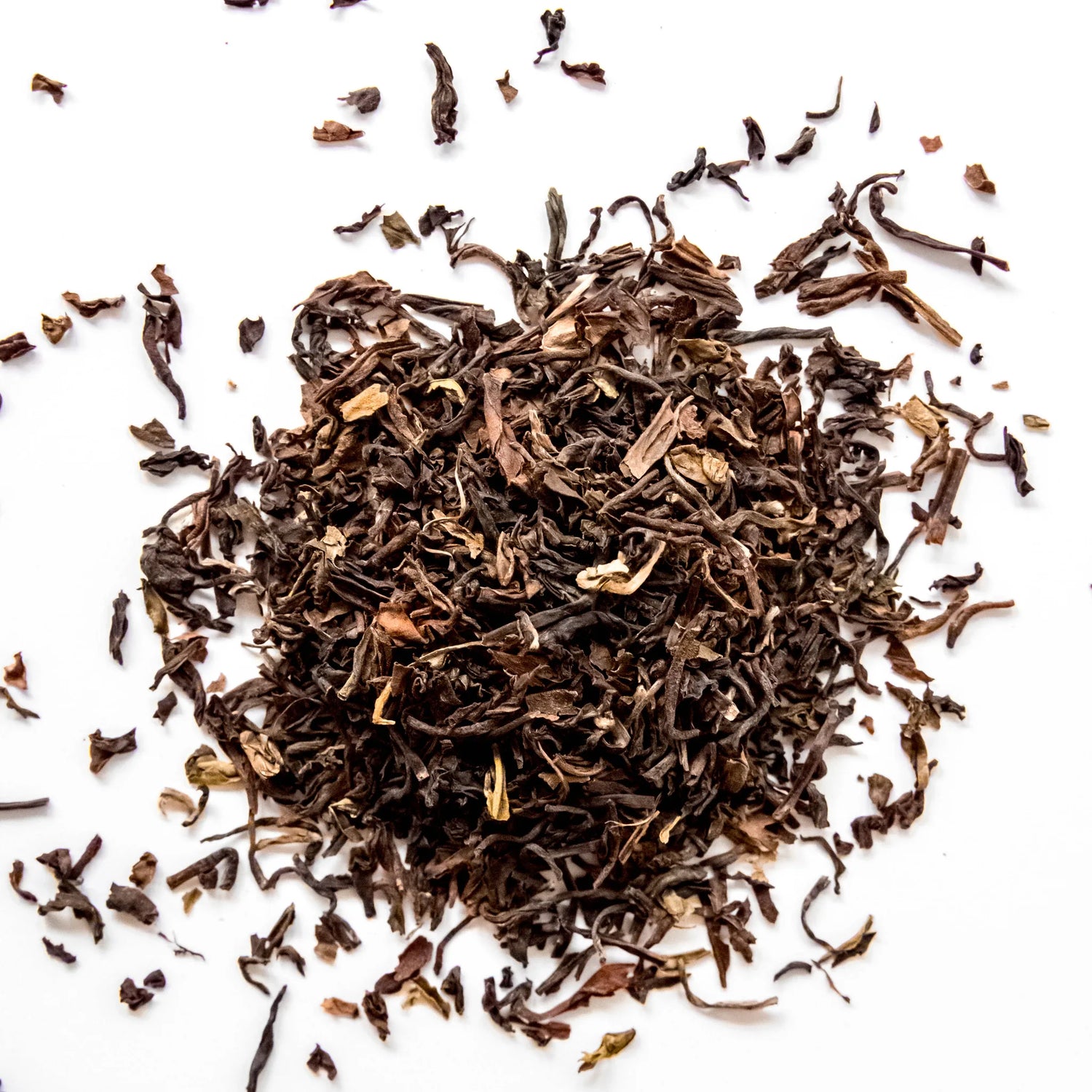
Loose leaf Darjeeling black tea with curled leaves scattered on white background, by Yerba Buena Tea Company.
Product image 2, can be opened in a modal.
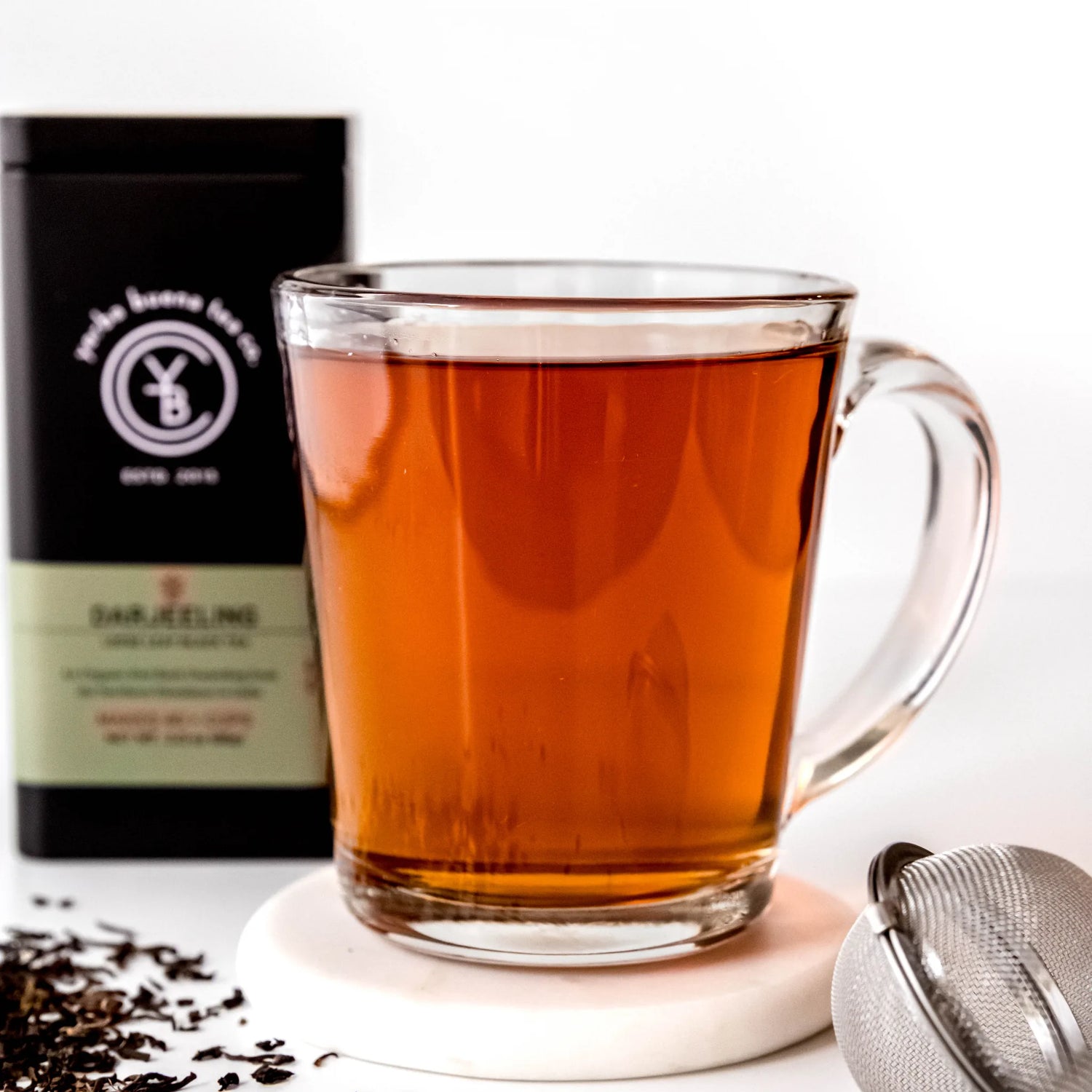
Brewed Darjeeling tea in clear glass mug with loose leaf tea and black pouch packaging visible behind, by Yerba Buena Tea Company.
Product image 3, can be opened in a modal.
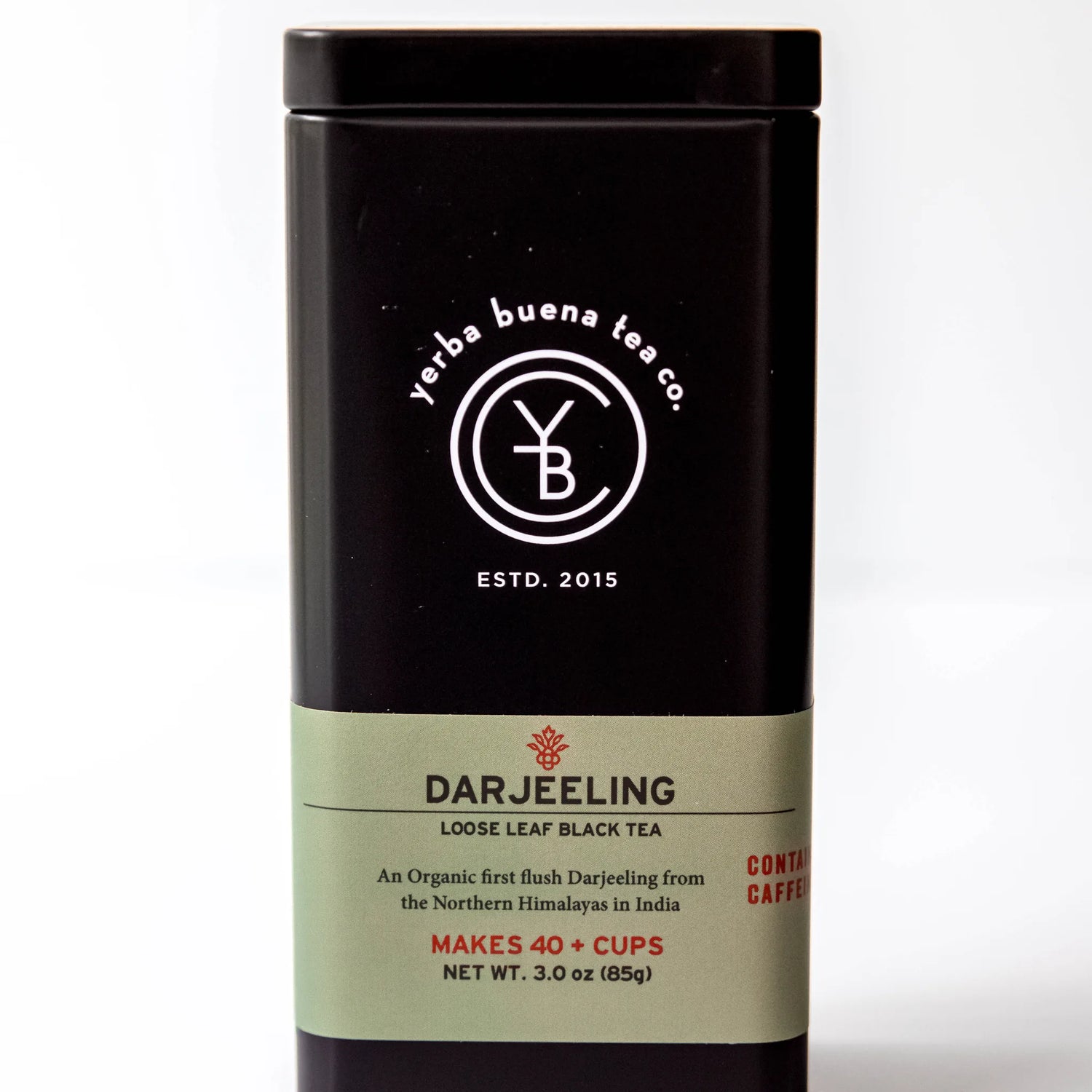
Darjeeling loose leaf black tea in sealed black canister with green label band, by Yerba Buena Tea Company.

Organic Black Tea | Muscatel & Floral | Medium Caffeine

Organic Darjeeling Black Tea

Grown in India Fruity Floral

Second Flush Darjeeling from the steep slopes of Northern India, with the muscatel-grape character that made this region famous. Light-bodied, floral, built for a quiet afternoon.

Ingredients: Organic Black Tea.

Regular price $18.00 USD
Regular price Sale price $18.00 USD
Shipping calculated at checkout.
Size: Tea Tin
  • Free shipping $70+
  • Small business
  • Secure checkout
About Darjeeling

The muscatel cup that made Darjeeling famous.

Second Flush Darjeeling from Northern India, grown at elevations between 4,000 and 6,000 feet in the foothills of the Himalayas. The thin air and steep slopes stress the tea bushes, which concentrate flavor compounds in the leaf. The result is the signature muscatel character: a fruity, wine-like note that reads as muscat grape and dried apricot. Light-bodied, crisp, with a natural astringency that cleanses the palate. This is the tea that earned Darjeeling its protected-origin status in India.

Why Second Flush matters.

Darjeeling harvests three times a year: First Flush in spring, Second Flush in early summer, and Monsoon Flush in the rainy season. Second Flush produces the muscatel note collectors prize. The tea bushes mature through May and June, developing higher concentrations of geraniol and linalool, the aromatic compounds that create the grape-like fruitiness. First Flush is lighter and more vegetal. Second Flush is where the terroir shows up in the cup.

The afternoon ritual.

Darjeeling is too delicate for milk. The tannins are light, the body is thin, and milk would cover the muscatel and floral top notes. Brew it at 205°F for 3 minutes. Serve it straight in a thin porcelain cup. A slice of lemon or a half-teaspoon of honey brings out the sweeter notes without covering the character. Best in the late afternoon, when you want alertness without heaviness.

Organic Ingredients
  • Organic Black Tea
Tasting Notes

Aroma: High-toned and floral. Wildflowers, fresh peach, a hint of honey.

Flavor: The signature muscatel note opens the cup: fruity, wine-like, reminiscent of muscat grapes. The body is light. The finish is dry and astringent, which cleanses the palate.

Finish: Long, clean, crisp. The astringency lingers like a fine white wine.

Why You'll Love It

The protected-origin region: Darjeeling holds a Geographic Indication (GI) status in India, similar to Champagne in France. Only tea grown in the 87 registered estates in the Darjeeling district can legally be sold as Darjeeling. The region sits in the foothills of the Himalayas, at elevations between 2,000 and 7,000 feet. The altitude, the cool nights, and the monsoon-fed soil create a terroir that produces tea nowhere else in the world can replicate.

The Second Flush harvest: Picked in May and June, after the spring rains and before the monsoon. The tea bushes mature slowly through the early summer, developing the muscatel character collectors prize. The leaves are darker, the oxidation is deeper, and the flavor is fruitier than the delicate First Flush.

The British afternoon tea tradition: Darjeeling became the afternoon tea of the British Raj in the 19th century. The light body and crisp astringency made it the tea to serve between lunch and dinner, often with thin sandwiches and pastries. The tradition holds: Darjeeling is still the afternoon tea in fine hotels across India and Europe.

Darjeeling loose leaf black tea in sealed black canister with green label band, by Yerba Buena Tea Company.

Darjeeling

Regular price $18.00 USD
Regular price Sale price $18.00 USD
TeaNorthern India, India

Organic Darjeeling Black Tea

Brew light. Sip pure.

Caffeine: Medium
8.0 oz
Water
205°F
Temperature
1.0 tsp
Leaf
3 min
Steep Time
Re-Steep · Up to 2×
Water at 205°F, not full boil. The delicate muscatel notes turn bitter above 210°F. 3 minutes for a balanced cup, 4 if you want more astringency. A half-teaspoon of honey brings out the sweeter notes without covering the grape character.
1
Cup

Craft Your Cup

A few notes from our teamakers.

Darjeeling with Honey and Lemon
Brew 1 teaspoon in 8 ounces of 205°F water for 3 minutes. While the tea is still warm, dissolve half a teaspoon of local honey into the cup. Add a thin slice of lemon. The honey brings out the muscatel sweetness, the lemon brightens the astringency. The afternoon tea ritual that has held for over a century.

Cold-Brewed Darjeeling
Steep 2 teaspoons in 16 ounces of cold water in the fridge for 8 hours. Strain. Pour over ice with a sprig of fresh mint. The cold extraction drops the tannins and keeps the muscatel note bright and clean. Drinks closer to a white wine spritzer than a tea.

Darjeeling Poached Pears
Brew a strong pot (3 tablespoons in 4 cups of water, steep 5 minutes). Add 1 cup of sugar and bring to a simmer. Peel and core 4 firm pears, then poach them in the tea syrup for 20 minutes. The muscatel note infuses the fruit. Serve the pears warm with vanilla ice cream and a drizzle of the reduced syrup.

Loose leaf Darjeeling black tea with curled leaves scattered on white background, by Yerba Buena Tea Company.

Your Questions About Darjeeling, Answered.

Why is it called the Champagne of Teas?

The comparison comes from two facts: exclusivity and flavor profile. Like Champagne, true Darjeeling can only come from one specific region in India, protected by Geographic Indication status. The flavor also shares characteristics with sparkling wine: crisp, fruity, dry, with a light body and a long finish. The muscatel note reads like muscat grapes, which is the same grape family that produces dessert wines in Europe.

Should I add milk to Darjeeling?

Most tea drinkers skip the milk. Darjeeling is a light-bodied black tea with delicate muscatel and floral notes that milk would cover. If you want to sweeten or soften the cup, a thin slice of lemon or a half-teaspoon of honey is a better choice. Both bring out the fruity notes without masking the character.

How much caffeine does Darjeeling have?

Moderate caffeine, in the middle range for black teas. The leaves are less oxidized than a heavy Assam or Ceylon, so the caffeine extraction is slightly lower. The lift is gentle and focused, which is why Darjeeling became the British afternoon tea tradition. It provides alertness without the heaviness of a morning brew.