The Tea That Walks Two Paths
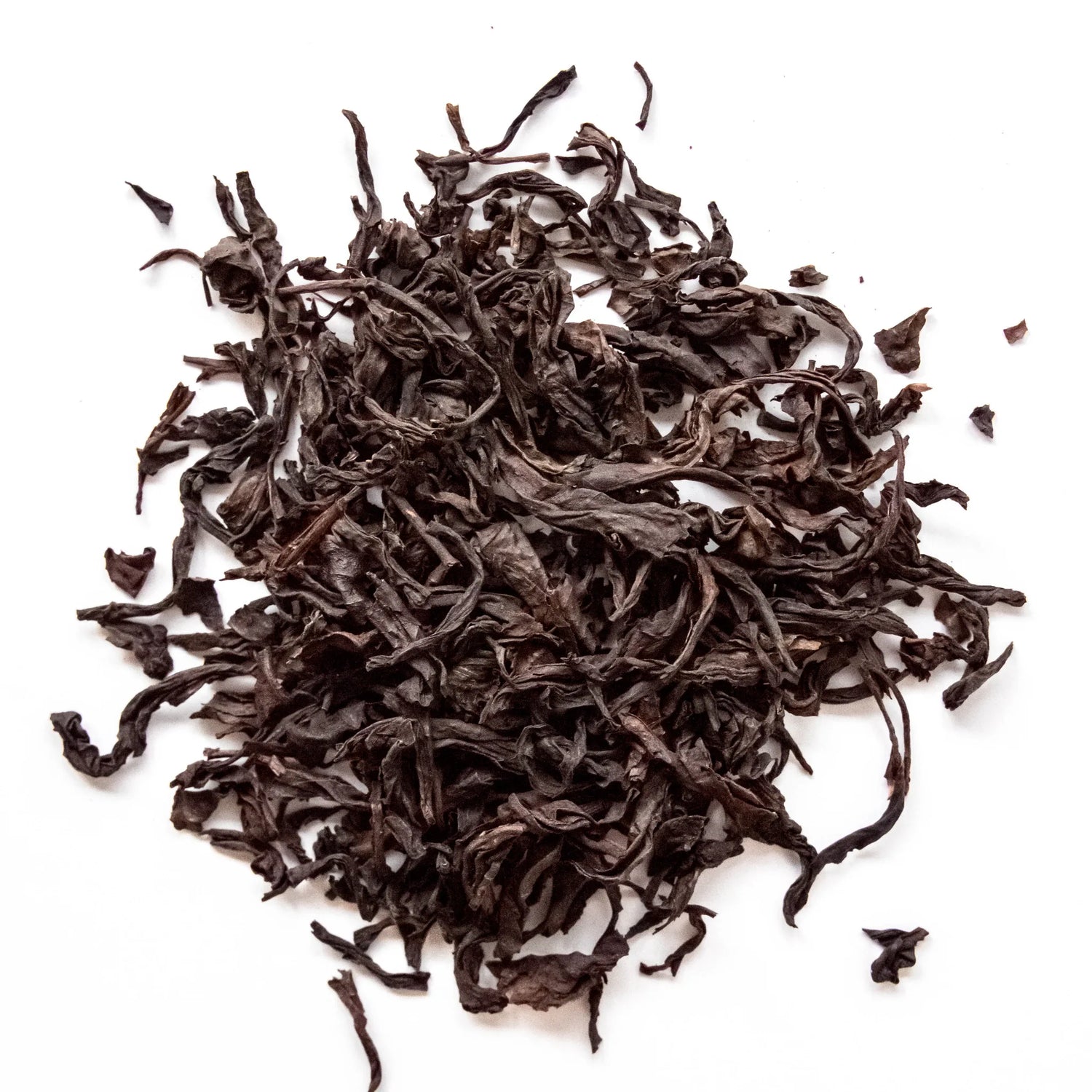
Oolong is the bridge. Half-oxidized, it falls between the vegetal freshness of green tea and the malty depth of black. The result is a cup that opens with orchid and honeysuckle, then settles into toasted chestnut and brown sugar. In China, where it was born, oolong is the Sunday tea: slow-steeped, re-infused, savored over conversation.
What makes oolong different is control. A tea master halts oxidation halfway through, locking in both the green leaf's brightness and the black leaf's complexity. The same leaves can be steeped four, five, six times, each infusion revealing a new layer. First steep: floral and light. Third steep: round and nutty. By the fifth, you are tasting the mineral backbone of the soil it grew in.
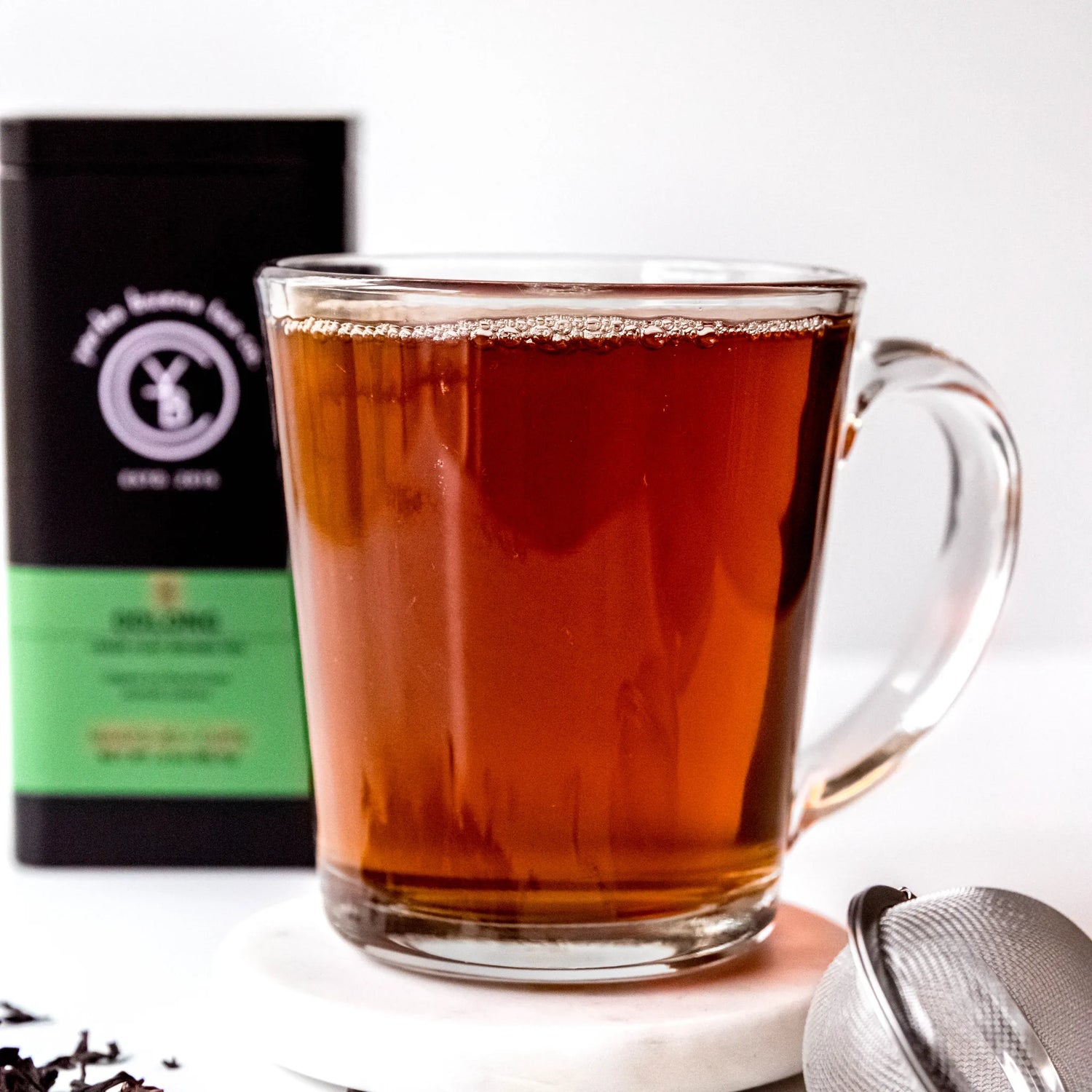
Oolong sits in the middle for caffeine, too: roughly 30 to 50 milligrams per cup, less jittery than black tea, more sustaining than green. In traditional Chinese medicine, oolong is the digestive tea, brewed strong after heavy meals to cut through oils and settle the stomach. That is not a medical claim, it is centuries of observation. Use boiling water (212°F) and steep for 3 to 5 minutes. Save the leaves and steep again.
Oolong sits between green and black. Explore our Green Teas for the lighter side, or our Connoisseur Collection for more rare leaves.