Product image 1, can be opened in a modal.
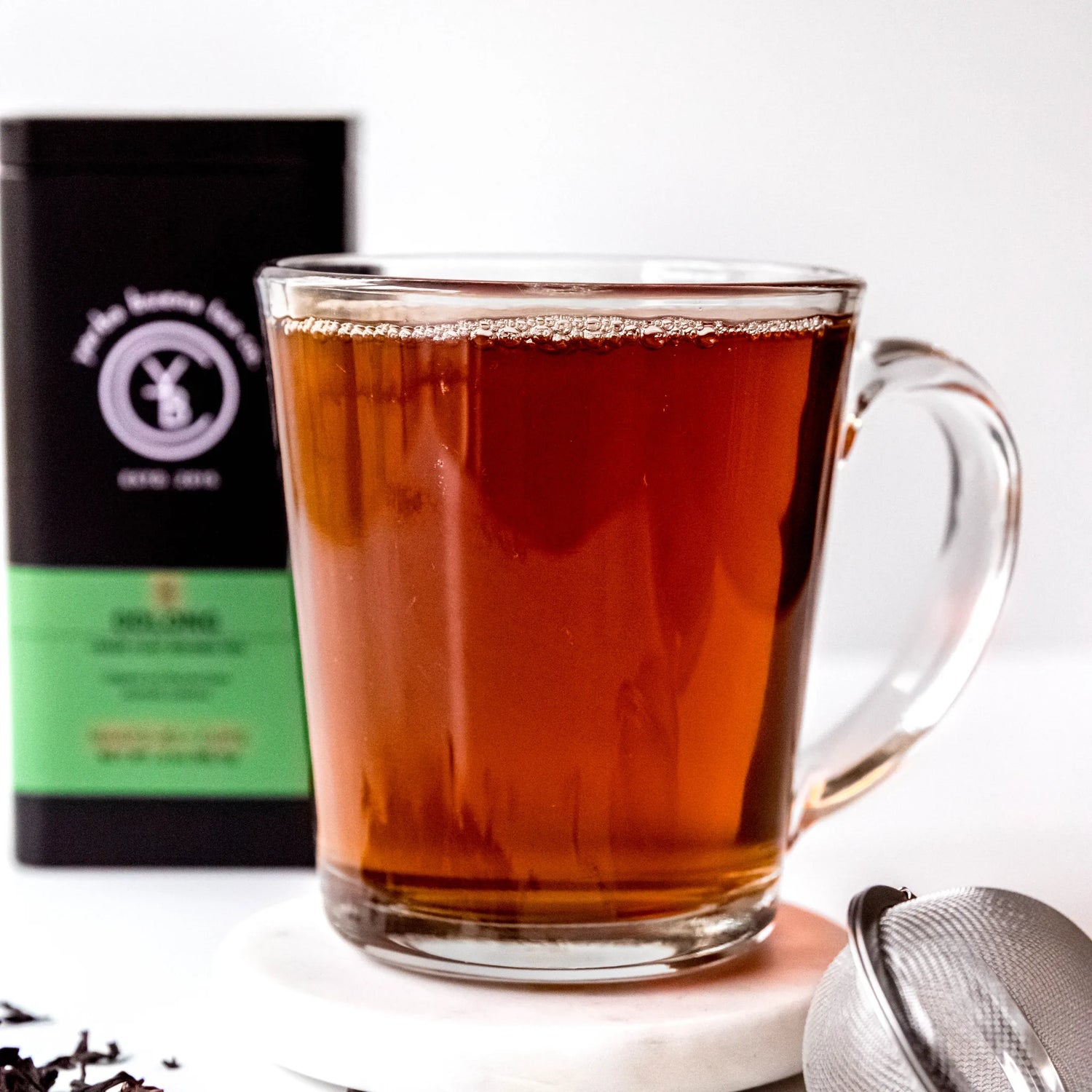
Curled dark brown oolong tea leaves scattered loosely on white background, by Yerba Buena Tea Company.
Product image 2, can be opened in a modal.
Brewed oolong tea in a clear glass mug with black and green tea package blurred in background, by Yerba Buena Tea Company.
Product image 3, can be opened in a modal.
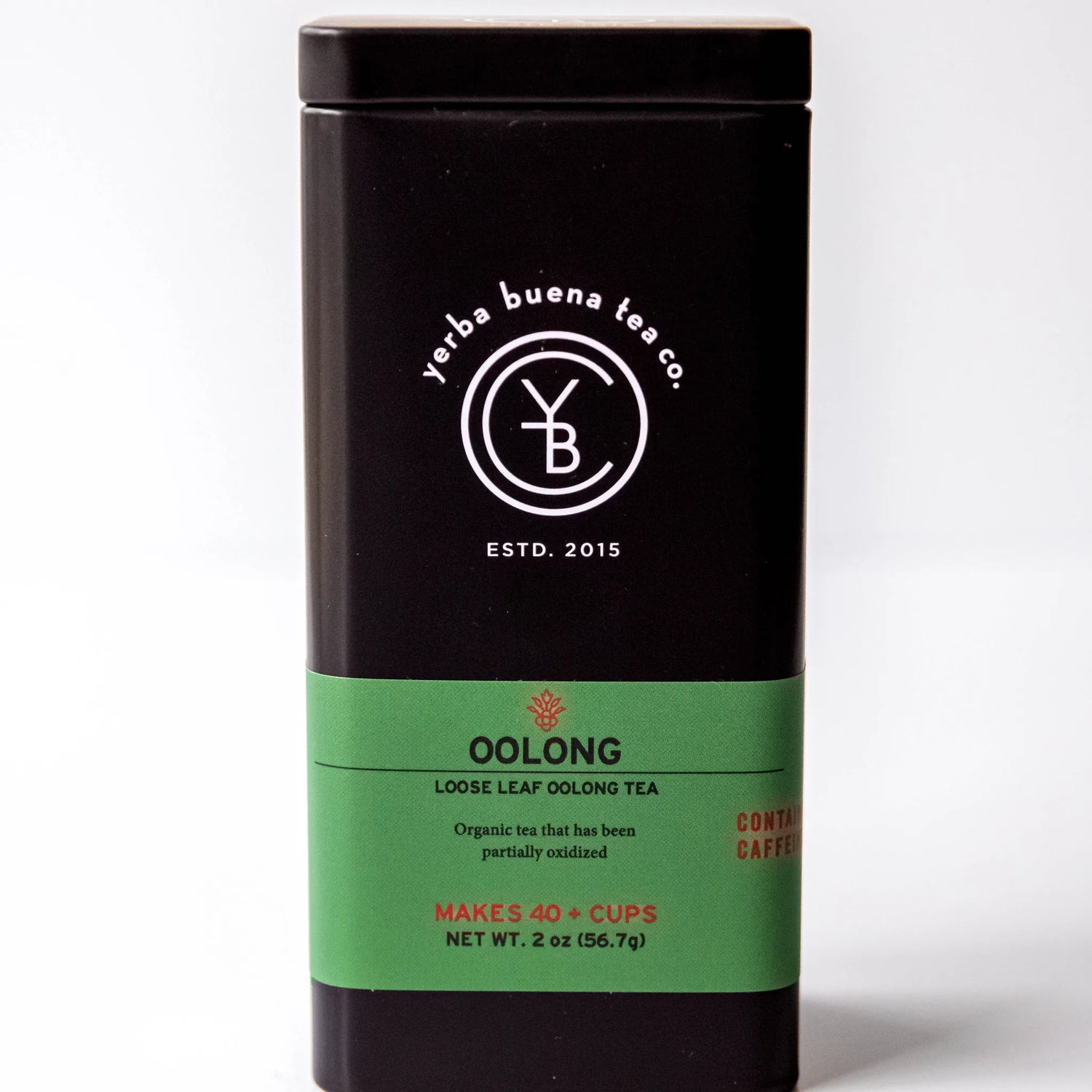
Sealed black canister with green label showing loose leaf oolong tea packaging, by Yerba Buena Tea Company.

Organic Oolong Tea | Floral & Toasted | Medium Caffeine

Organic Ti Kuan Yin Oolong Tea

Grown in China Toasted Floral

Semi-oxidized tea from Fujian Province, China. Orchid aroma over a toasted walnut body. The cup that sits between green and black.

Ingredients: Organic Oolong Tea.

Regular price $18.00 USD
Regular price Sale price $18.00 USD
Shipping calculated at checkout.
Size: Tea Tin
  • Free shipping $70+
  • Small business
  • Secure checkout
About Oolong

The tea that sits between green and black.

Ti Kuan Yin is a semi-oxidized oolong from Fujian Province, China. The leaf is 40-50% oxidized, which puts it halfway between the vegetal brightness of green tea and the malty body of black tea. The cup tastes like blooming orchids over toasted walnuts, with a buttery texture that lingers. The process is what makes it: the leaves are bruised in bamboo baskets to start oxidation at the edges, then fired to stop the reaction. The bruising is what releases the floral compounds.

Why the leaves are twisted.

Ti Kuan Yin is rolled into tight pellets during production. The rolling breaks down cell walls and compresses the leaf, which concentrates the aromatic oils. When you steep the leaf, it unfurls slowly, releasing flavor in stages. This is why oolong re-steeps so well. The first steep opens the leaf. The second and third steeps extract the deeper notes. By the fourth steep, the leaf is fully open and the cup is softer, sweeter, with almost no astringency.

The Hui Gan phenomenon.

Chinese tea tradition names the returning sweetness that shows up after you swallow. Hui Gan translates as "returning sweetness." High-quality oolongs produce it reliably. The sweetness sits at the back of the throat and builds with each sip. The effect is subtle, but once you notice it, you notice it every time. Floral, toasted, sweet on the return.

Organic Ingredients
  • Organic Oolong Tea
Tasting Notes

Aroma: Blooming orchids and lilacs. A soft, floral perfume that fills the cup before you taste it.

Flavor: Buttery and textured. Fresh vegetation up front, toasted walnut through the middle, a creamy sweetness at the finish.

Finish:Lingering and sweet. The Hui Gan effect: a returning sweetness at the back of the throat that builds with each sip.

Why You'll Love It

The Iron Goddess name: Ti Kuan Yin translates as "Iron Goddess of Mercy," named after Guanyin, the Buddhist deity of compassion. Legend traces the tea to an 18th-century Fujian farmer who discovered a tea plant growing near a ruined Guanyin temple. He cultivated it, and the tea became one of China's Ten Famous Teas. The name stuck.

Semi-oxidation as craft: Oolong production requires timing. The leaves are bruised in bamboo baskets to start oxidation at the edges, then fired to halt the reaction at the exact moment the floral compounds peak. Stop too early and the tea tastes vegetal. Stop too late and it tastes like black tea. The 40-50% oxidation range is where the orchid aroma appears.

Traditional pairing: Oolong is the after-meal tea across China and Taiwan, particularly after rich or greasy dishes. The polyphenol profile differs from green and black tea, with compounds that traditional Chinese medicine credits with aiding digestion and clearing heat. Modern studies look at oolong's effect on lipid metabolism, though results vary.

Sealed black canister with green label showing loose leaf oolong tea packaging, by Yerba Buena Tea Company.

Oolong

Regular price $18.00 USD
Regular price Sale price $18.00 USD
TeaFujian Province, China

Organic Ti Kuan Yin Oolong Tea

Rinse once. Steep four times.

Caffeine: Medium
8.0 oz
Water
190°F
Temperature
1.0 tsp
Leaf
4 min
Steep Time
Re-Steep · Up to 4×
Rinse the leaves with hot water for 5 seconds before the first steep. This wakes the leaf and removes any dust from processing. First steep: 3 minutes. Second steep: 4 minutes. Third and fourth: 5 minutes. The leaf unfurls slowly, so each steep tastes different.
1
Cup

Craft Your Cup

A few notes from our teamakers.
Iced Oolong with Honey
Brew double-strength (2 teaspoons in 8 ounces at 190°F, steep 5 minutes). While warm, dissolve 1 teaspoon of honey into the cup. Pour over ice. The floral notes stay bright when cold, and the honey rounds the toasted walnut finish. Drinks like a lightly sweet floral iced tea.

Cold-Brew Oolong Concentrate
Steep 3 tablespoons in 32 ounces of cold water in the fridge for 12 hours. Strain. The cold extraction pulls almost no tannin, so the cup is smooth, floral, and naturally sweet with zero bitterness. Dilute 1:1 with water or milk, or drink straight over ice. Keeps in the fridge for 3 days.

Oolong Shortbread Cookies
Grind 2 tablespoons of leaves into a fine powder in a spice grinder. Fold into shortbread dough. The toasted walnut notes in the tea mirror the browned butter in the cookies, and the floral aroma stays delicate through baking. The result is a tea cookie that tastes more sophisticated than the effort suggests.

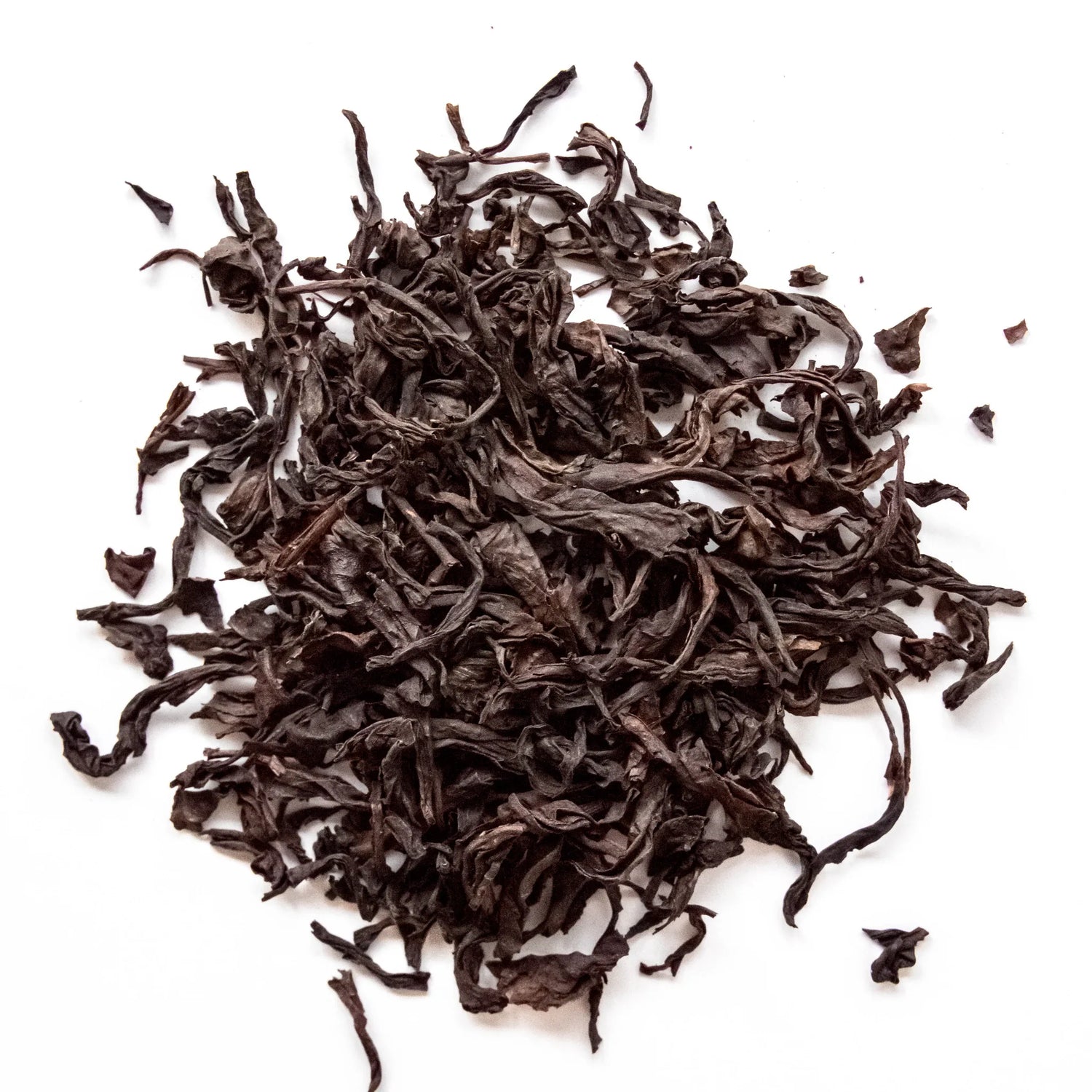
Curled dark brown oolong tea leaves scattered loosely on white background, by Yerba Buena Tea Company.

Your Questions About Oolong, Answered.

Is this green tea or black tea?

Neither. Oolong is its own category. Green tea is 0% oxidized, dried or steamed immediately after harvest. Black tea is 100% oxidized, fully darkened before firing. Oolong sits at 40-50% oxidation, which is why the cup tastes floral like green tea but smooth like black tea. The partial oxidation is what makes it oolong.

How many times can I re-steep this?

Three to four times. The rolled leaves unfurl slowly, so the first steep extracts the floral top notes, the second and third steeps pull the toasted body, and the fourth steep is softer and sweeter with almost no astringency. Use the same leaves, same temperature, and add 1 minute to each steep. Most customers stop after the third, but the fourth is worth trying.

What does Ti Kuan Yin mean?

Ti Kuan Yin translates as "Iron Goddess of Mercy," named after Guanyin, the Buddhist deity of compassion. The tea originated in Fujian Province in the 18th century and became one of China's Ten Famous Teas. The "iron" refers to the weight of the rolled leaf, which is denser than most teas. The name has stuck for over 200 years.