Product image 1, can be opened in a modal.
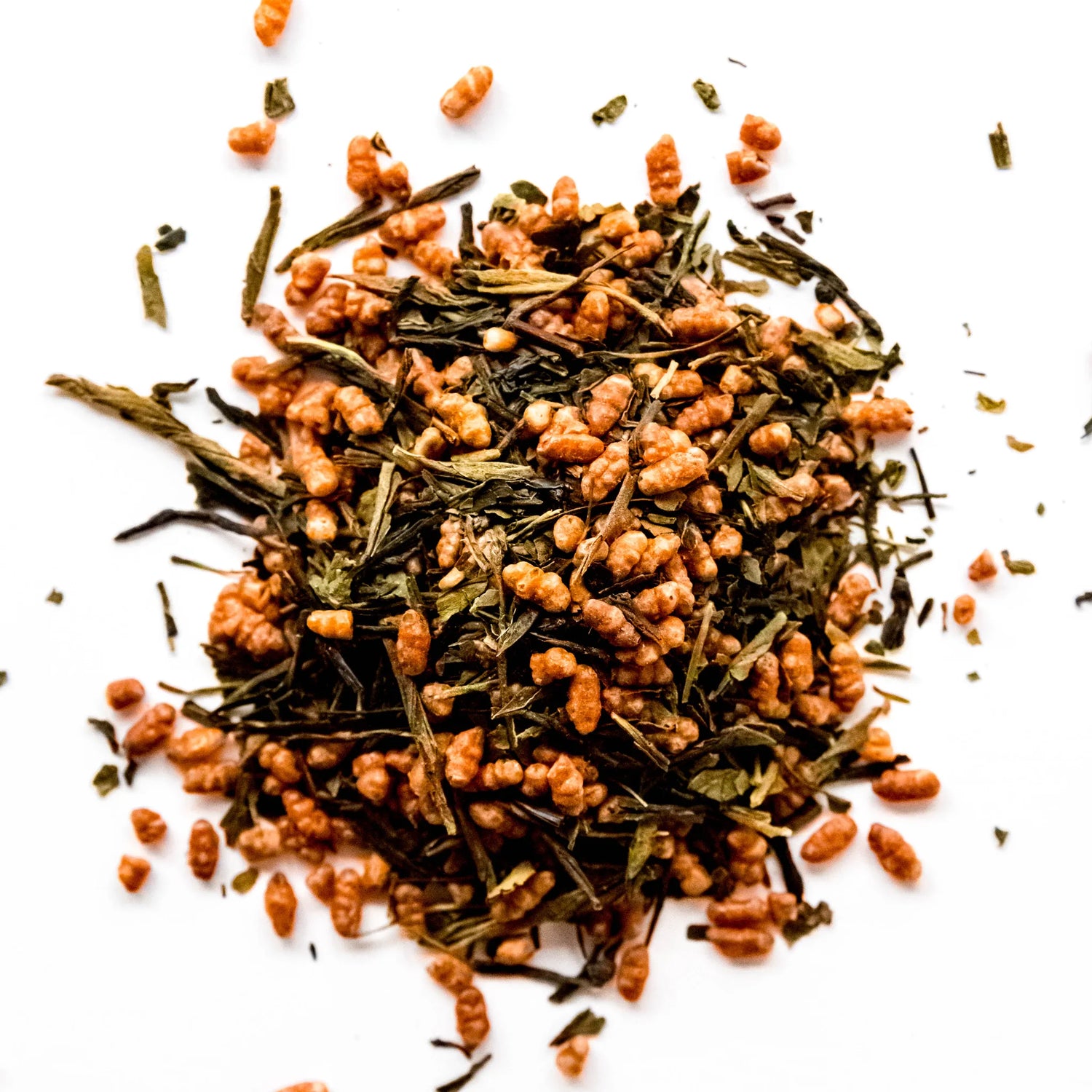
Loose leaf genmaicha tea blend with green tea leaves and roasted rice kernels scattered on white background, by Yerba Buena Tea Company.
Product image 2, can be opened in a modal.
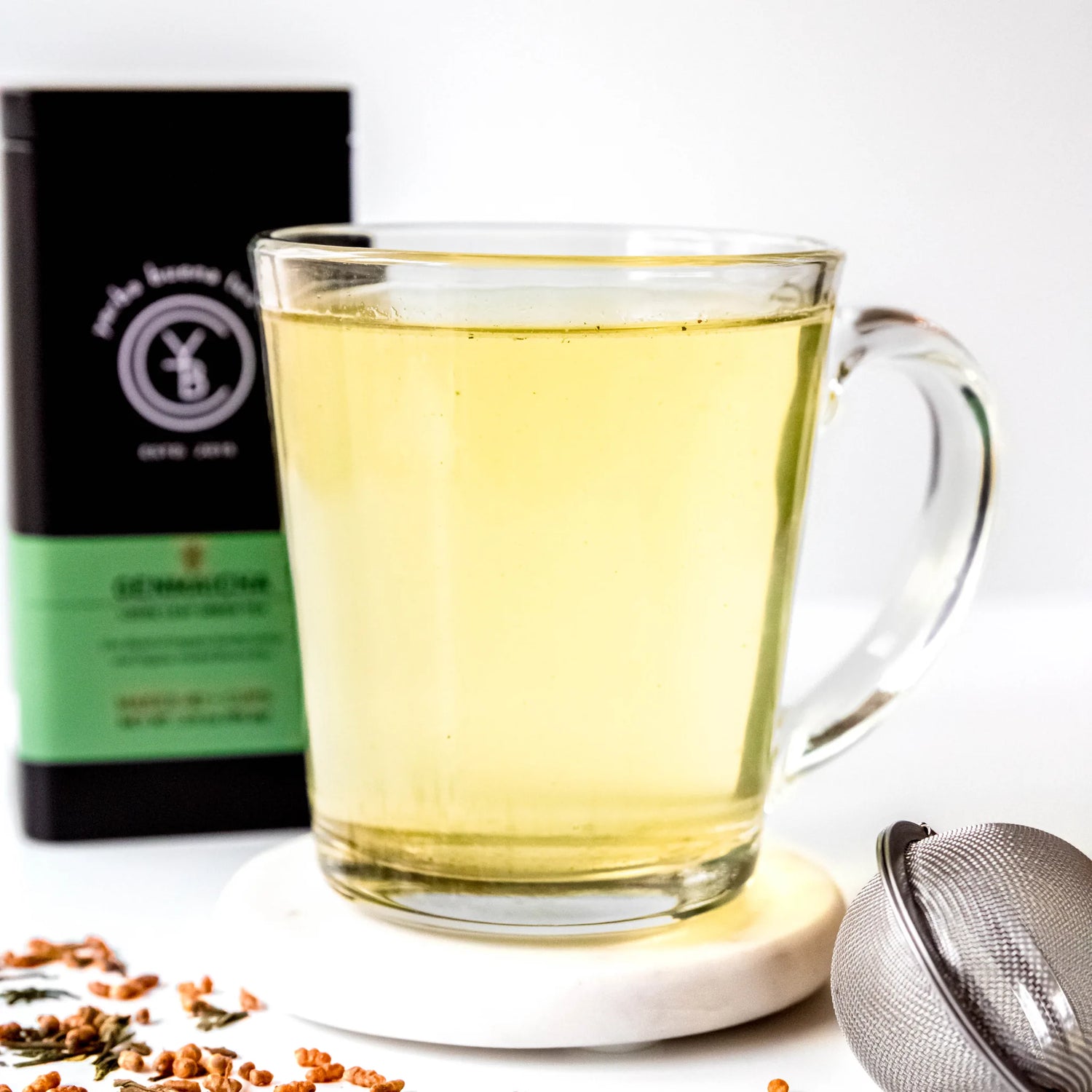
Pale yellow brewed genmaicha tea in a glass mug with infuser ball and packaging pouch behind, by Yerba Buena Tea Company.
Product image 3, can be opened in a modal.
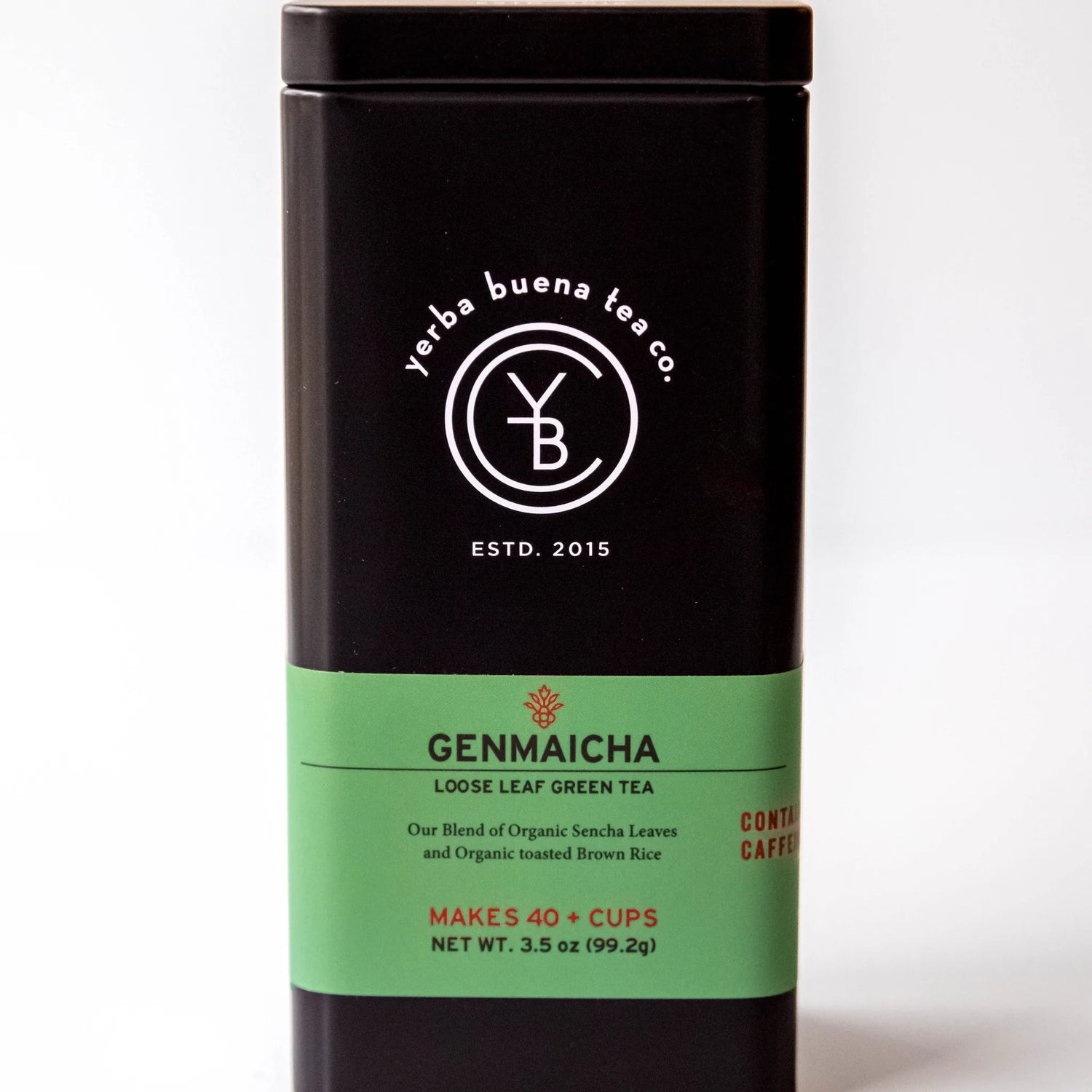
Genmaicha loose leaf green tea in black canister with green label band, by Yerba Buena Tea Company.

Organic Green Tea | Nutty & Savory | Low Caffeine

Organic Genmaicha Green Tea

Blended in Oregon Toasted Grassy

Japanese green tea with toasted brown rice. The savory, popcorn-like cup that made green tea approachable.

Ingredients: Organic Green Tea, Organic Roasted Brown Rice.

Regular price $18.00 USD
Regular price Sale price $18.00 USD
Shipping calculated at checkout.
Size: Tea Tin
  • Free shipping $70+
  • Small business
  • Secure checkout
About Genmaicha

The green tea for people who find green tea too grassy.

Genmaicha is an organic Japanese blend of sencha green tea and toasted brown rice. The rice roasts until it pops, which is why the tea smells like fresh popcorn. The toasting caramelizes the starches in the rice, releasing a nutty sweetness into the cup that softens the vegetal edge of the green tea. The result is savory, broth-like, impossible to over-steep. The tea that makes green tea make sense.

Why the rice changes everything.

The starch matters. When the toasted rice steeps, it releases natural sugars and starches into the water, which smooth out the astringency that makes straight green tea taste sharp or bitter to some palates. The body thickens. The flavor reads as warm, comforting, and savory rather than bright or grassy. You still get the antioxidants and the gentle caffeine lift of green tea, but the cup tastes closer to a light miso broth than a standard tea infusion.

The lunch companion.

In Japan, Genmaicha is the midday tea, brewed with meals because the savory character pairs with food rather than competing with it. Rice bowls, sushi, grilled fish, a sandwich at your desk: the tea cleanses the palate without overwhelming the flavors on the plate. The low caffeine level keeps it gentle enough for afternoon drinking without disrupting sleep later.

Organic Ingredients
  • Organic Green Tea
  • Organic Roasted Brown Rice
Tasting Notes

Aroma: Toasted grain, warm and nutty. Smells exactly like fresh popcorn or roasted rice crackers.

In the cup: Savory and smooth. The toasted rice leads with a caramelized sweetness. The sencha sits underneath with a soft, vegetal note. The body is thicker than a standard green tea, almost broth-like.

Finish: Clean and lightly sweet. Leaves a starchy coating on the tongue, the way a good rice cracker does.

Why You'll Love It

The People's Tea: Genmaicha came out of early 20th-century Japan, when tea was expensive and rice was abundant. Adding toasted rice to green tea stretched the supply, making tea affordable for working people. What began as economic necessity became a national flavor, still called "the People's Tea" in Japan today. The name "genmaicha" translates literally as "brown rice tea."

The popcorn effect: Some rice kernels pop during the roasting process, which is why the tea is also nicknamed "Popcorn Tea" in English-speaking markets. The popped kernels add visual charm and reinforce the toasted-grain aroma in the dry leaf.

Low caffeine by design: Because the rice takes up space in the spoon, you brew fewer tea leaves per cup. The result is naturally lower in caffeine than a straight sencha, which makes Genmaicha the afternoon green tea for people who want the ritual without the jolt.

Genmaicha loose leaf green tea in black canister with green label band, by Yerba Buena Tea Company.

Genmaicha

Regular price $18.00 USD
Regular price Sale price $18.00 USD
TeaJapan

Organic Genmaicha Green Tea

Steep savory. Sip comfort.

Caffeine: Low
8.0 oz
Water
175°F
Temperature
1.0 tsp
Leaf
3 min
Steep Time
Re-Steep · Up to 2×
3 minutes at 175°F. The lower temperature keeps the sencha sweet and prevents the rice from turning bitter. You can push this to 4 minutes without consequence. Nearly impossible to over-steep.
1
Cup

Craft Your Cup

A few notes from our teamakers.

Genmaicha with Miso Soup
Brew 1 teaspoon in 8 ounces at 175°F for 3 minutes. Sip alongside a bowl of miso soup or a rice-based meal. The savory, broth-like character of the tea mirrors the umami in the soup. Classic Japanese pairing that works because both are built on the same flavor foundation: toasted grain and fermented soy.

Cold-Brewed Genmaicha
Steep 2 teaspoons in 16 ounces of cold water in the fridge for 8 hours. Strain. The cold extraction pulls the toasted sweetness from the rice and drops most of the astringency from the sencha. The result is smooth, lightly sweet, refreshing. Drinks closer to barley tea than green tea.

Genmaicha Ochazuke
Brew a strong cup (1.5 teaspoons, 4 minutes). Pour the hot tea over leftover rice in a bowl. Top with pickled vegetables, furikake, or sesame seeds. "Ochazuke" is the traditional Japanese comfort food: tea over rice. The toasted rice in the tea reinforces the rice in the bowl. Fast, savory, satisfying.

Loose leaf genmaicha tea blend with green tea leaves and roasted rice kernels scattered on white background, by Yerba Buena Tea Company.

Your Questions About Genmaicha, Answered.

Why is there rice in my tea?

It's a Japanese tradition that dates to the early 20th century. Tea was expensive; rice was abundant. Adding toasted brown rice stretched the tea supply and made it affordable for working people. The roasted rice adds a nutty, savory depth that balances the vegetal character of the green tea. Some kernels even pop during roasting, which is why it's nicknamed "Popcorn Tea" in English.

Is it gluten-free?

Yes. The ingredients are organic green tea and organic roasted brown rice, both naturally gluten-free. Rice is not a gluten-containing grain.

Does it taste like green tea?

It tastes like green tea softened by toasted grain. The vegetal, grassy notes that define sencha sit in the background. The toasted rice leads with a warm, nutty sweetness that reads as savory rather than bright. If you find straight green tea too grassy or astringent, this is the blend that will change your mind.