Product image 1, can be opened in a modal.
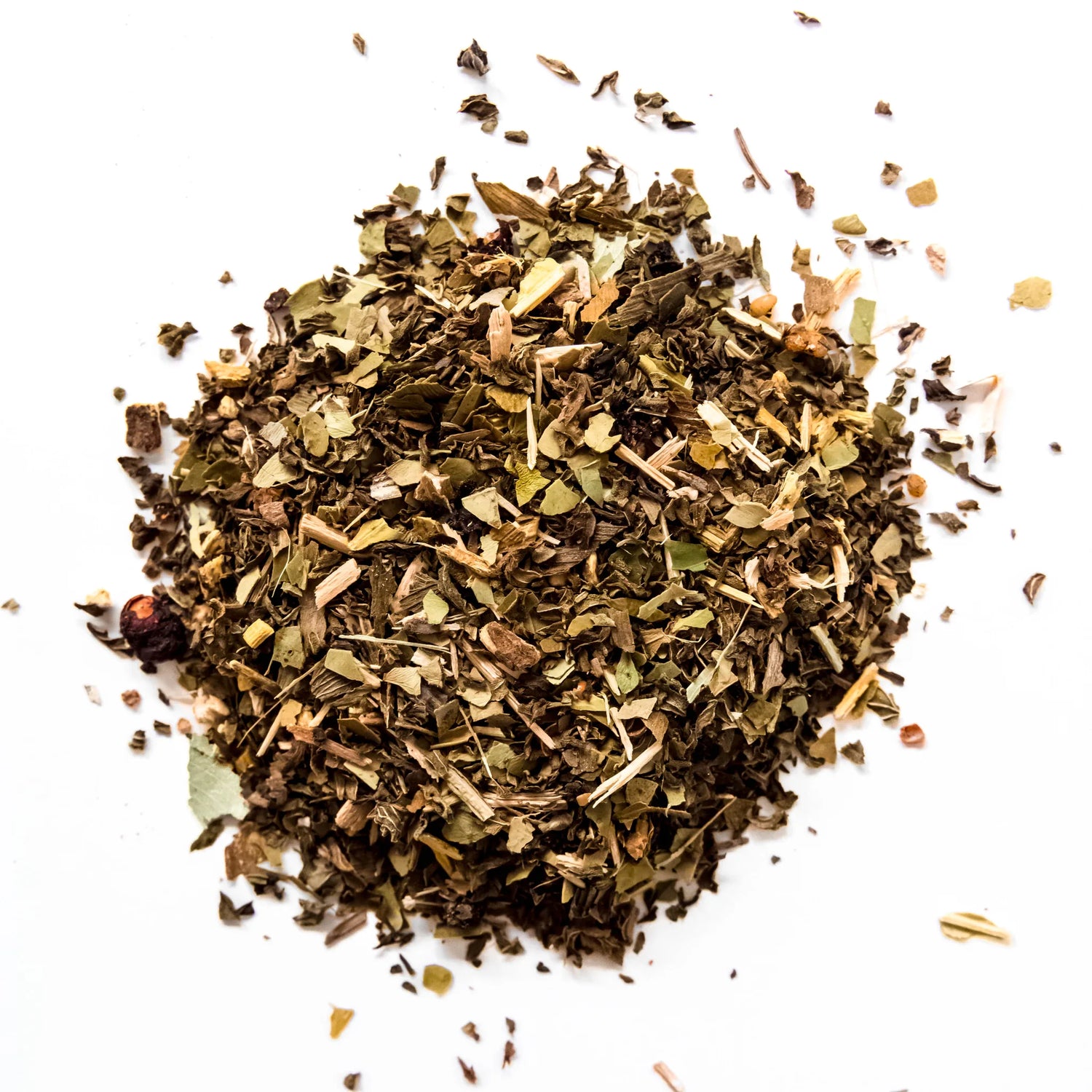
Loose leaf herbal tea blend with dried herbs and plant material scattered on white background, by Yerba Buena Tea Company.
Product image 2, can be opened in a modal.
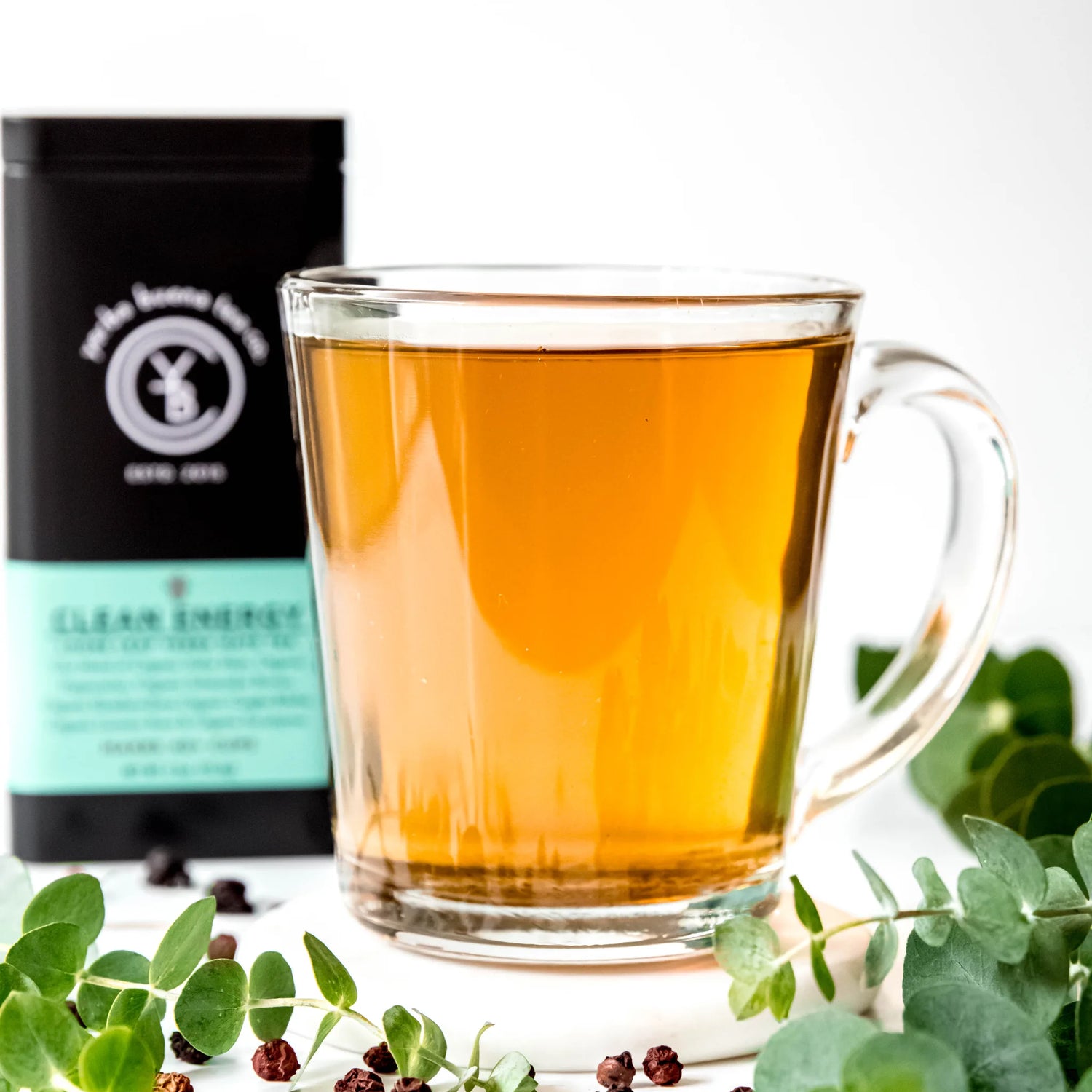
Brewed golden tea in a clear glass mug surrounded by fresh green leaves and packaging, by Yerba Buena Tea Company.
Product image 3, can be opened in a modal.
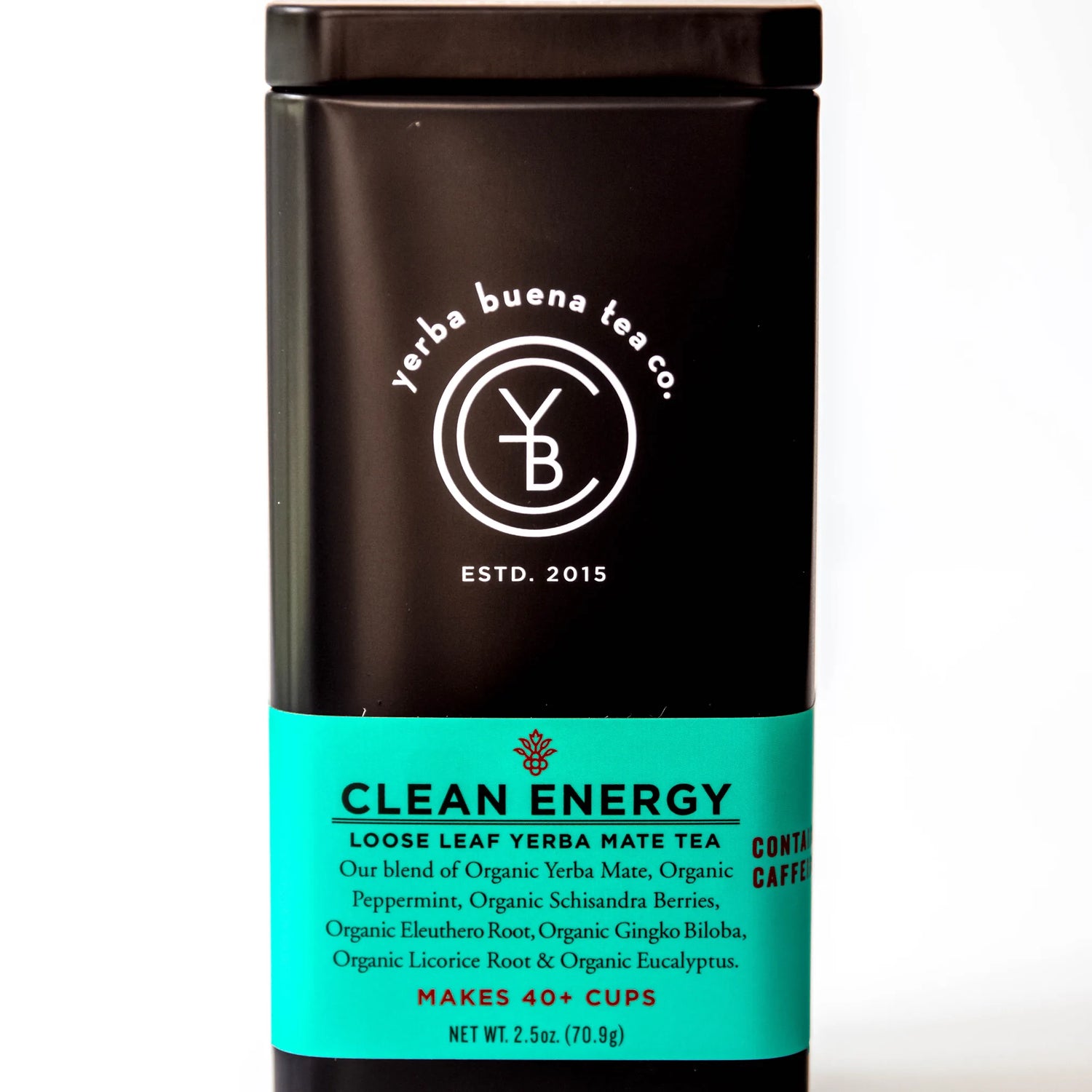
Clean Energy loose leaf yerba mate tea in dark canister with turquoise label band, by Yerba Buena Tea Company.

Organic Yerba Mate | Minty & Earthy | High Caffeine

Organic Clean Energy Yerba Mate

Blended in Oregon Mint Earthy

Brazilian Yerba Mate blended with seven adaptogenic and stimulant herbs. The sustained-lift cup for the 3 PM wall and the morning that needs more than coffee.

Ingredients: Organic Yerba Mate, Organic Peppermint Leaf, Organic Schisandra Berries, Organic Eleuthero Root, Organic Ginkgo Biloba, Organic Licorice Root, Organic Eucalyptus Leaf.

Regular price $18.00 USD
Regular price Sale price $18.00 USD
Shipping calculated at checkout.
Size: Tea Tin
  • Free shipping $70+
  • Small business
  • Secure checkout
About Clean Energy

The sustained-focus cup built from two caffeine sources.

Brazilian Yerba Mate is the base. Peppermint, schisandra berries, eleuthero root, ginkgo biloba, licorice root, and eucalyptus round it out. Seven ingredients, each one pulling a specific job: the Yerba Mate delivers the caffeine backbone (roughly 65-75mg per cup), the peppermint brightens the palate, the schisandra berries add a tart-sweet complexity, the eleuthero and ginkgo sit in the adaptogen lane, the licorice binds the flavor, the eucalyptus opens the sinuses. The cup tastes minty, earthy, lightly sweet, and drinks like something you'd make for a deadline, not a moment of relaxation.

Why Yerba Mate works differently than coffee.

Yerba Mate is Ilex paraguariensis, a South American holly species cultivated across Brazil, Argentina, Paraguay, and Uruguay. The caffeine content sits between green tea and coffee, but the compound profile includes theobromine (the alkaloid in chocolate) and theophylline (a bronchodilator), which modulate the stimulant effect. Traditional gaucho culture treats Mate as an all-day social drink, passed in a gourd among friends and refilled repeatedly. The steady lift, not the spike-and-crash. Mate also contains chlorogenic acids and saponins, plant compounds studied in modern phytochemistry for antioxidant activity.

The adaptogen support layer.

Eleuthero root is Eleutherococcus senticosus, often called Siberian Ginseng, used in Traditional Chinese Medicine under the name ci wu jia as a Qi tonic. Ginkgo biloba is one of the oldest living tree species on the planet, with fossil records dating back 270 million years. Both herbs sit in the adaptogen category in Western herbalism, plants that support the body's response to physical and mental stress. The combination doesn't eliminate fatigue, but it tends to smooth the ride.

Organic Ingredients
  • Organic Yerba Mate
  • Organic Peppermint Leaf
  • Organic Schisandra Berries
  • Organic Eleuthero Root
  • Organic Ginkgo Biloba
  • Organic Licorice Root
  • Organic Eucalyptus Leaf
Tasting Notes

Aroma: Bright peppermint over an earthy, grassy Mate base. The eucalyptus opens the sinuses before the first sip.

In the cup: Minty and vegetal up front. The Yerba Mate reads as earthy and slightly smoky, the way South American Mate traditionally does. The schisandra berries add a tart-sweet note that cuts through the middle. The licorice root rounds the finish without making the cup taste like candy.

Finish: Clean, slightly astringent, with a lingering mint coolness. The eucalyptus stays in the sinuses. The cup leaves the palate feeling awake.

Iced: Cold-brew it for 8 hours and the mint becomes the dominant note. The earthiness softens. Drinks closer to an herbal energy drink than a traditional tea.

Why You'll Love It

Yerba Mate, the South American social stimulant: Cultivated and consumed across Argentina, Brazil, Paraguay, and Uruguay for centuries. The traditional preparation involves steeping the leaves in a hollowed-out gourd (also called a mate) and sipping through a filtered metal straw called a bombilla. The gourd gets refilled repeatedly throughout the day, often shared in a circle. The ritual is less about a single caffeinated jolt and more about sustained alertness over hours. Mate contains caffeine, theobromine, and theophylamine, which is why the lift feels broader than coffee's single-alkaloid hit.

Eleuthero and Ginkgo, the adaptogen layer: Eleuthero root is a staple of Traditional Chinese Medicine, classified as a Qi tonic under the name <em>ci wu jia</em>. Ginkgo biloba is one of the planet's oldest living tree species, with medicinal use records in China dating back over a thousand years. Both herbs fall into the adaptogen category in Western herbalism, plants that support the body's response to stress without overstimulating. They don't make fatigue disappear; they tend to make the fatigue easier to navigate.

Peppermint and Eucalyptus, the clarity herbs: Both contain volatile oils (menthol in peppermint, eucalyptol in eucalyptus) that open the airways and sharpen the senses. Peppermint has been an after-meal digestive aid across Europe for centuries. Eucalyptus shows up in respiratory herbalism traditions from Australia to the Mediterranean. In this blend, they work as sensory amplifiers: the mint wakes the palate, the eucalyptus clears the sinuses, and both make the caffeine feel sharper than it actually is.

Clean Energy loose leaf yerba mate tea in dark canister with turquoise label band, by Yerba Buena Tea Company.

Clean Energy

Regular price $18.00 USD
Regular price Sale price $18.00 USD
TeaBrazil

Organic Clean Energy Yerba Mate

Steep strong. Focus steady.

Caffeine: High
8.0 oz
Water
175°F
Temperature
1.0 tsp
Leaf
5 min
Steep Time
Re-Steep · Up to 2×
5 minutes at 175°F brings out the mint without overextracting the Mate into bitterness. The Mate base can handle a re-steep: add 2 minutes to the second infusion. Traditional gaucho preparation involves 5 to 10 refills of the same leaves throughout the day.
1
Cup

Craft Your Cup

A few notes from our teamakers.

The Deep Work Pot
Brew 2 heaping teaspoons in 16 ounces of 175°F water for 5 minutes. Strain. Sip over the course of a 2-hour work session. Re-steep the same leaves with an additional 2 minutes steep time when the pot runs out. Traditional gaucho preparation involves refilling the same leaves throughout the day; this is the desk-job version of that ritual.

Cold-Brew Energy Tonic
Place 2 tablespoons of leaves in 32 ounces of cold water. Refrigerate for 8 hours. Strain. Pour over ice with a squeeze of lime and a drizzle of honey. The cold extraction drops most of the bitterness and amplifies the mint. Drinks like a natural energy drink, closer to a tonic than a tea.

The Pre-Workout Cup
Brew 1.5 teaspoons in 8 ounces of 175°F water for 6 minutes (slightly longer than the standard brew to extract more caffeine). Drink 20 to 30 minutes before a morning run or gym session. The caffeine and adaptogens work together to support endurance without the spike-and-crash of pre-workout powders. Pair with a light breakfast.

Loose leaf herbal tea blend with dried herbs and plant material scattered on white background, by Yerba Buena Tea Company.

Your Questions About Clean Energy, Answered.

How much caffeine is in this compared to coffee?

Roughly 65 to 75 milligrams of caffeine per 8-ounce cup, which sits between a strong green tea and a light-roast coffee. An 8-ounce cup of drip coffee typically contains 95 to 120 milligrams. The difference is in the compound profile: Yerba Mate contains caffeine plus theobromine (the alkaloid in chocolate) and theophylline (a bronchodilator), which modulate the stimulant effect. Most people report a steadier lift with less jitter.

What does Yerba Mate taste like?

Earthy, grassy, slightly smoky, with a vegetal bitterness that sits somewhere between green tea and a strong herbal infusion. Traditional South American Mate can be an acquired taste for people raised on softer teas. This blend softens the Mate with peppermint (which brightens the palate), schisandra berries (which add a tart-sweet note), and licorice root (which rounds the finish). If you've never had Mate before, expect something closer to a strong green tea with more body and a cooling mint aftertaste.

Is this safe to drink daily?

Yerba Mate has been consumed daily across South America for centuries as a social and work beverage, often refilled 5 to 10 times throughout the day. The adaptogen herbs (eleuthero and ginkgo) are generally recognized as safe in moderate amounts. That said, high-caffeine products are not appropriate for everyone. If you are pregnant, nursing, have a heart condition, or are sensitive to stimulants, consult a qualified healthcare practitioner before adding this to your routine. Licorice root in large quantities can affect blood pressure; the amount in this blend is culinary-level, not medicinal-dose.