Product image 1, can be opened in a modal.
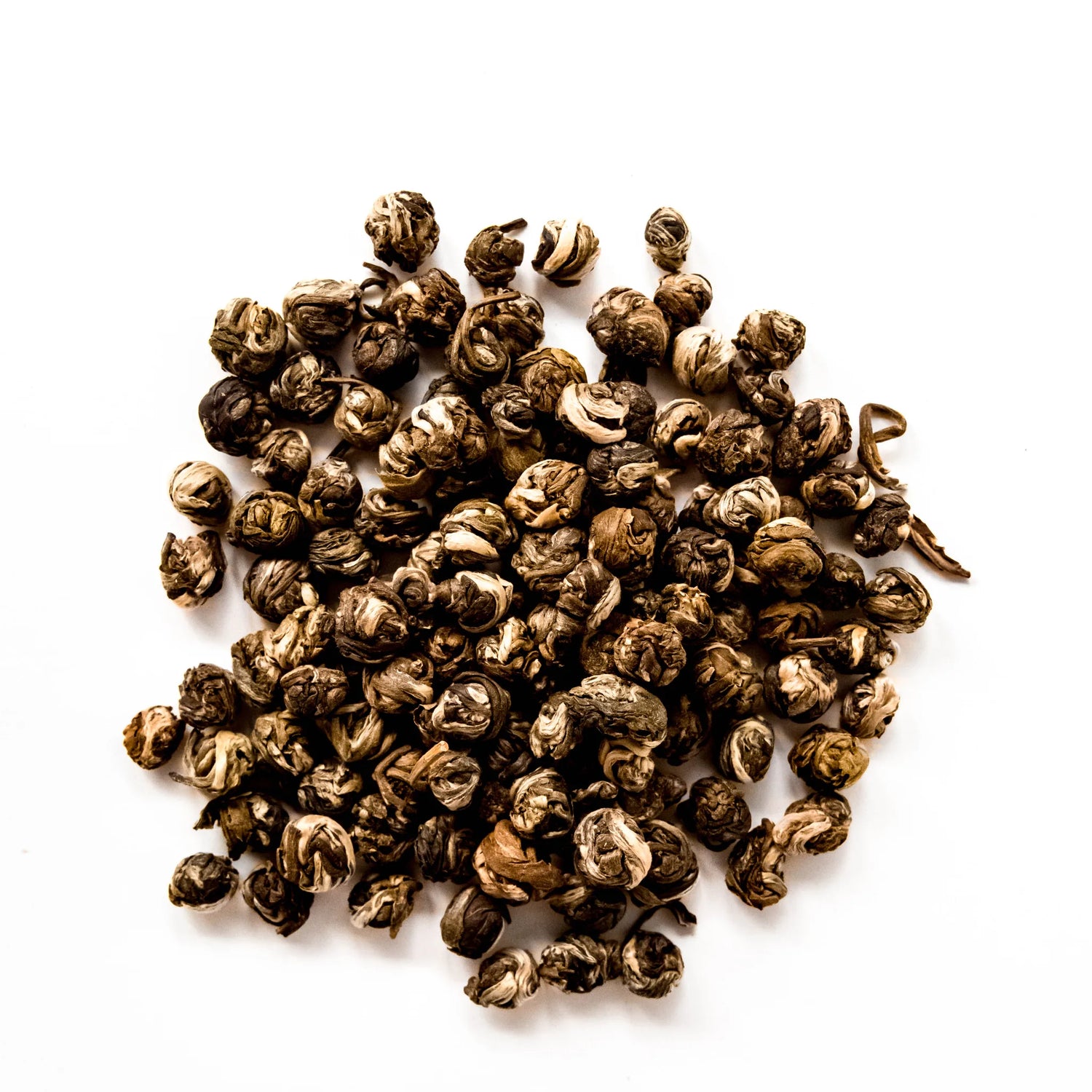
Jasmine Pearl loose leaf green tea with hand-rolled ball shapes displayed on white background, by Yerba Buena Tea Company.
Product image 2, can be opened in a modal.
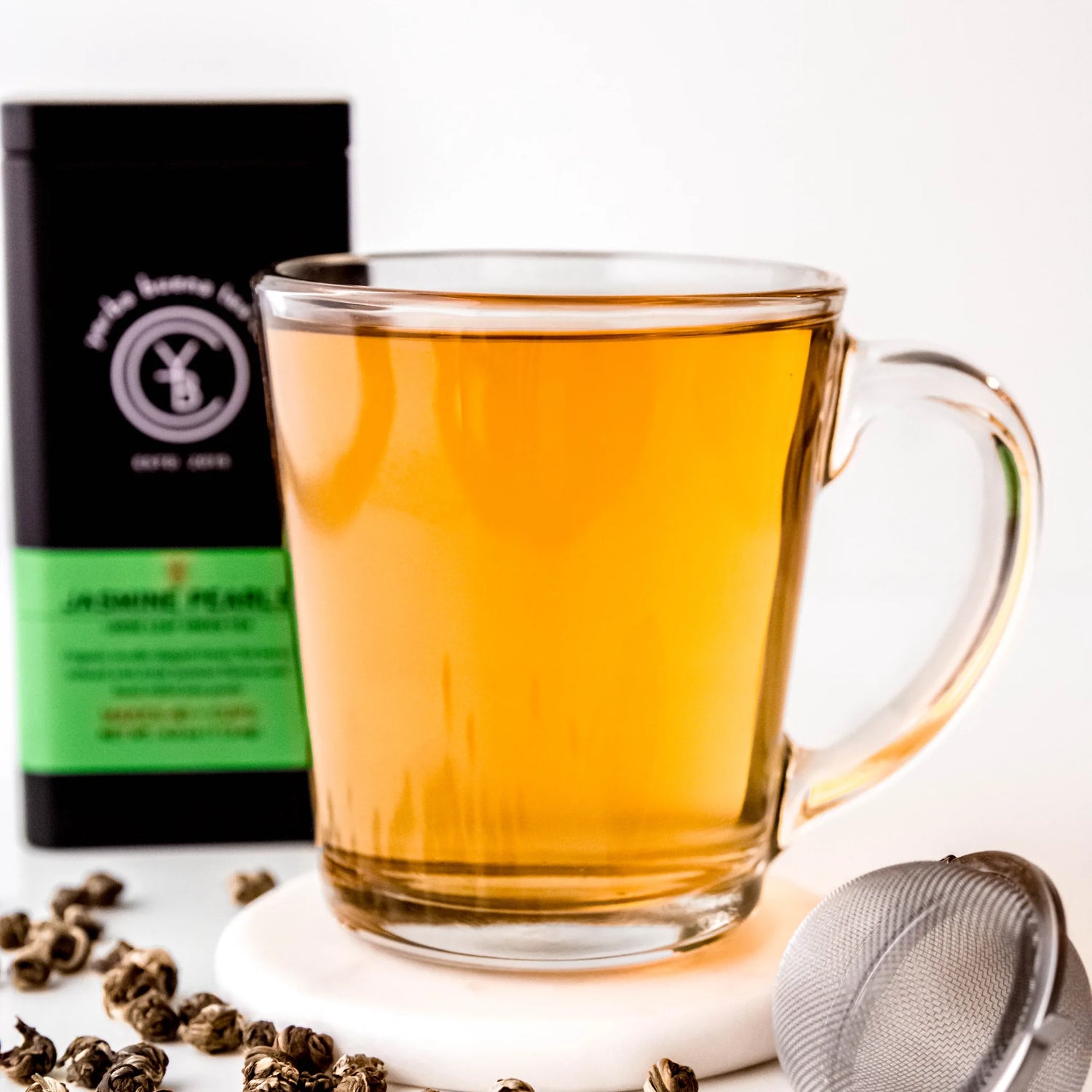
Brewed jasmine pearl tea in a clear glass mug beside loose leaf pearls and infuser, by Yerba Buena Tea Company.
Product image 3, can be opened in a modal.
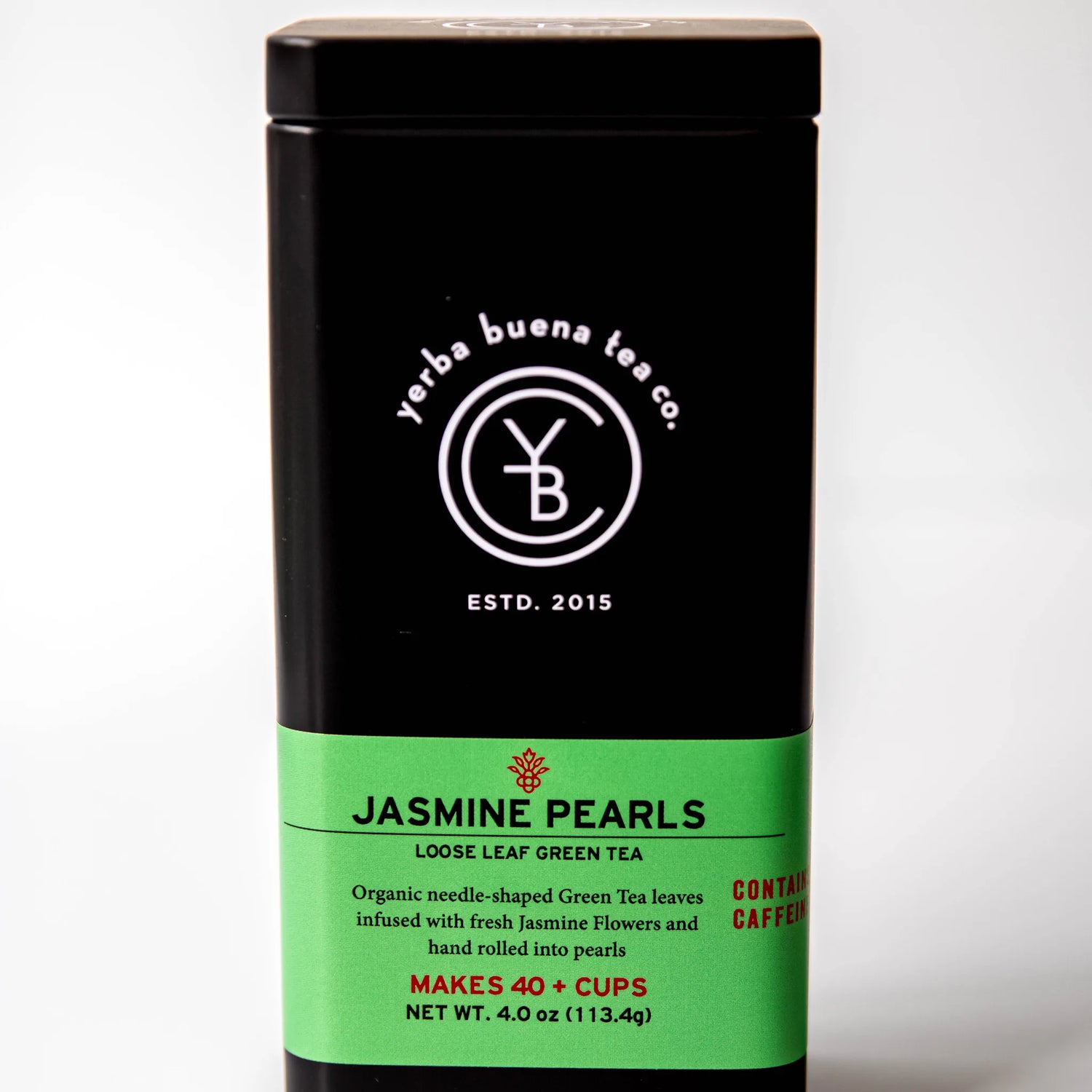
Jasmine Pearls loose leaf green tea in a black and green labeled canister, by Yerba Buena Tea Company.

Organic Green Tea | Floral & Sweet | Medium Caffeine

Organic Jasmine Pearls Green Tea

Grown in China Floral Sweet

Green tea buds rolled into pearls, scented with fresh jasmine round after round in the Fuzhou tradition. The leaves unfurl in the cup like a slow-motion bloom.

Ingredients: Organic Green Tea, Organic Jasmine Flowers.

Regular price $35.00 USD
Regular price Sale price $35.00 USD
Shipping calculated at checkout.
Size: Tea Tin
  • Free shipping $70+
  • Small business
  • Secure checkout
About Jasmine Pearls

The pearl that unfurls in the cup.

Each pearl is a single bud and one or two tender leaves, rolled into a tight ball while the leaf is still supple. The shape is the point. Rolling locks the leaf's aromatic oils inside, so the jasmine stays vivid in the tin for months, and it turns every steep into a small performance: drop the pearls in hot water and they slowly wake, loosen, and bloom back into whole leaves.

Why the scenting matters.

Jasmine tea is Fuzhou's craft. The capital of China's Fujian Province has scented tea with jasmine since the Song Dynasty, roughly a thousand years of practice, and the tradition is honored today as part of China's national intangible cultural heritage. The method follows the flower's clock. Jasmine blooms after dark, so the blossoms are picked at midday while still closed, then layered with the tea in the evening as they open and release their scent. The tea drinks in the fragrance overnight. Then the spent flowers come out, the tea is gently dried, and the cycle repeats with fresh blossoms, round after round across several weeks, until the jasmine sits deep in the leaf instead of resting on its surface. Scented, never flavored. No oils, no sprays. Flowers, tea, and patience.

The visual ritual.

Use glass. A glass teapot or a clear cup. Drop 10 to 15 pearls into 175°F water and watch them unfurl. The tightly rolled balls soften, the leaves separate, and within two minutes the entire bud-and-leaf structure blooms open. The liquor turns pale gold. The jasmine scent fills the room. You are missing half the experience if you brew this in ceramic.

Tasting Notes

Aroma: Intensely floral. Pure jasmine, night-blooming and sweet, over a soft vegetal base.

In the cup: Silky and nectar-sweet. The tea liquor is thicker than standard green tea, coating the palate with a round, floral sweetness. The vegetal notes sit underneath, grounding the jasmine.

Finish: Long and clean. The jasmine lingers for minutes after the last sip, soft and perfume-like without crossing into artificial.

Why You'll Love It

The pearl format: Rolling green tea into pearls is the modern half of this tea, a twentieth-century Fujian refinement built for premium scented leaf. Shaping a bud and its leaves into a tight ball without breaking them is patient, skilled work, and the payoff is practical: the rolled shape guards the leaf's oils, so a pearl holds its fragrance in the tin far longer than open-leaf tea.

The scenting tradition: The scenting is the ancient half. Fuzhou has layered tea with night-blooming jasmine since the Song Dynasty, and the craft is recognized today as part of China's national intangible cultural heritage. The flowers release their peak fragrance between dusk and dawn, which is why the scenting happens at night. Everyday jasmine teas are scented once or twice. Fine ones repeat the cycle with fresh blossoms, re-drying the tea between rounds, until the fragrance saturates the leaf.

The re-steep advantage: Because the leaves are whole and tightly rolled, they release flavor slowly. The first steep wakes the leaf. The second, after the pearls have fully unfurled, often delivers the cleanest jasmine flavor. The later steeps soften into a quieter, more vegetal cup. Each steep reveals a different facet of the same leaf.

Jasmine Pearls loose leaf green tea in a black and green labeled canister, by Yerba Buena Tea Company.

Jasmine Pearls

Regular price $35.00 USD
Regular price Sale price $35.00 USD
TeaFujian, China

Organic Jasmine Pearls Green Tea

Steep slow. Watch it bloom.

Caffeine: Medium
8.0 oz
Water
175°F
Temperature
1.0 tsp
Leaf
3 min
Steep Time
Re-Steep · Up to 4×
Use 175°F water, not full boil. The lower temperature protects the delicate jasmine oils and keeps the green tea from going bitter. 3 minutes for the first steep, 2 minutes for the second and third.
1
Cup

Craft Your Cup

A few notes from our teamakers.
Iced Jasmine Pearls
Cold-brew 2 teaspoons of pearls in 16 ounces of cold water for 8 hours in the fridge. Strain. Pour over ice with a squeeze of lime and a sprig of fresh mint. The cold extraction keeps the jasmine bright and drops most of the vegetal bitterness. Drinks like a floral limeade.

Jasmine Rice Pairing
Brew a pot of Jasmine Pearls and serve it alongside Thai jasmine rice, steamed vegetables, and a light protein like white fish or tofu. The floral notes in the tea mirror the floral notes in the rice. The pairing is a traditional one in Chinese banquet settings, where jasmine tea cleanses the palate between courses.

Jasmine Pearl Granita
Brew double-strength (2 teaspoons in 8 ounces, 4 minutes). Dissolve 2 tablespoons of cane sugar into the hot tea. Pour into a shallow baking dish and freeze for 3 hours, scraping with a fork every 30 minutes to create icy flakes. The result is a floral, lightly sweet palate cleanser that works as a mid-meal sorbet or a summer dessert.

Jasmine Pearl loose leaf green tea with hand-rolled ball shapes displayed on white background, by Yerba Buena Tea Company.

Your Questions About Jasmine Pearls, Answered.

Why are they rolled into pearls?

Rolling protects the aromatic oils in the leaf, so the jasmine stays fresh in the tin for months. It also creates the visual experience this tea is known for: in hot water the pearls bloom back into whole leaves within about two minutes. The pearl shape itself is a modern Fujian refinement. The scenting it carries is the ancient part, a Fuzhou jasmine craft with roots in the Song Dynasty.

How many times can I re-steep them?

Three to four times. The first steep wakes the leaf. The second steep, after the pearls have fully opened, often delivers the cleanest jasmine flavor. The third and fourth steeps soften into a quieter, more vegetal cup. Use 175°F water and shorten the time slightly for each additional steep.

How many pearls per cup?

10 to 15 pearls for an 8-ounce cup, which works out to roughly 1 teaspoon. The pearls expand to five times their original size as they unfurl. A little goes a long way. If you are brewing in a larger teapot, scale up proportionally.