Product image 1, can be opened in a modal.
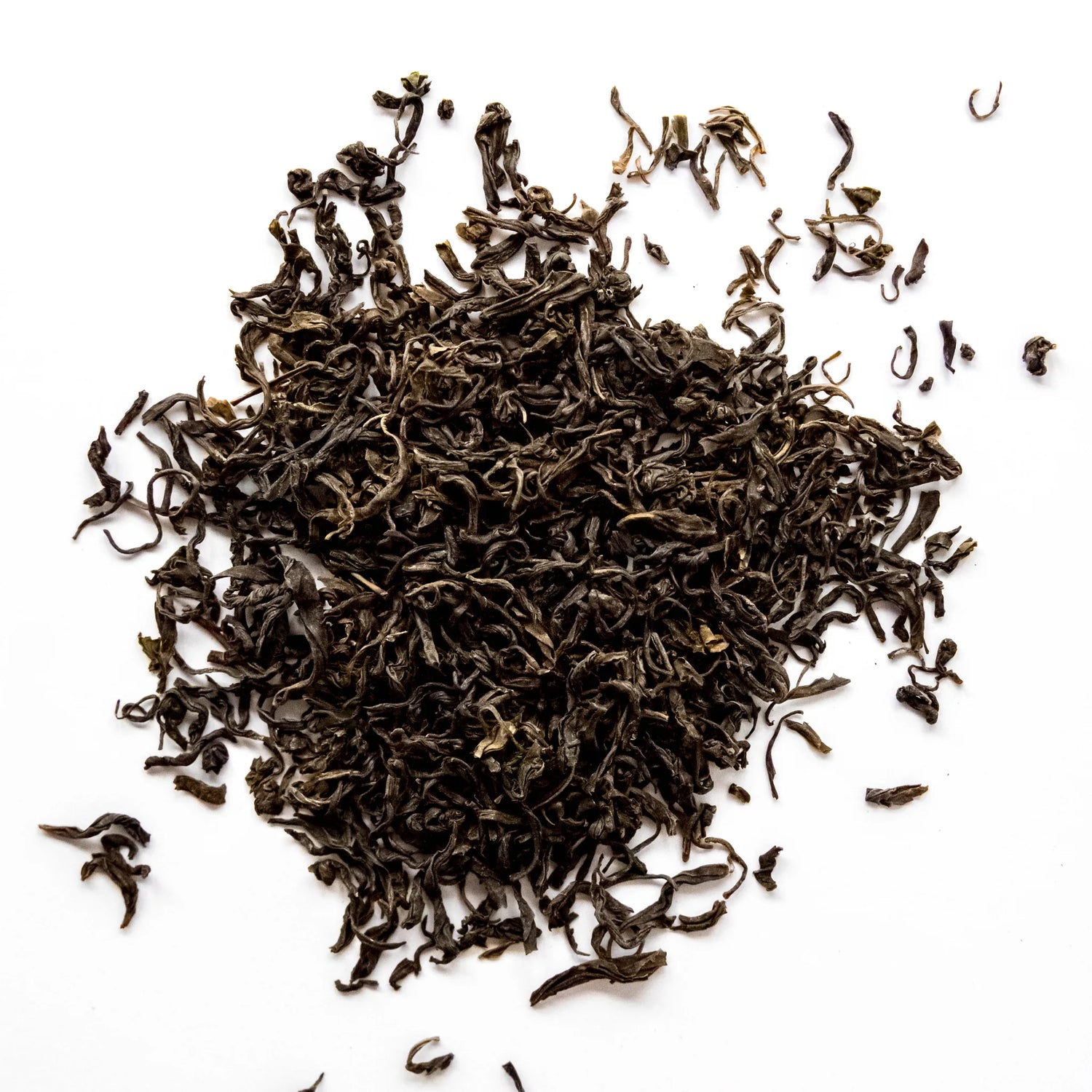
Loose leaf green tea with curled leaves scattered on white background, by Yerba Buena Tea Company.
Product image 2, can be opened in a modal.
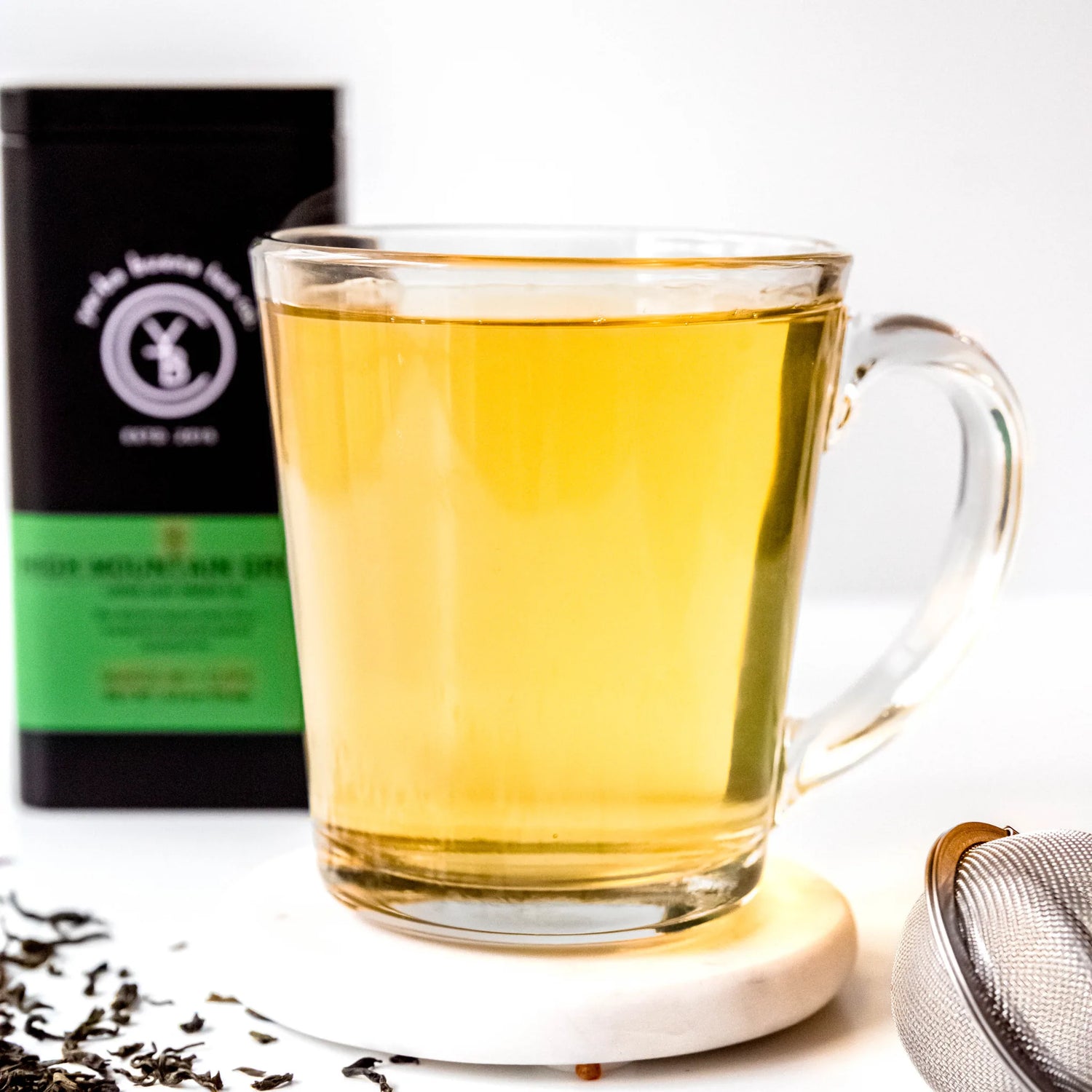
Brewed pale yellow green tea in glass mug beside loose leaf tea and black packaging with green label, by Yerba Buena Tea Company.
Product image 3, can be opened in a modal.
High Mountain Green loose leaf green tea in a black canister with green label band, by Yerba Buena Tea Company.

Organic Green Tea | Sweet & Nutty | Medium Caffeine

Organic High Mountain Green Tea

Grown in China Floral Sweet

A pan-fired Chinese green tea from Zhejiang province, grown above the cloud line where the air slows the leaf and sweetens the cup. Smooth, chestnut-warm, zero bitter edge.

Ingredients: Organic Green Tea.

Regular price $18.00 USD
Regular price Sale price $18.00 USD
Shipping calculated at checkout.
Size: Tea Tin
  • Free shipping $70+
  • Small business
  • Secure checkout
About High Mountain Green

The pan-fired green tea for people who find green tea too grassy.

High Mountain Green is an organic Chinese green tea grown at elevation in Zhejiang province, where the thin air and persistent cloud cover force the tea bushes to grow slowly. That slow growth concentrates amino acids and natural sugars in the leaf, which is why high-altitude teas taste sweeter without added sugar. The leaves are pan-fired in the traditional Chinese style, tossed in a hot wok to halt oxidation. The result is a cup with toasted chestnut warmth and soft floral top notes, with zero vegetal or grassy character. Smooth from the first sip. No astringency on the finish.

Why pan-firing matters.

Japanese green teas are steamed, which preserves chlorophyll and produces that bright, grassy, seaweed-like flavor. Chinese green teas are pan-fired, which adds a toasted note and mellows the vegetal edge. The difference is immediate. Pan-fired greens taste warmer, rounder, and more approachable to Western palates raised on black tea. The technique dates back over a thousand years and remains the signature processing method for Chinese greens.

The altitude effect.

Tea grown above the cloud line is prized across Asia for a reason. The clouds act as natural shade, increasing chlorophyll and L-theanine content in the leaf. The thin air slows photosynthesis, which forces the plant to produce more aromatic compounds as it compensates. The result is a tea that tastes complex without tasting heavy. Sweet, floral, nutty.

Tasting Notes

Aroma: Delicate and nutty. Toasted chestnuts, soft orchid, a hint of fresh butter.

In the cup: Sweet and smooth from the first sip. The pan-fired warmth leads. A soft fruity note sits underneath. No vegetal bite, no astringency.

Finish: Clean and lingering. The sweetness stays. The toasted note fades gently.

Why You'll Love It

High-altitude tea in Chinese tradition: Tea grown above the cloud line is classified as "gao shan cha" (high mountain tea), a grade designation that dates back over a thousand years in Chinese tea culture. The clouds provide natural shade, which increases chlorophyll and L-theanine, the amino acid responsible for the umami sweetness in tea. The thin air slows growth, which concentrates aromatic compounds. The result is a more complex cup.

Pan-firing vs. steaming: The signature difference between Chinese and Japanese green tea. Japanese greens are steamed, which preserves the bright green color and produces a grassy, vegetal flavor. Chinese greens are pan-fired, which adds a toasted, nutty warmth and softens the vegetal edge. The technique involves tossing fresh leaves in a hot wok immediately after plucking, which halts oxidation and sets the flavor profile.

Spring harvest: Hand-plucked during the spring flush in Zhejiang province, when the leaves are youngest and the flavor is brightest. Spring-harvested greens are softer and sweeter than summer or autumn harvests.

High Mountain Green loose leaf green tea in a black canister with green label band, by Yerba Buena Tea Company.

High Mountain Green

Regular price $18.00 USD
Regular price Sale price $18.00 USD
TeaZhejiang, China

Organic High Mountain Green Tea

Steep gentle. Sip pure.

Caffeine: Medium
8.0 oz
Water
175°F
Temperature
1.0 tsp
Leaf
3 min
Steep Time
Re-Steep · Up to 2×
175°F water, not boiling. Green tea scorches above 180°F, which is where the bitterness comes from. 3 minutes for the first steep. The leaves will open slowly and sweeten as they go.
1
Cup

Craft Your Cup

A few notes from our teamakers.
The Pure Cup
Brew 1 teaspoon in 8 ounces of 175°F water for 3 minutes. Strain. Sip plain, no milk or sugar. The natural sweetness and toasted warmth are the point. Best in a small cup, sipped slowly, mid-morning when the brain needs a gentle lift.

Cold-Brewed Green
Add 2 teaspoons to 16 ounces of cold water. Steep in the fridge for 8 hours. Strain. Pour over ice. Cold extraction drops the tannins entirely and amplifies the sweetness. Tastes closer to melon water than to tea. Pair with sushi or a summer lunch.

Green Tea Rice
Brew 2 cups of strong tea (double the usual leaf amount, steep 4 minutes, strain). Use the brewed tea as the cooking liquid for white rice or quinoa. The toasted, nutty flavor infuses the grain. A Japanese ochazuke-inspired technique that works beautifully with pan-fired Chinese greens.

Loose leaf green tea with curled leaves scattered on white background, by Yerba Buena Tea Company.

Your Questions About High Mountain Green, Answered.

Does this taste grassy like Japanese green tea?

No. Japanese green teas like Sencha are steamed, which preserves the bright green color and produces a grassy, vegetal, sometimes seaweed-like flavor. Chinese green teas like this one are pan-fired, which adds a toasted, nutty warmth and softens the vegetal edge. The flavor reads closer to roasted chestnuts than to spinach.

Can I re-steep the leaves?

Yes. Whole-leaf green teas re-steep well. Brew the first steep at 175°F for 3 minutes. Second steep: same temperature, 2 minutes. The flavor will soften and sweeten with each infusion. Most customers get 2 to 3 good steeps from the same leaves.

Why does it taste sweet without sugar?

High-altitude growing conditions increase the concentration of L-theanine, an amino acid that produces an umami sweetness in the cup. The slow growth caused by thin air and persistent cloud cover forces the tea plant to produce more aromatic compounds and natural sugars. That sweetness is inherent to the leaf, not added.