Product image 1, can be opened in a modal.
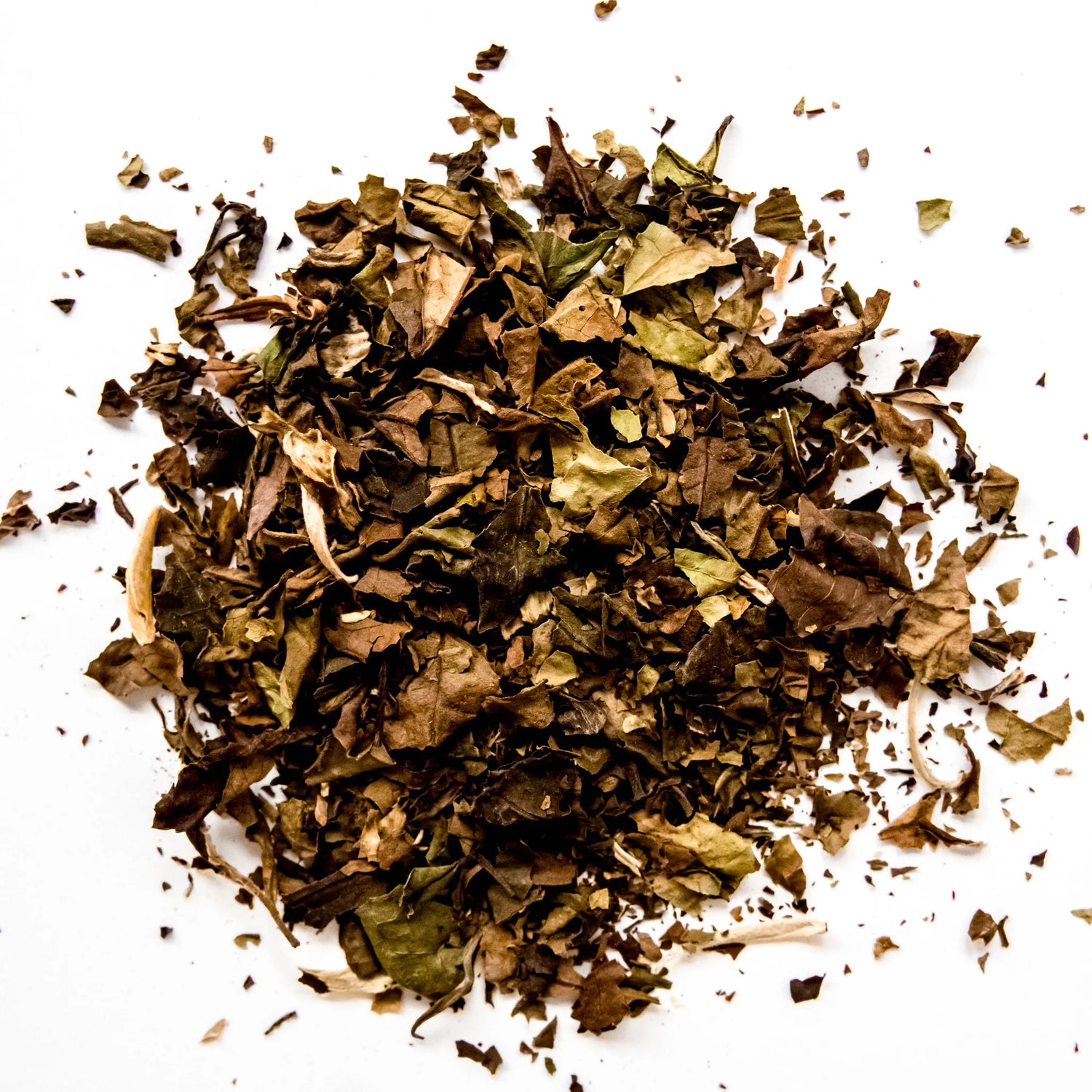
Loose leaf white peony tea with dried leaves and flowers scattered on white background, by Yerba Buena Tea Company.
Product image 2, can be opened in a modal.
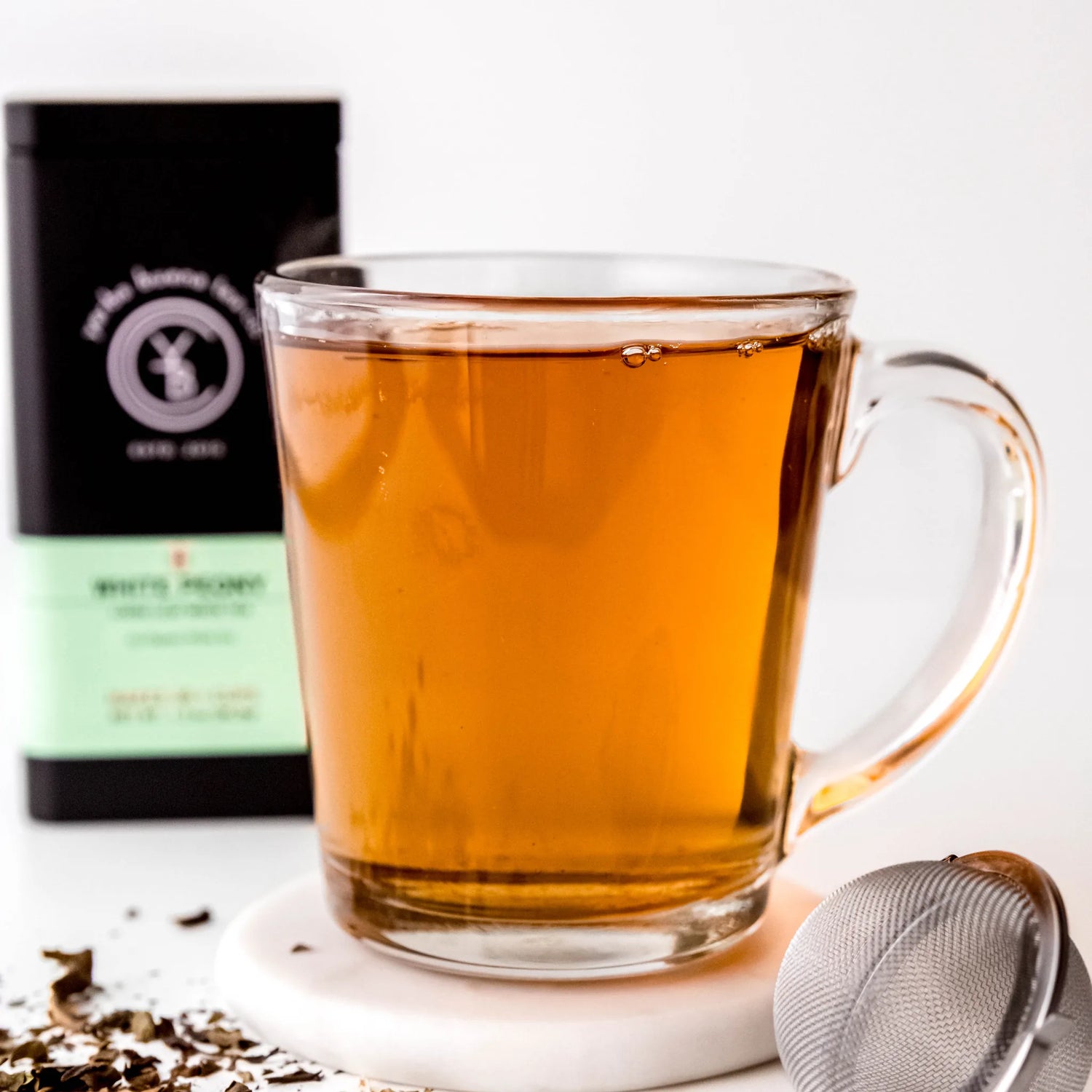
Brewed White Peony tea in clear glass mug with loose leaf scattered nearby and packaging in background, by Yerba Buena Tea Company.
Product image 3, can be opened in a modal.
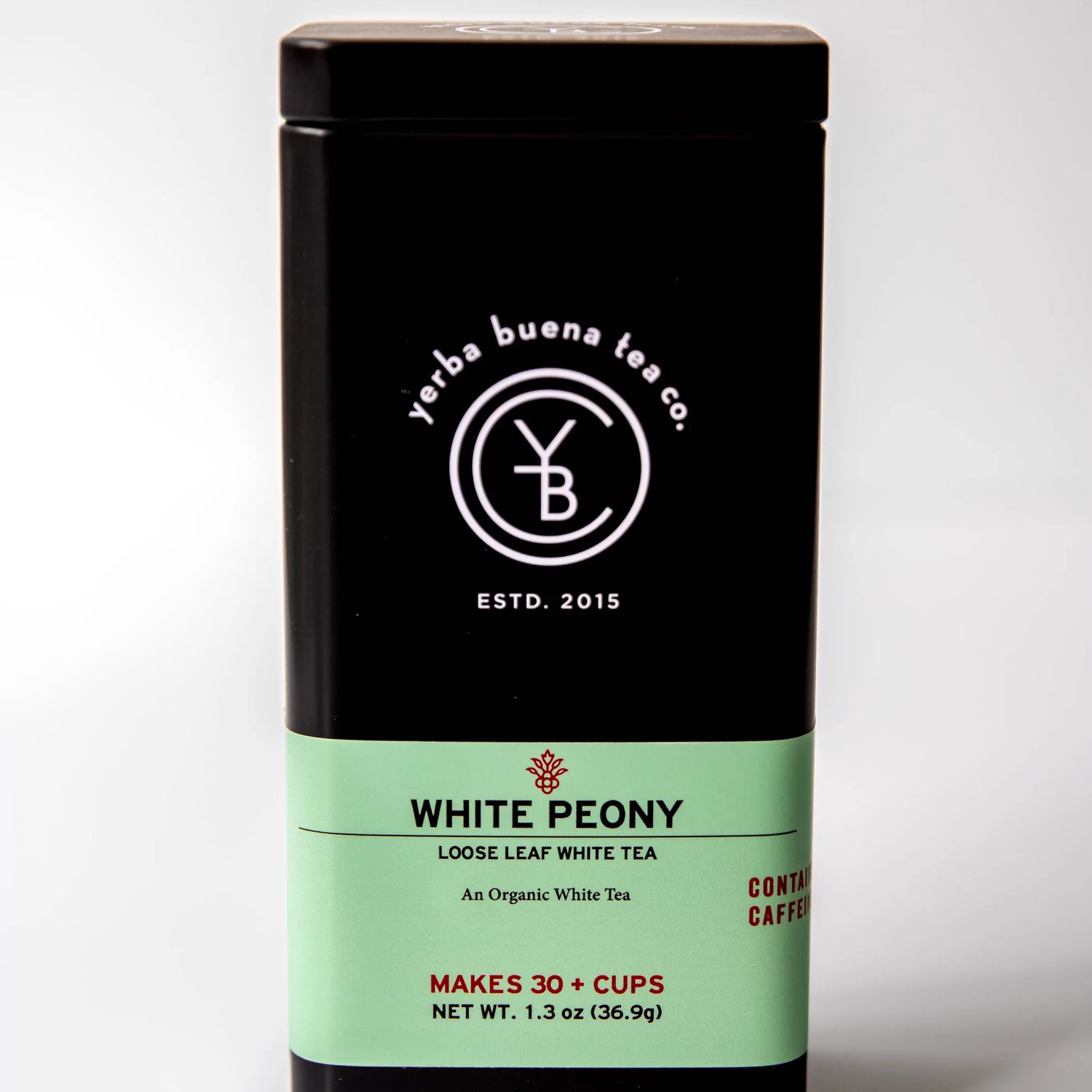
White Peony loose leaf white tea in a black canister with mint green label band, by Yerba Buena Tea Company.

Organic White Tea | Delicate & Melon-Sweet | Low Caffeine

Organic White Peony White Tea

Grown in China Floral Sweet

One bud, two leaves, sun-dried and left alone. The least-processed tea in the catalog, with the softest cup.

Ingredients: Organic White Tea.

Regular price $18.00 USD
Regular price Sale price $18.00 USD
Shipping calculated at checkout.
Size: Tea Tin
  • Free shipping $70+
  • Small business
  • Secure checkout
About White Peony

The least-processed tea in the catalog.

White Peony (Bai Mu Dan in Mandarin) is one bud and two young leaves, plucked in early spring and left to wither in the sun. No steaming, no pan-firing, no roasting. The leaves dry in open air over 48 to 72 hours. The result is a tea that sits as close to the living plant as any processed leaf can get. The flavor reads as honeydew melon and apricot, with a soft, velvety body that coats the palate. Zero astringency. Zero bitterness. It tastes like drinking sweetened air.

Why the minimal processing matters.

Green tea gets steamed or pan-fired to halt oxidation. Black tea gets rolled and fully oxidized, then roasted. White tea skips all of it. The buds and leaves wither naturally, which preserves the highest concentration of catechins (the polyphenol antioxidants that drive most of tea's studied health effects). The same minimal processing keeps the caffeine low. White tea buds contain less caffeine than mature leaves, and the lack of heat means nothing concentrates. The cup wakes you gently, if it wakes you at all.

The visual ritual.

White Peony leaves are voluminous and downy. The buds are covered in fine silver hairs; the leaves are soft green with pale undersides. Brew this in a glass teapot or a wide glass mug. As the leaves hydrate, they stand vertically in the water, mimicking the bloom of a peony flower. The movement is slow and meditative. The reason traditional gongfu tea ceremony uses glass for white tea.

Tasting Notes

Aroma: Clean and airy. Fresh linen, cut hay, wildflowers drying in the sun. The scent is subtle enough that you have to lean in.

In the cup: Sweet and round. Honeydew melon and apricot, with a hint of raw honey. Zero astringency, zero bitterness. The flavor sits so softly on the palate that it reads more as texture than taste.

Finish: Silky and coating. Like drinking honey water. The sweetness lingers long after the cup is empty.

Why You'll Love It

The antioxidant profile: White tea contains the highest concentration of catechins of any tea type, a class of polyphenol antioxidants that have been studied for their free-radical-scavenging activity. The minimal processing preserves these compounds in their most bioavailable form. Traditional Chinese herbalism has used white tea as a cooling herb for centuries, prized for its ability to clear heat and support skin health from the inside.

The caffeine story: White tea buds naturally contain less caffeine than mature tea leaves. The sun-drying process, which never exposes the leaves to high heat, keeps the caffeine content stable and low. Most cups contain 15 to 30 milligrams of caffeine, roughly a quarter of what a cup of coffee delivers. The lift is gentle, subtle, and forgiving.

The hydration factor: The silky mouthfeel and naturally sweet flavor make white tea one of the most hydrating teas to drink. It tastes closer to flavored water than a traditional tea, which means people tend to sip more of it. A quiet choice for afternoons, evenings, or anytime the body wants water but the palate wants flavor.

White Peony loose leaf white tea in a black canister with mint green label band, by Yerba Buena Tea Company.

White Peony

Regular price $18.00 USD
Regular price Sale price $18.00 USD
TeaFujian Province, China

Organic White Peony White Tea

Steep gentle. Sip silk.

Caffeine: Low
8.0 oz
Water
175°F
Temperature
1.5 tsp
Leaf
3 min
Steep Time
Re-Steep · Up to 3×
Use water at 175°F, not boiling. Boiling water scalds the delicate buds and flattens the sweetness. 3 to 4 minutes for the first steep. The leaves will stand vertically in the cup as they hydrate.
1
Cup

Craft Your Cup

A few notes from our teamakers.
Cold-Brewed White Peony
Use 2 teaspoons in 16 ounces of cold water. Steep in the fridge for 8 to 12 hours. Strain. The cold extraction pulls even more sweetness and drops the vegetal notes entirely. Tastes like melon-infused water. No ice needed.

White Peony with Fresh Peach
Brew 1.5 teaspoons at 175°F for 4 minutes. Strain. Add thin slices of fresh peach to the warm tea and let them steep for 2 to 3 minutes. The stone-fruit notes in the tea amplify the peach. Drink warm or pour over ice. A summer pairing that tastes more sophisticated than the effort required.

The Glass Pot Ritual
Brew this in a clear glass teapot or a wide glass mug. Use 1.5 teaspoons and 8 ounces of 175°F water. Watch as the downy buds and leaves hydrate and stand vertically in the water, mimicking the bloom of a peony flower. The movement is slow and meditative. Traditional gongfu tea ceremony uses glass for white tea for exactly this reason.

Loose leaf white peony tea with dried leaves and flowers scattered on white background, by Yerba Buena Tea Company.

Your Questions About White Peony, Answered.

Does this taste floral like Jasmine tea?

No scenting, no added flowers. The floral aroma comes from the tea plant itself, a subtle wildflower character that reads as background, not foreground. Jasmine tea is green tea scented with jasmine blossoms. White Peony is unscented and tastes more like melon and stone fruit than flowers.

Why is the water temperature so specific?

White tea buds are delicate. Boiling water (212°F) scalds them and flattens the natural sweetness. Water at 175°F extracts the honeyed, melon-like flavors without pulling bitterness or astringency. If you don't have a temperature-controlled kettle, bring water to a boil and let it sit for 3 to 4 minutes before pouring.

How many times can I re-steep the leaves?

Three to four steeps is typical. The first steep is the sweetest. The second and third deepen slightly, with more vegetal, hay-like notes coming forward. The fourth is lighter but still flavorful. Add 30 seconds to each subsequent steep to compensate for the opened leaves.