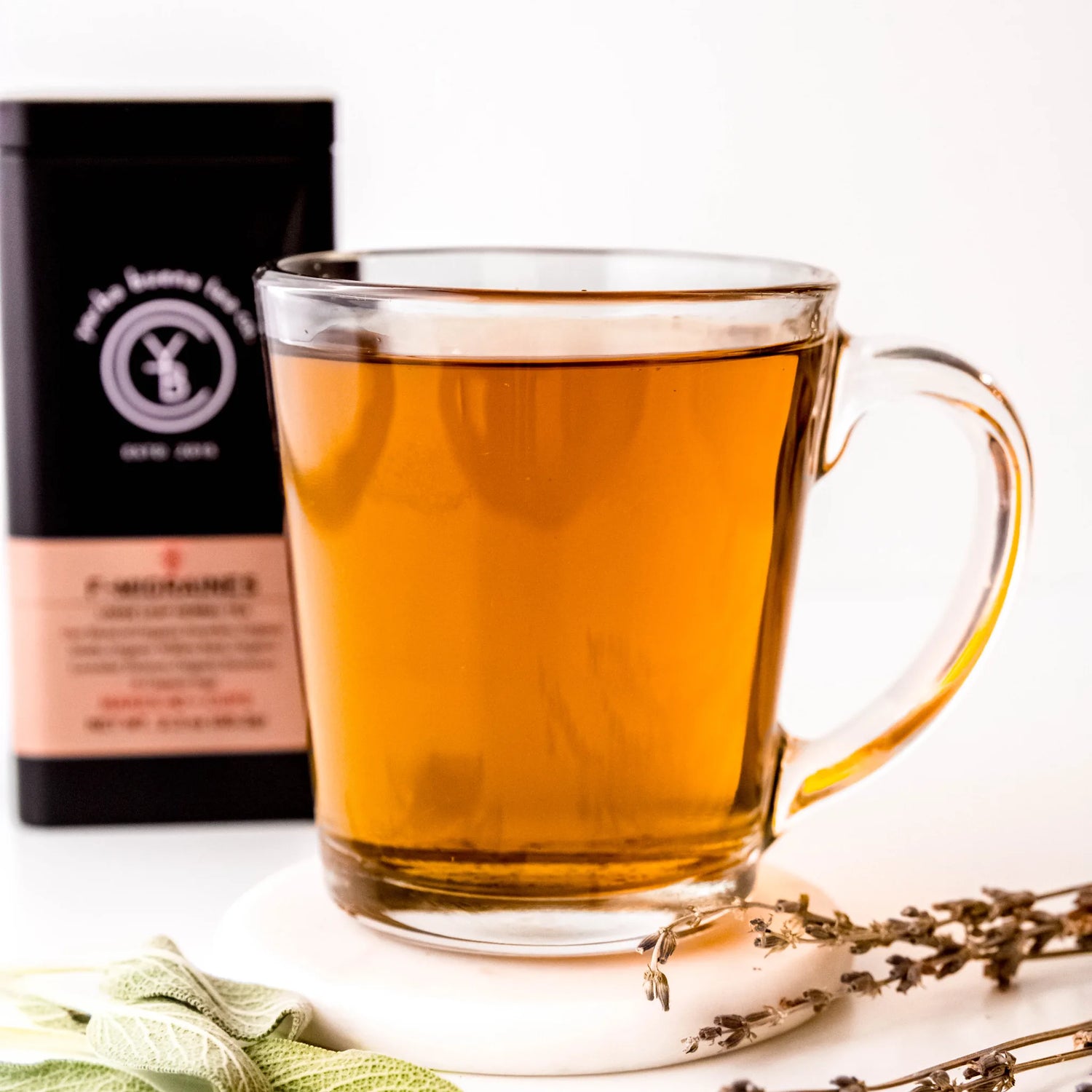
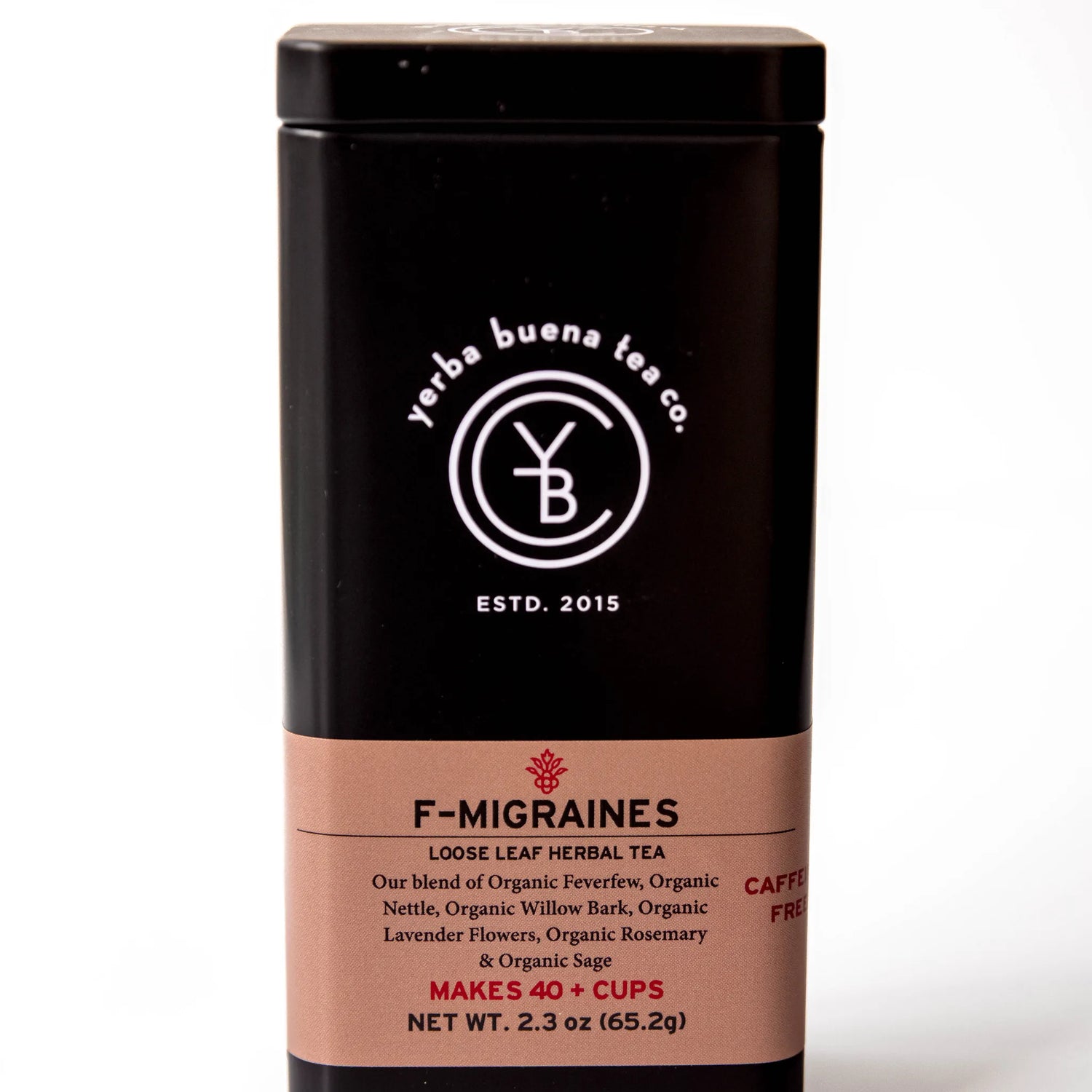
Product image 1, can be opened in a modal.
Loose leaf herbal tea blend with dried herbs and botanicals scattered on white background, by Yerba Buena Tea Company.
Product image 2, can be opened in a modal.
Brewed amber tea in clear glass mug with black pouch packaging in background, by Yerba Buena Tea Company.
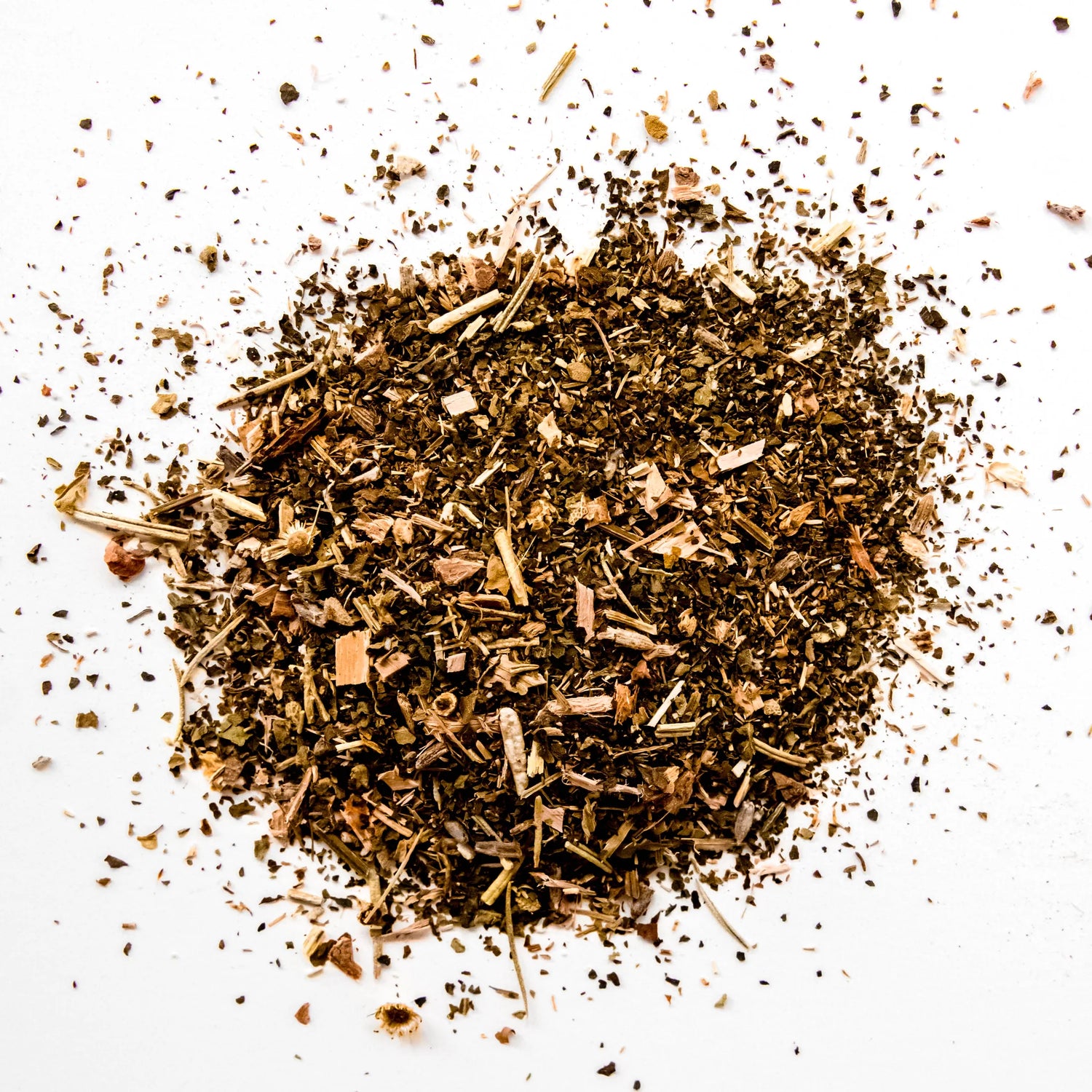
Product image 3, can be opened in a modal.
F-Migraines loose leaf herbal tea in black canister with tan label and brand logo, by Yerba Buena Tea Company.

Organic Herbal Tea | Savory & Herbaceous | Caffeine-Free

Organic Head Ease Herbal Tea

Blended in Oregon Earthy

A savory herbalist's blend built on Feverfew and White Willow Bark. The cup for when your head feels heavy and you need to slow down.

Ingredients: Organic Feverfew, Organic Nettle Leaf, Organic White Willow Bark, Organic Lavender Flowers, Organic Rosemary Leaf, Organic Sage Leaf.

Regular price $18.00 USD
Regular price Sale price $18.00 USD
Shipping calculated at checkout.
Size: Tea Tin
  • Free shipping $70+
  • Small business
  • Secure checkout
About F-Migraines

The savory herbal blend for when the pressure builds.

Six herbs working together, built around Feverfew and White Willow Bark. Feverfew has been the Western herbalist's go-to for head tension since the first century, with records of use in ancient Greece and Rome. White Willow Bark contains salicin, a natural compound that the body converts into salicylic acid, the same active ingredient that led chemists to synthesize aspirin in 1897. Nettle Leaf, Lavender, Rosemary, and Sage round the blend out, adding mineral depth and aromatic softness. The cup tastes savory, not sweet. Earthy, herbaceous, grounding. Closer to a comforting broth than a fruit tea.

Why the herbalist tradition pairs these plants.

Feverfew and White Willow Bark have been used together in Western herbal formulas for centuries, a pairing that appears in British and European herbalism texts dating back to the 1600s. The logic: Feverfew addresses the intensity, White Willow addresses the dull ache underneath, and the aromatic herbs (Lavender, Rosemary, Sage) work on the tension that lives in the jaw, neck, and shoulders. Nettle Leaf adds mineral content and a grounding, vegetal backbone. The blend works as a ritual, not a quick fix. Slow sips, dim room, quiet moment.

The compress ritual.

Brew a strong batch (2 teaspoons in 8 ounces, steep 10 minutes), let it cool to lukewarm, then soak a clean washcloth in the tea. Wring out the excess and place the compress over your forehead or the back of your neck. The cooling sensation combined with the aromatic oils (linalool from Lavender, cineole from Rosemary) creates a topical moment of relief. A folk practice that has been around as long as the herbs themselves. Blended in our Salem, Oregon kitchen.

Tasting Notes

Aroma: Herbaceous and savory. The sharp, piney scent of Rosemary meets the soft floral of Lavender, with an earthy, green undertone from Nettle and Feverfew.

In the cup: Savory and medicinal in a grounding way. The Sage and Rosemary lead with an earthy, almost broth-like quality. The Lavender softens the middle. The White Willow Bark and Feverfew add a subtle bitterness that reads as cleansing, not off-putting.

Finish: Clean, drying, with a lingering herbal coolness. A touch of honey rounds the bitter edge if you need it.

Why You'll Love It

Feverfew, the herbalist's classic:Tanacetum partheniumhas records of medicinal use dating back to ancient Greece and Rome, where it was known as the "medieval aspirin." The name comes from the Latinfebrifugia, meaning "fever reducer." British herbalism texts from the 1600s onward cite Feverfew as the go-to for head tension and jaw clenching. The plant contains parthenolide, a sesquiterpene lactone studied in modern herbal pharmacology for its action on smooth muscle and inflammatory pathways. Traditional use centers on daily, steady consumption rather than acute dosing.

White Willow Bark, the "nature's aspirin":Salix albacontains salicin, a glycoside that the body converts into salicylic acid upon ingestion. The ancient Egyptians, Greeks, and Native American tribes all documented use of willow bark for pain and inflammation, long before German chemist Felix Hoffmann synthesized acetylsalicylic acid (aspirin) from salicin in 1897. The bark's traditional use was steeped as a tea or chewed directly, a practice that continues in modern herbalism.

The aromatic trio:Lavender, Rosemary, and Sage all contain volatile oils (linalool, cineole, camphor) that have been used in Western and Mediterranean herbalism for tension relief, both as teas and as topical applications. The oils work through inhalation and ingestion, which is why this blend also functions as a compress.

F-Migraines loose leaf herbal tea in black canister with tan label and brand logo, by Yerba Buena Tea Company.

F-Migraines

Regular price $18.00 USD
Regular price Sale price $18.00 USD
TeaSalem, Oregon

Organic Head Ease Herbal Tea

Steep grounding. Sip relief.

Caffeine: None
8.0 oz
Water
212°F
Temperature
1.5 tsp
Leaf
7 min
Steep Time
1
Cup

Craft Your Cup

A few notes from our teamakers.
The Quiet Moment Cup
Brew 1.5 teaspoons in 8 ounces of full-boil water for 7 to 10 minutes. Sip slowly in a dim room, away from screens. The ritual matters as much as the herbs. The slower you drink it, the more the body registers the signal to slow down.

The Herbal Compress
Brew double-strength (2 teaspoons in 8 ounces, steep 10 minutes). Let it cool to lukewarm. Soak a clean washcloth in the tea, wring out the excess, and place it over your forehead or the back of your neck. The cooling sensation plus the aromatic oils (linalool from Lavender, cineole from Rosemary) create a topical moment of relief. A folk practice that predates modern herbalism.

The Bedside Thermos
Brew a full pot (3 teaspoons in 24 ounces, 8 minutes), add a tablespoon of honey, and pour into a thermos. Keep it by the bed. Sip throughout the evening or night as needed. The warmth, the ritual, and the steady herbal extraction all work together. Traditional herbalism doses Feverfew steadily, not acutely.

Loose leaf herbal tea blend with dried herbs and botanicals scattered on white background, by Yerba Buena Tea Company.

Your Questions About F-Migraines, Answered.

Why does the tin say "F-Migraines"?

That is the original name of the blend, and the label on the tin reflects it. We market the tea as "Head Ease" to describe the feeling it provides without making medical claims, but the formula inside is identical. Same blend, different name for regulatory clarity.

Does this taste medicinal?

Yes, in a grounding way. The Sage, Rosemary, and White Willow Bark give the cup a savory, almost broth-like quality. It tastes more like a comforting kitchen remedy than a sweet tea. Many people find this savory profile soothing when they are not feeling well. A small drizzle of honey softens the bitter edge if you need it.

Are there medication interactions?

Potentially, yes. White Willow Bark contains salicin, which the body converts into salicylic acid, the same compound related to aspirin. If you are allergic to aspirin, taking blood thinners, or on any medication that interacts with NSAIDs, consult your doctor before drinking this tea. This is not medical advice; it is information to take to a qualified practitioner.